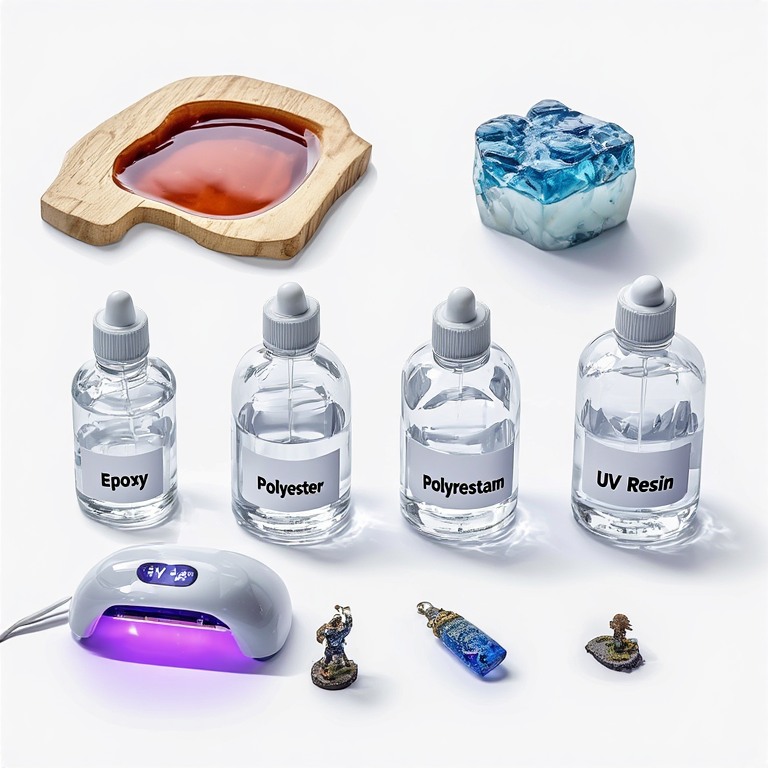

What is Resin?
A complete guide to resin — what it is, how it works, and how it’s used across industries and crafts.
Imagine running your hand across a perfectly smooth, glass-like tabletop — a swirl of turquoise and gold suspended mid-pour, frozen in time. Or picture a tiny dried flower sealed inside a crystal-clear pendant, perfectly preserved forever. These are just two of the thousands of things made possible by one remarkable material: resin.
Resin has exploded in popularity over the past decade, capturing the imaginations of artists, craftspeople, builders, and engineers alike. But what exactly is it? Where does it come from? And how does a sticky, syrup-like liquid transform into something rock-solid and beautiful?
In this guide, we’ll answer all of those questions and more — covering everything from the science behind resin to the many ways it’s used in everyday life, plus a practical introduction to working with it yourself.
What is Resin? — The Basics
At its most fundamental level, resin is a viscous substance — thick, sticky, and liquid — that can harden into a solid through a process called curing. It belongs to a broader family of materials known as polymers, meaning its molecules are made up of long, repeating chains of smaller units called monomers.
When those molecular chains link together — a process triggered by heat, ultraviolet light, or a chemical catalyst — the liquid transforms into a solid. Depending on the type of resin, the resulting material can be rock-hard and glass-like, flexible and rubbery, or anything in between
Key property: Resin starts as a liquid and becomes a solid — a transformation that makes it incredibly versatile for coating, casting, sculpting, and bonding

A Brief History of Resin
Humans have been using resin for thousands of years. Ancient Egyptians used natural plant resins to waterproof ships and embalm mummies. The Romans used pine resin to seal wine amphorae. For centuries, shellac — a resin secreted by the lac bug — was used as a varnish, a food glaze, and even the coating for early gramophone records.
The 20th century brought a revolution: synthetic resins. Chemists discovered how to create resin compounds in the lab, leading to materials like epoxy, polyester, and polyurethane resin. These new materials were stronger, more consistent, and far more versatile than anything found in nature — and they transformed industries from construction to aerospace.
Key Physical Properties
What makes resin so useful is the combination of properties it can offer:
- Transparency — many resins cure to a clear, glass-like finish, making them ideal for encapsulating objects or coating surfaces.
- Hardness & durability — cured resin is highly resistant to scratching, chemicals, and moisture.
- Adhesion — resin bonds strongly to many materials, including wood, metal, fabric, and stone.
- Mouldability — in its liquid state, resin takes on the exact shape of any mould, allowing intricate detail.
- Versatility — additives like pigments, glitter, fibres, and glow powders can be mixed in before curing.
Types of Resin
Not all resins are created equal. Different formulations have very different properties, curing methods, and ideal applications. Here’s a breakdown of the most common types you’ll encounter.
Natural Resins

Natural resins are produced by plants and insects as a protective substance. They have been used by humans for millennia and remain in use in niche applications today.
- Amber — fossilised tree resin, millions of years old, prized for jewellery.
- Rosin — derived from pine sap, used to coat violin bows and as a flux in soldering.
- Shellac — secreted by lac bugs, used as a wood finish and food-safe coating.
- Dammar — a tree resin used in varnishes and as a glazing medium in oil painting.
Epoxy Resin
Epoxy resin is arguably the most popular resin for both crafts and industrial applications. It is a two-part system: a resin and a hardener that must be mixed together in a precise ratio to trigger curing.
The result is an incredibly strong, clear, and durable solid. Epoxy resin is used for everything from river tables and jewellery to boat hulls and aerospace components. It is favoured for its low shrinkage, excellent adhesion, and outstanding clarity.
Best for: Crafts, woodworking, coating surfaces, casting, jewellery, and industrial bonding.
UV Resin
Epoxy resin is arguably the most popular resin for both crafts and industrial applications. It is a two-part system: a resin and a hardener that must be mixed together in a precise ratio to trigger curing.
The trade-off is that UV resin typically comes in small quantities, is more expensive per volume, and is best suited to thin applications — it struggles to cure in thick pours because UV light cannot penetrate deeply.
Best for: Small jewellery pieces, thin coatings, nail art, and miniature detailing work.
Polyester Resin
Polyester resin is one of the oldest synthetic resins and is widely used in fibreglass construction. It is inexpensive and cures quickly, but produces strong fumes, shrinks slightly during curing, and is more brittle than epoxy. It is a staple in the marine, automotive, and construction industries.
Best for: Fibreglass layups, boat hulls, car body repairs, and swimming pools
Polyurethane Resin
Polyurethane resin is a two-part system that cures very quickly — often in minutes. It can be formulated to be rigid or flexible, and is commonly used for casting detailed props, prototypes, and foam products. It is more sensitive to moisture than epoxy and can produce bubbles if not handled carefully.
Best for: Fast casting, prop-making, prototyping, foam production, and flexible moulding.
Casting vs. Coating Resins
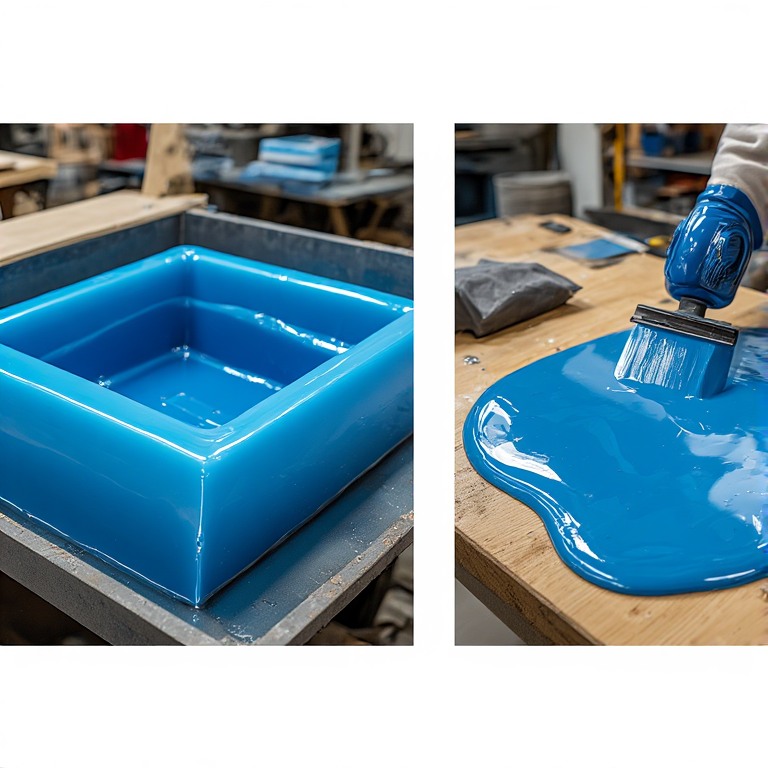
Beyond the chemical type, resins also differ in their formulation for purpose:
- Casting resins are designed for deep pours inside moulds. They cure slowly (to manage heat) and are low viscosity so they flow into fine details.
- Coating resins are designed for thin surface applications. They are often higher viscosity, self-levelling, and formulated to cure with a hard, glossy topcoat.
Using a casting resin as a coating (or vice versa) is a common beginner mistake — always check the product specifications before purchasing.
How Resin Works — The Curing Process
One of the most fascinating things about resin is the chemistry behind its transformation. Understanding the curing process helps explain why certain conditions matter so much when working with resin.
What is Curing?
Curing is the process by which liquid resin solidifies. On a molecular level, it is a chemical reaction called polymerisation — the individual monomer molecules in the resin link together into long chains or interlocking networks, creating a rigid solid structure.
Once cured, this structure is largely irreversible. Unlike thermoplastics (such as PVC or nylon), which melt when reheated, most resins are thermosets — they remain solid permanently after curing.

Mixing Ratios — Why Accuracy Matters
For two-part systems like epoxy and polyurethane, the ratio of resin to hardener is critical. Common ratios are 1:1 or 2:1 by volume or weight — but the exact ratio varies by product. Adding too much or too little hardener disrupts the chemical reaction, resulting in a resin that never fully cures, remains sticky, or becomes brittle.
Pro tip: Always use digital scales for measuring resin by weight — measuring cups can introduce inaccuracies that ruin a batch.
Factors That Affect Curing
- Temperature — warmer conditions speed up curing; cold conditions slow it. Most resins require a minimum temperature of around 18–21°C (65–70°F).
- Humidity — high moisture in the air can cause polyurethane resin to foam and can create cloudiness in epoxy.
- Pot life — the working time you have after mixing before the resin becomes too thick to pour. This varies from minutes (polyurethane) to hours (slow-cure epoxy).
- Pour depth — thick casts generate more heat (an exothermic reaction), which can cause cracking or yellowing if the resin cures too fast.
Common Curing Problems
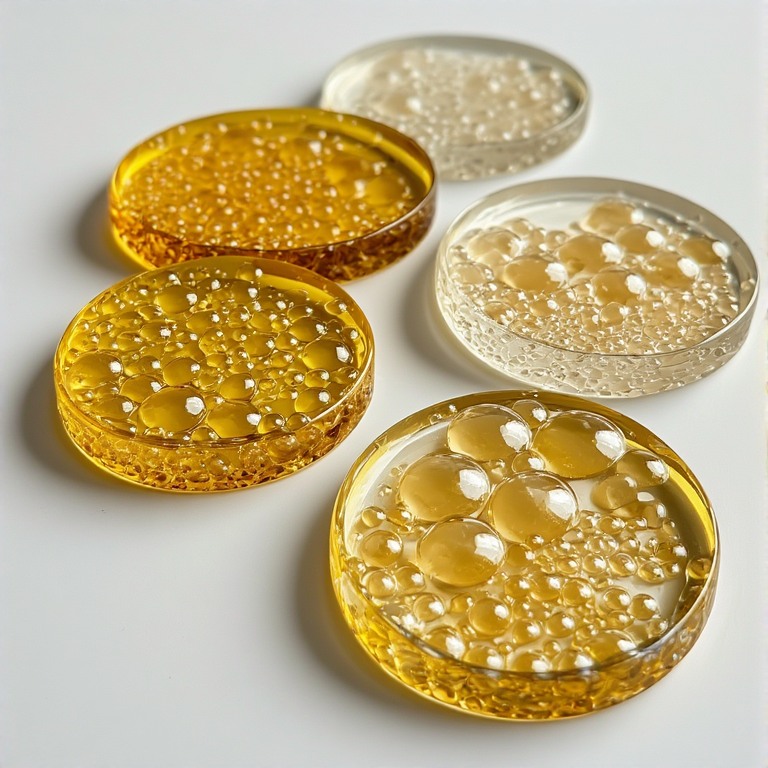
- Sticky surface — usually caused by incorrect mixing ratios or undercuring. The piece may need to be placed in a warm environment or re-coated.
- Yellowing — caused by UV exposure over time, or using low-quality resin. Use UV-stabilised formulas for pieces that will be displayed in sunlight.
- Bubbles — introduced during mixing or from the substrate. Use a heat gun or torch briefly over the surface to pop bubbles before they cure.
- Cracking — from too-deep pours or curing too quickly in high heat. Pour in thinner layers for deep casts.
Uses of Resin — Everyday & Industrial
Resin is one of the most versatile materials on earth. It shows up in places you’d never expect — from the coat on your kitchen floor to the lens in your glasses. Here’s a tour of the most significant applications.
Arts & Crafts

The craft world has enthusiastically adopted epoxy and UV resin for its ability to create stunning visual effects. Popular resin craft applications include:
- Jewellery — pendants, rings, earrings, and bangles embedding flowers, glitter, and foils.
- Coasters and trays — abstract resin art with metallic pigments and alcohol inks.
- Encapsulation — preserving flowers, insects, keepsakes, and memorabilia.
- Resin art panels — poured abstract paintings on wood or canvas.
Woodworking

Resin and wood have a natural affinity. The two most popular woodworking applications are:
- River tables — live-edge wood slabs bridged by a deep cast of coloured resin, creating a striking ‘river’ effect.
- Surface coatings — bar tops, dining tables, and countertops sealed with a thick, self-levelling epoxy coat for a glass-like, waterproof finish.
- Wood repairs — filling knots, voids, and cracks in timber with tinted resin.
Construction & Flooring
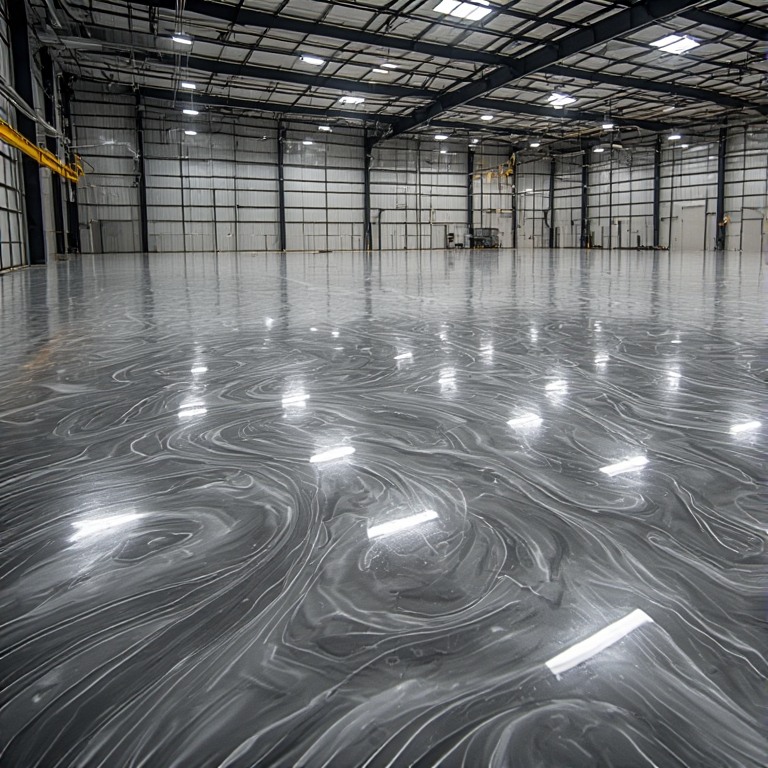
Industrial epoxy resin is a mainstay of modern construction. Epoxy flooring systems are poured onto concrete to create seamless, chemical-resistant, and highly durable surfaces — ideal for warehouses, hospitals, kitchens, and car showrooms. Resin is also used to bond and seal stone countertops, repair structural cracks in concrete, and waterproof basements.
Electronics
In the electronics industry, resin plays an invisible but essential role. Circuit boards are coated in a conformal resin layer to protect against moisture and vibration. Sensitive components are ‘potted’ — fully encased in resin — to protect them from shock, heat, and environmental exposure. Without resin, modern electronics would be far less reliable.
Automotive & Marine
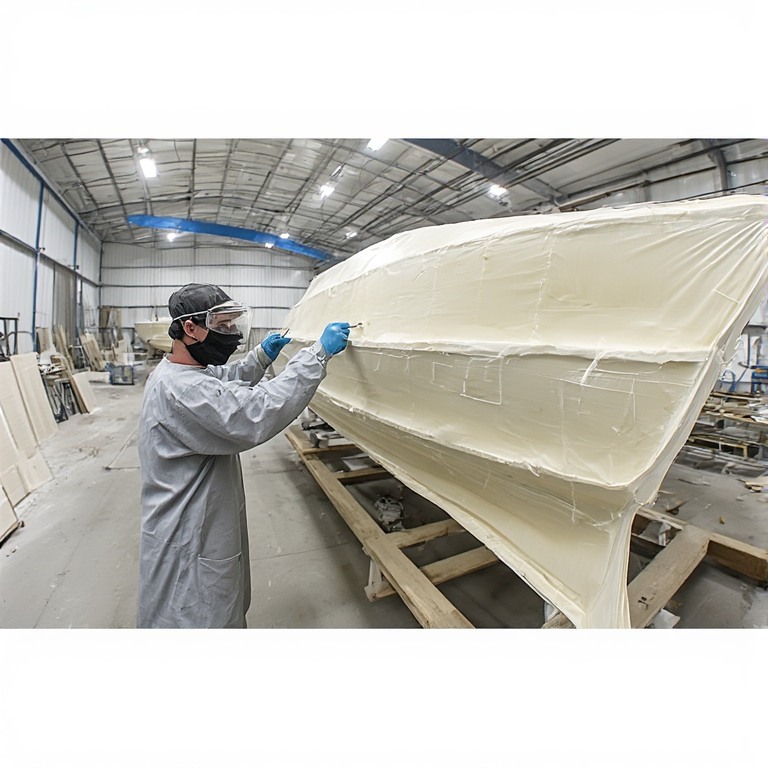
Polyester resin and fibreglass are the backbone of boat hull construction. The combination is lightweight, strong, and waterproof — perfect for everything from small dinghies to large motor yachts. In the automotive world, resin is used to create fibreglass body panels, repair vehicle damage, and coat underbodies for corrosion protection.
Medical & Dental
Dental composites — the tooth-coloured fillings used to repair cavities — are resin-based. UV-cure resin allows dentists to precisely shape and harden a filling in the patient’s mouth in minutes. Resin is also used in prosthetics, orthotics, and the production of medical devices where custom shapes and biocompatibility are required.
How to Work with Resin — A Beginner’s Guide
Ready to try resin yourself? The good news is that getting started is more accessible than ever. Here’s everything you need to know to complete your first project successfully.
Tools & Supplies You’ll Need

- Resin & hardener — choose a beginner-friendly epoxy kit (clearly labelled with mixing ratio).
- Digital scales — for accurate measurement by weight.
- Plastic or silicone mixing cups — resin pops out of silicone easily once cured.
- Silicone moulds — for casting projects.
- Nitrile gloves — resin is a skin sensitiser; always wear gloves.
- Heat gun or small torch — for popping surface bubbles.
- Pigments, dyes, or alcohol inks — for colour effects.
- Isopropyl alcohol — for cleaning tools and surfaces.
Step-by-Step: Your First Resin Pour
Step 1 — Prepare your workspace
Work on a flat, level surface covered with a silicone mat or disposable plastic sheeting. Ensure good ventilation — open windows or work near a fan. The room temperature should ideally be between 21–24°C (70–75°F). Gather all your supplies before you begin, as resin waits for no one once mixed.
Step 2 — Measure your resin
Using your digital scales, measure Part A (resin) and Part B (hardener) according to the manufacturer’s ratio. For most beginner epoxies, this is 1:1 or 2:1 by volume. Measure into separate cups first, then combine into a third cup.
Step 3 — Mix thoroughly
Stir slowly and deliberately for 3–5 minutes, scraping the sides and bottom of the cup. Avoid whipping air in — stir with a slow, folding motion. The mixture should go from cloudy to crystal clear as it combines properly.
Step 4 — Add colour (optional)
Divide your mixed resin into smaller cups if you want multiple colours. Add pigment powder, alcohol ink, or resin dye — a little goes a long way. Stir each colour separately.
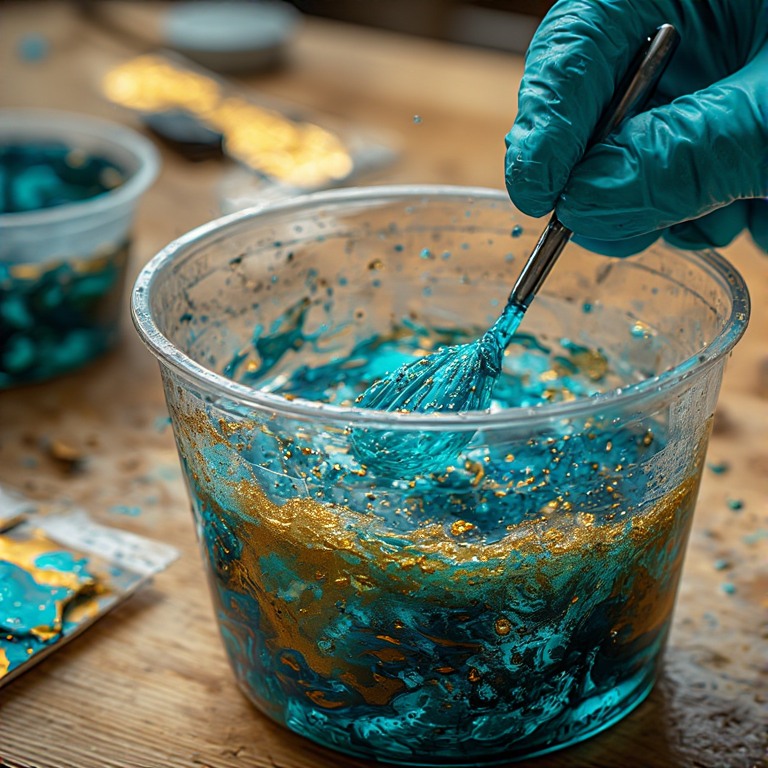
Step 5 — Pour
Pour your resin into the mould slowly, from a low height to minimise bubbles. If doing a layered piece, pour the first layer and allow it to gel (become rubbery but not fully hard) before adding the next layer.
Step 6 — Remove bubbles
Pass a heat gun or small torch quickly over the surface from about 15 cm (6 inches) away. The heat reduces surface tension, causing bubbles to pop. Do not hold the heat source in one spot or you risk scorching the resin.
Step 7 — Cover and cure
Cover your piece with a dome or box to prevent dust settling on the surface. Leave to cure undisturbed at room temperature. Most epoxy resins are safe to demould after 24 hours but reach full hardness in 72 hours to 7 days.
Finishing Your Resin Piece

Once fully cured, resin can be sanded, drilled, and polished just like stone. For a glass-like finish:
- Start with coarser wet/dry sandpaper (400 grit) and work progressively up to 2000 or 3000 grit.
- Use a polishing compound and a soft cloth or buffing pad to bring up the shine.
- For a super-glossy final finish, apply a thin coat of fresh resin over the polished surface.
Safety & Environmental Considerations
Resin is a wonderful material, but it demands respect. Understanding its hazards ensures you can work with it confidently and responsibly.
Health Hazards

Uncured liquid resin is the primary concern. Both the resin and hardener components contain chemicals that can irritate the skin, eyes, and respiratory system.
- Skin sensitisation — repeated skin contact with uncured resin can cause allergic reactions that worsen over time. Always wear nitrile gloves.
- Eye irritation — wear safety glasses when pouring. If resin contacts eyes, rinse immediately with water.
- Fume inhalation — especially with polyester and polyurethane resins, fumes can be hazardous. Use a respirator rated for organic vapours, not just a dust mask.
Important: Once resin is fully cured, it is generally considered safe to handle without gloves. The hazard is in the uncured liquid state.
Workspace & Ventilation
Always work in a well-ventilated space. Open windows and doors, or use a ventilation fan that exhausts air outside. For regular resin work, consider a dedicated workspace with a proper extraction system. Keep resin away from food preparation areas and ensure children and pets are not present during pouring.
Disposing of Resin Safely
- Liquid resin — never pour unused mixed or unmixed resin down the drain. Leave mixed resin to fully cure in a disposable container, then discard with household waste (check local regulations).
- Cured resin — once solid, cured resin is inert and can generally be disposed of in general waste.
- Empty containers — allow containers to fully cure before disposing; never leave opened resin containers where pets or wildlife can access them.
Eco-Friendly Alternatives

Environmental concerns have driven innovation in the resin industry. Bio-based epoxy resins derived from plant sources (such as pine oil or sugar cane) are now available as more sustainable alternatives to petroleum-derived resins. While not yet as widely available or cost-effective, these products are steadily improving and represent an exciting direction for the industry.
Additionally, some manufacturers now produce water-based resin systems with significantly lower VOC (volatile organic compound) emissions — a safer option for indoor use.
Final Thoughts
Resin is one of those rare materials that sits at the crossroads of art, craft, science, and industry. From the pine sap used by ancient civilisations to the advanced photopolymers powering modern 3D printers, resin has proven itself to be an extraordinarily adaptable and enduring material.
Whether you’re drawn to the creative possibilities of jewellery making and river tables, or fascinated by its role in electronics and construction, there has never been a better time to explore what resin can do. The barrier to entry for beginners has never been lower, with quality starter kits, instructional resources, and an active crafting community all readily available.
Your next step: Pick up a small beginner epoxy kit and try casting a simple coaster or pendant. The best way to understand resin is to get your (gloved!) hands on it.