How to Pick the Perfect Resin for Your Project
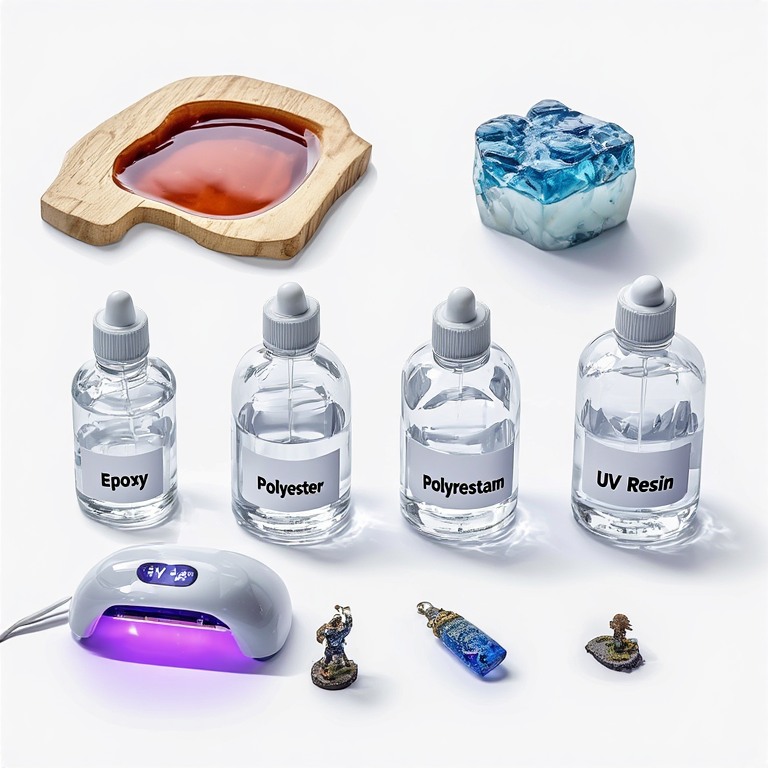
Epoxy vs. Polyester vs. Polyurethane vs. UV Resin:
You already know what resin is. Now you’re facing the real question: Which resin should you actually use?
Walk into any craft store or browse online, and you’ll see several contenders: epoxy, polyester, polyurethane, and the increasingly popular UV resin. Pick the wrong one, and your project can crack, yellow, stay sticky, or fail entirely. Pick the right one, and you get a flawless finish that lasts for years.
This guide cuts through the confusion. By the end, you’ll know exactly which resin to buy for your tabletop, jewelry, mold, repair, or quick-cure project.
Quick Comparison: Epoxy vs. Polyester vs. Polyurethane vs. UV Resin
Here’s the at-a-glance difference:
| Feature | Epoxy Resin | Polyester Resin | Polyurethane Resin | UV Resin |
|---|---|---|---|---|
| Cure method | Two-part (mix) | One-part + catalyst | Two-part (mix) | One-part + UV light |
| Strength | High | Medium | Very high | Low to medium |
| Clarity | Crystal clear | Often yellow tint | Water-clear available | Very clear, glass-like |
| Heat resistance | Moderate (150-200°F) | Low (~130°F) | High (200-300°F) | Low (~120°F) |
| UV / yellowing resistance | Good (with stabilizers) | Poor – yellows quickly | Excellent | Excellent – non-yellowing |
| Shrinkage | Very low | High (7-8%) | Very low (<1%) | Low (~2-3%) |
| Odor | Low to moderate | Strong (styrene) | Moderate to strong | Low (some have mild odor) |
| Working / cure time | 20-60 min work; 12-24 hr cure | 10-20 min work; 24 hr cure | 5-15 min work; 24 hr cure | 2-15 min under UV lamp |
| Equipment needed | Mixing cups, stir sticks | Catalyst, respirator | Mixing tools, dry environment | UV lamp (365-405nm) or sunlight |
| Cost per unit | $$$ (highest) | $ (cheapest) | $$ (mid-range) | $$ (mid-range, small volumes) |
| Best for | Tabletops, art, coatings, jewelry | Fiberglass, boat repairs, cheap molds | Detailed casting, flexible parts, high-heat items | Jewelry, small castings, quick repairs, doming |
Deep Dive: Epoxy Resin – The All-Rounder
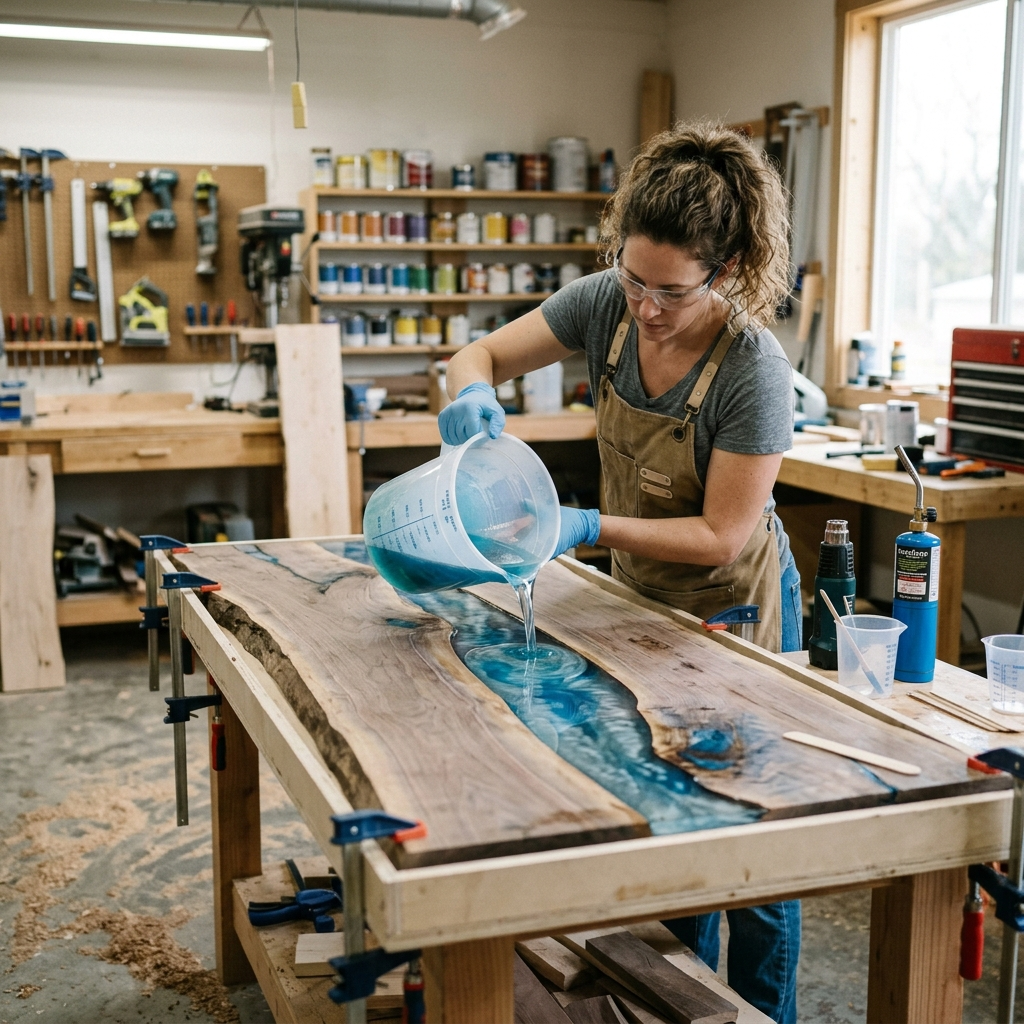
What it is: A two-part system (resin + hardener) that cures through a chemical reaction.
Strengths:
- Self-leveling – no brush marks
- Excellent adhesion to wood, concrete, metal, and most surfaces
- Low odor, can be used indoors with ventilation
- Very low shrinkage – keeps dimensions accurate
- Can be poured in thin or thick layers (with deep-pour formulas)
Weaknesses:
- More expensive than polyester
- Slower cure (24+ hours to full hardness)
- Sensitive to mixing ratios – measure carefully
When to choose epoxy:
✅ Tabletops and bar tops – epoxy or polyurethane for bar top? Epoxy wins for gloss, depth, and scratch resistance.
✅ Coating photos, dried flowers, or memorabilia – clear resin for coating photos needs epoxy’s clarity and non-yellowing formula.
✅ Jewelry and small castings – best resin for casting jewelry is often epoxy because bubbles are easy to remove and it polishes beautifully.
✅ Countertops – Only food safe resin for countertops labeled FDA-compliant (most epoxies are not – always check).
❌ Avoid epoxy when: You need extreme heat resistance (above 200°F), very fast cure (under 30 minutes), or the lowest possible cost.
Pro tip: For resin for deep pour projects over 1 inch, use a specialized deep-pour epoxy. Standard epoxy will overheat and crack.
Deep Dive: Polyester Resin – The Budget Workhorse
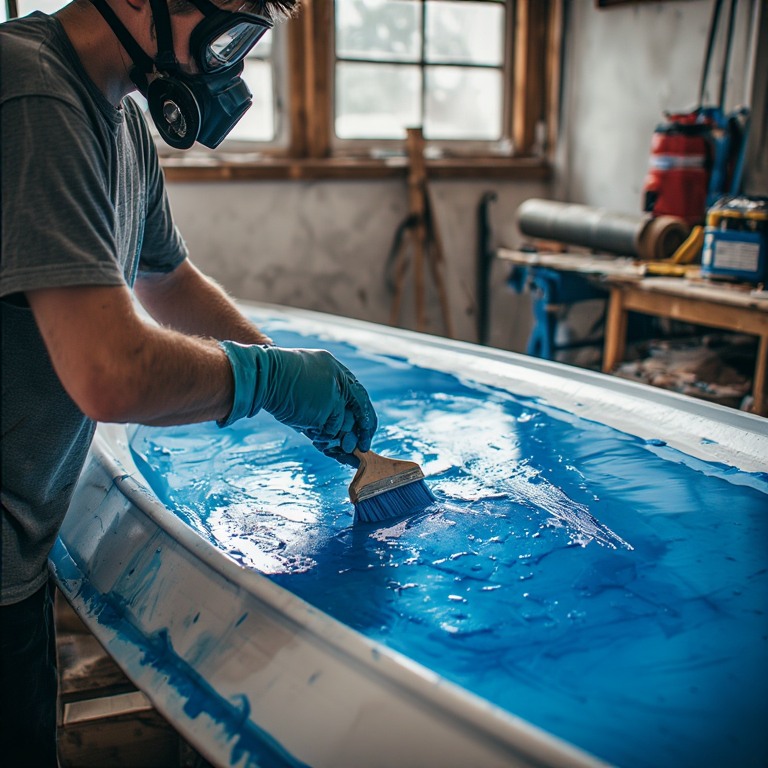
What it is: A one-part resin that requires a catalyst (usually MEKP) to cure. Most commonly used with fiberglass.
Strengths:
- Cheapest resin by far – great for large volumes
- High heat resistance after full cure
- Good for laminating fiberglass
- Cures hard and can be sanded easily
Weaknesses:
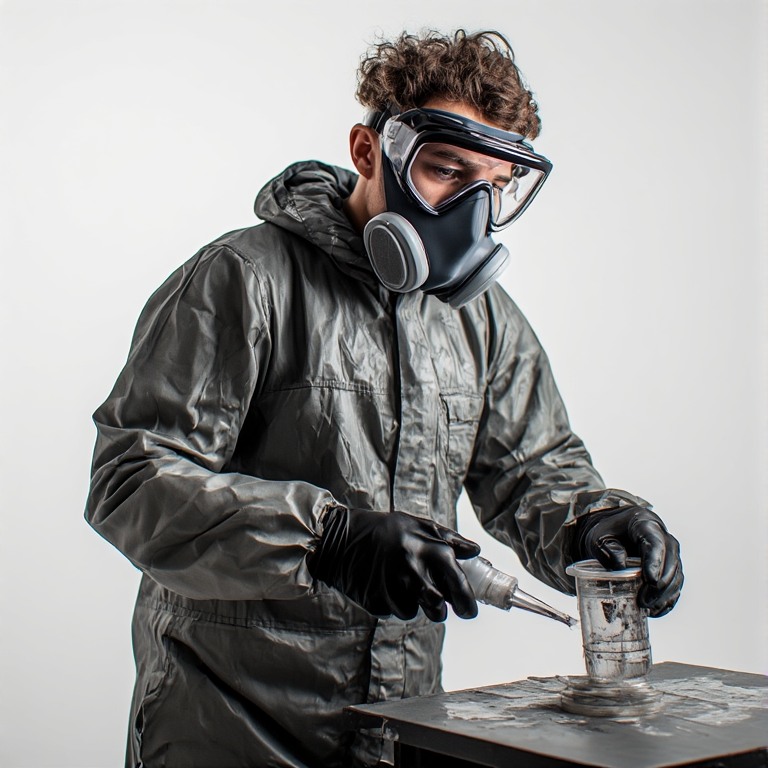
- Strong styrene odor – requires serious ventilation and respirator
- Shrinks significantly (7-8%) – not for precise castings
- Yellows badly in sunlight – never use outdoors without painting
- Poor adhesion to many surfaces (needs mechanical roughening)
When to choose polyester:
✅ Boat repairs, auto body, and fiberglass work – Industry standard for decades.
✅ Large, cheap molds – cheap polyester resin for molds is fine if dimensional accuracy isn’t critical.
✅ Budget prototypes – When you’re going to paint over it anyway.
❌ Avoid polyester when: You need clarity (jewelry, coasters, art), UV stability, or low shrinkage. Never use polyester for a tabletop – it will yellow and crack within months.
Keyword answer: Which resin is strongest? Polyester is the weakest of the four. Epoxy and polyurethane are both stronger.
Deep Dive: Polyurethane Resin – The Detail Specialist
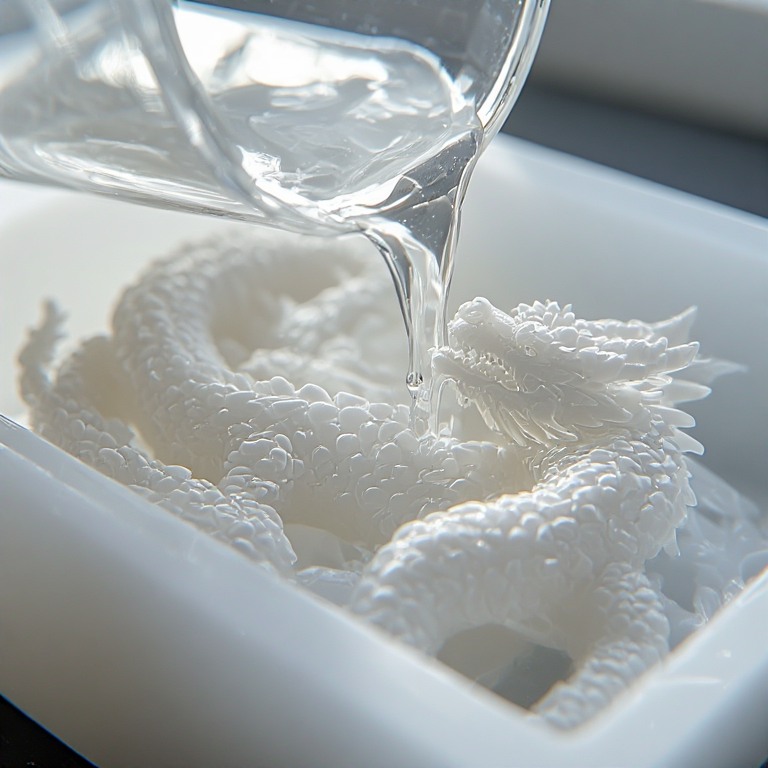
What it is: A two-part resin (often 1:1 ratio) that cures very quickly and with extremely low viscosity.
Strengths:
- Water-thin consistency – captures microscopic detail
- Very low shrinkage (<0.1% for some formulas)
- Excellent heat resistance (200-300°F / 93-149°C)
- No yellowing – great for outdoor use
- Flexible formulations available (shore hardness from A to D)
Weaknesses:
- Moisture-sensitive – humidity above 50% causes bubbling or foaming
- Very short working time (5-15 minutes typical)
- Strong fumes – good ventilation required
- Can be brittle if not formulated correctly
When to choose polyurethane:
✅ Detailed miniature casting, prop making, and figurines – flexible resin for molds (shore A) or rigid detail resin (shore D) both excel.
✅ High-heat applications – resin for high heat resistance means polyurethane. Great for casting near engines or in hot environments.
✅ Outdoor signs and parts – resin that doesn’t yellow is polyurethane’s superpower.
✅ Clear, bubble-free castings – If you have a vacuum chamber or pressure pot, polyurethane gives unmatched clarity.
❌ Avoid polyurethane when: You work in a humid garage or basement, need long working time (over 20 minutes), or want to cast directly over damp materials (like fresh wood).
Important: Polyurethane reacts violently with moisture. Even the humidity in your breath can cause surface bubbles. Use in a dry environment (below 50% humidity) and store bottles tightly sealed.
Deep Dive: UV Resin – The Quick-Cure Champion
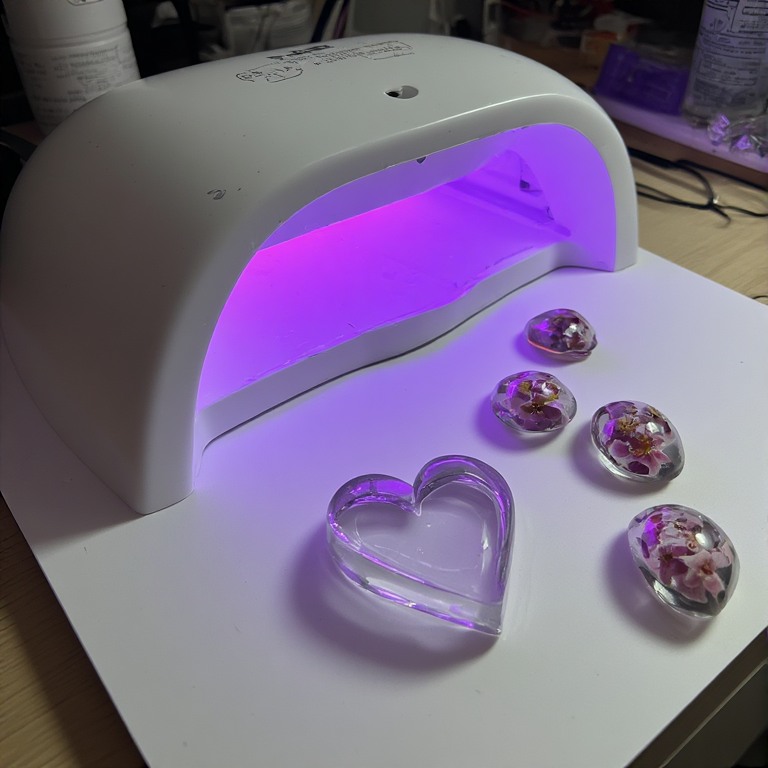
What it is: A one-part resin that cures only when exposed to ultraviolet light (typically 365-405nm wavelength). It remains liquid indefinitely until UV hits it.
Strengths:
- Extremely fast cure – 2 to 15 minutes under a UV lamp
- No mixing – use straight from the bottle
- Very low odor – can be used at a desk
- Crystal clear and non-yellowing over time
- Excellent for thin layers, coatings, and doming
Weaknesses:
- Limited to thin layers – maximum 1/4 inch (6mm) per cure; thicker layers won’t cure fully
- Requires a UV lamp (or strong sunlight) – an added expense
- Can be tacky on the surface if not fully cured (wipe with alcohol)
- Lower strength and heat resistance – not for structural or high-wear items
- More expensive per ounce than epoxy (but you use small amounts)
When to choose UV resin:
✅ Jewelry making (pendants, earrings, rings) – Fast cure means you can finish a piece in 15 minutes instead of 24 hours.
✅ Doming over stickers, photos, or cabochons – Creates a perfect glass-like dome without bubbles.
✅ Quick repairs – Fix a broken resin piece or fill a small void instantly.
✅ Small castings (under 1/4 inch thick) – Keychains, charms, buttons, miniature figures.
✅ Beginners who want instant results – No mixing, no waiting, no bubbles if you use a toothpick to pop them.
❌ Avoid UV resin when: You need to cast thick objects (over 1/4 inch), need high heat resistance (hot coffee mug will soften it), or want a large surface area (expensive and impractical).
Pro tip: Always use a 365-405nm UV lamp (nail lamp works great). Sunlight works but takes longer and can cure unevenly. Wear UV-blocking safety glasses – the light is bright and can strain eyes.
Project-Specific Recommendations (The Decision Guide)
For Tabletops & Countertops
- Best choice: Epoxy
- Why: Self-leveling, durable, deep gloss, scratch-resistant
- Avoid: Polyester (yellows), polyurethane (too fast), UV resin (too expensive and thin)
- Keywords: epoxy vs polyester resin for table top, epoxy or polyurethane for bar top, food safe resin for countertops
For Jewelry & Small Castings
- Best choice: UV resin for quick, thin pieces; Epoxy for thicker or deeper molds
- Why: UV resin cures in minutes – perfect for small batches. Epoxy handles deeper bezels.
- Avoid: Polyester (yellows and smells)
- Keyword: best resin for casting jewelry
For Mold Making & Detailed Casting
- Best choice: Polyurethane (rigid or flexible)
- Why: Low viscosity captures every fingerprint. UV resin can’t do thick or complex shapes easily.
- Alternative for thin details: UV resin in open-backed molds (e.g., shallow charms)
- Keyword: flexible resin for molds
For Deep Pours (over 1 inch / 2.5 cm)
- Best choice: Deep-pour epoxy
- Why: Generates less heat during cure. UV resin is impossible for deep pours.
- Avoid: Polyester (high shrinkage), polyurethane (can foam)
- Keyword: resin for deep pour projects
For Outdoor / UV Exposure
- Best choice: Polyurethane (UV-stable formulas) or UV resin (non-yellowing)
- Second choice: Epoxy with a UV-blocking topcoat
- Avoid: Polyester (yellows in weeks)
- Keyword: resin that doesn’t yellow
For Budget / Large Volume
- Best choice: Polyester resin
- Why: Lowest cost per gallon. Just know it will shrink and yellow.
- Avoid: Using expensive UV resin for a large mold (you’d need a massive UV lamp)
- Keyword: cheap polyester resin for molds
For Quick Projects & Repairs (Under 15 Minutes)
- Best choice: UV resin
- Why: No mixing, no 24-hour wait. Cure under a lamp.
- Examples: Fix a chipped resin coaster, dome a photo charm, fill a small hole.
- Avoid: Epoxy or polyurethane (too slow for instant gratification)
Frequently Asked Questions
Which resin is strongest?
Polyurethane generally has the highest tensile strength. Epoxy has better impact resistance and adhesion. Polyester is the weakest. UV resin is not for structural use.
Can I use polyester resin on a tabletop?
No. It will yellow, shrink, and crack. It also doesn’t self-level. Use epoxy for tabletops.
Is epoxy food safe after curing?
Only specific epoxies labeled FDA-compliant (usually for countertops). Standard epoxy, polyester, polyurethane, and UV resin are not food safe. Always check the technical data sheet.
What resin do professionals use for casting?
- For fine art jewelry: Epoxy or UV resin (thin layers)
- For high-detail prop and model casting: Polyurethane
- For large, cheap molds: Polyester
- For quick-turnaround small items: UV resin
Epoxy vs polyurethane for bar top – which lasts longer?
Epoxy is more scratch- and impact-resistant. Polyurethane handles hot mugs better (up to 300°F vs epoxy’s ~150°F). Choose based on whether you place hot pans or mugs directly on the surface.
Can I mix different types of resin?
Never. Epoxy, polyester, polyurethane, and UV resin do not bond to each other properly. They have different chemistries. Choose one and stick with it.
Does UV resin need a special lamp?
Yes – a 365-405nm UV lamp (nail curing lamps work well). Sunlight also works but is slower and less consistent. Avoid cheap 395nm-only lamps that may not cure fully.
Is UV resin safe?
Generally yes, but wear gloves (some people develop allergies over time) and use UV-blocking glasses to protect your eyes from the lamp.
Quick Pick Guide
| If you want… | Choose this resin |
|---|---|
| A glossy, self-leveling tabletop | Epoxy |
| Cheap fill for a large, painted mold | Polyester |
| A heat-resistant, detailed casting | Polyurethane |
| A flexible, rubber-like part | Flexible polyurethane |
| A crystal-clear coating over photos | Epoxy |
| An outdoor sign that won’t yellow | Polyurethane or UV resin (small) |
| A quick pendant, keychain, or domed sticker | UV Resin |
| A beginner’s first coaster set | Epoxy (low odor, forgiving) |
| A repair that needs curing in 5 minutes | UV Resin (thin layer repair) |