Common Resin Problems and How to Fix Them (Stickiness, Bubbles, Soft Spots, Cracks & Fissures)
You’ve just unmolded your resin project after a long 24-hour cure. Instead of a glossy, glass-like finish, you find a tacky surface, tiny bubbles trapped inside, soft squishy spots, or worse – hairline cracks and deep fissures.
Don’t throw it away. Most resin problems are fixable.
In this resin troubleshooting guide, we’ll walk you through the four most common resin problems – stickiness, bubbles, soft spots, and cracks – and show you exactly how to fix resin at home, step by step.
Why Is My Resin Sticky? Common Causes and Fixes
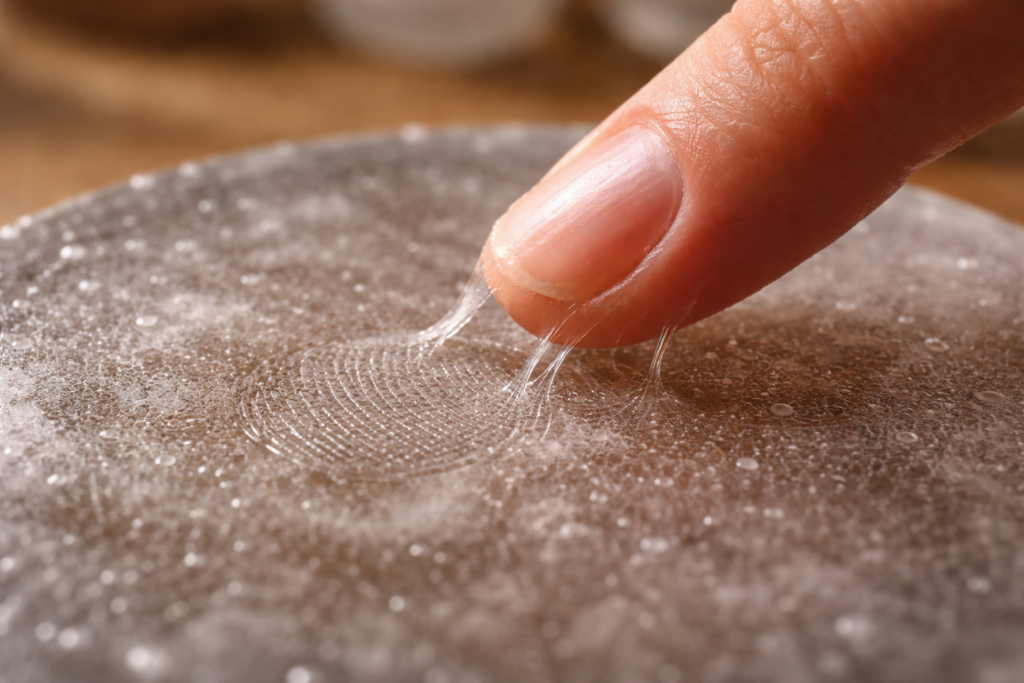
“Resin still sticky after curing” is one of the most searched resin problems. Stickiness usually means the resin hasn’t fully hardened. Here’s why.
Cause #1: Incorrect Mixing Ratio
Most epoxy resins require a specific 1:1 or 2:1 ratio (resin to hardener) by volume or weight. Using too much resin leaves the surface tacky; too much hardener makes it soft and oily.
Fix: Always read the manufacturer’s instructions. Use separate graduated cups for each part. If measuring by weight, use a digital scale.
[ Digital Scale for Resin (Precise to 0.1g)]
Cause #2: Inadequate Mixing
You need to mix resin and hardener thoroughly – typically for 3–5 minutes. Scrape the sides and bottom of your cup constantly. If you see “strings” or swirls, keep mixing.
Fix: Stir slowly to avoid bubbles, but be methodical. After mixing, pour the mixture into a second clean cup and mix again. This ensures no unmixed resin hides at the bottom.
Cause #3: Low Temperature or High Humidity
Resin cures best at 70–80°F (21–27°C). Cold resin stays sticky for days. Humidity above 60% can cause a cloudy, tacky film.
Fix: Warm your resin bottles in a water bath (not boiling) before mixing. Move your project to a warmer room or use a seedling heat mat.
How to Fix Sticky Resin: Step-by-Step
- Assess the stickiness. If it’s only slightly tacky (like tape), gentle heat can help. If it’s liquid or gooey, proceed to step 2.
- Apply heat. Use a heat gun on low setting 6–8 inches away. Move constantly. This can finish the cure if the ratio was close.
- Sand and recoat. If still sticky after heating, sand the surface with 120-grit sandpaper, wipe clean with isopropyl alcohol, and pour a thin fresh layer of properly mixed resin.
- Severe case: If the resin is runny, scrape it off as much as possible, clean with alcohol, and start over.
Pro tip: Sticky resin that has cured for more than 48 hours is unlikely to harden on its own. Always recoat.
How to Prevent and Remove Bubbles in Resin
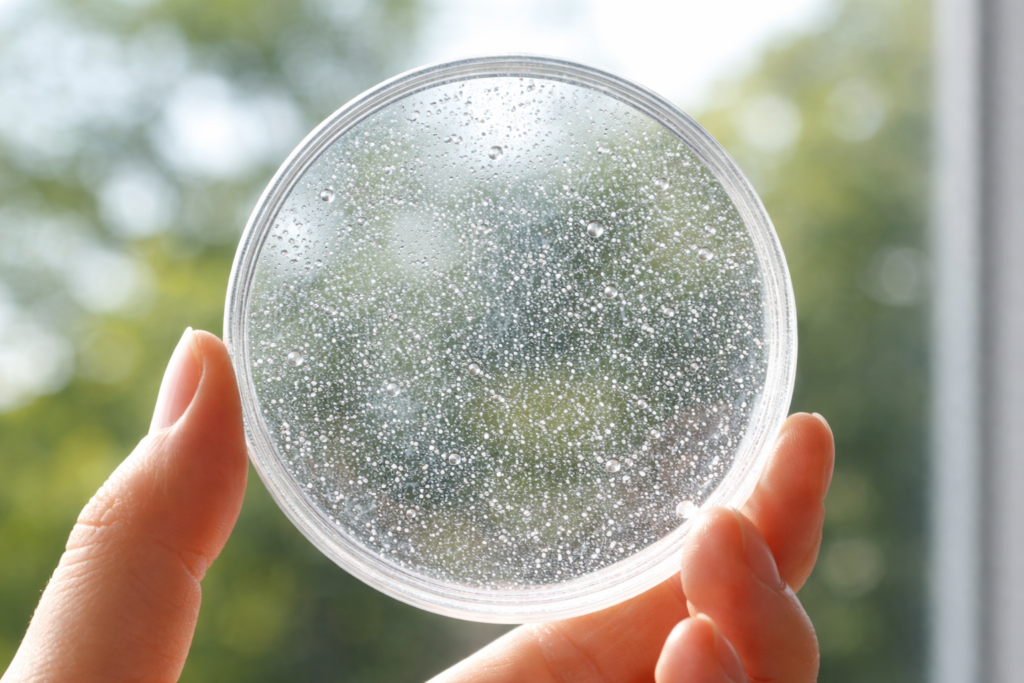
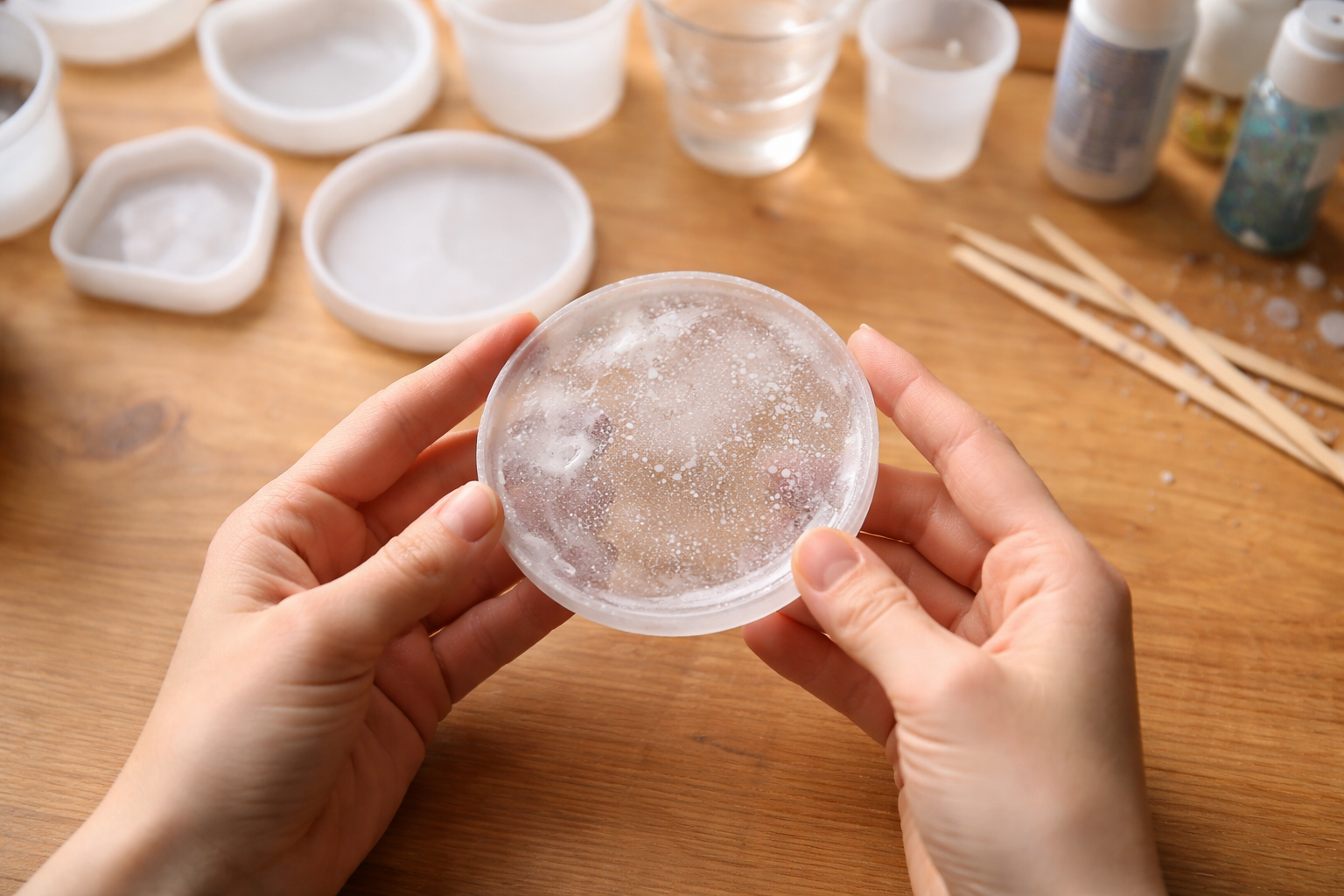
“Why are there bubbles in my resin?” Bubbles are the second biggest frustration for crafters. The good news – you can remove most of them.
Why Do Bubbles Form?
- Mixing too vigorously – whipping air into the resin.
- Pouring too quickly – trapping air from the bottom of the mold.
- Porous substrates – wood, dried flowers, or fabric releasing air.
- Cold resin – thicker resin holds bubbles longer.
How to Get Bubbles Out of Resin (Before It Hardens)
| Method | Best For | How-To |
|---|---|---|
| Heat Gun | Most projects | Hold 2–3 inches above surface, wave constantly. Bubbles pop within seconds. |
| Torch | Large, flat surfaces (tabletops) | Pass flame quickly – don’t burn the mold. |
| Vacuum Chamber | Professional deep pours | Removes bubbles before pouring. Expensive but flawless. |
| Toothpick/Pin | Individual stubborn bubbles | Gently poke and pop. |
[Butane Torch for Resin Bubble Removal]
Important: Don’t overheat. If resin smokes or wrinkles, you’ve applied too much heat.
How to Fix Bubbles After Resin Has Cured
If bubbles are already hard inside your piece:
- Sand the surface with 220-grit, then 400-grit, then 800-grit wet sandpaper.
- Clean thoroughly with alcohol.
- Pour a thin “flood coat” of fresh resin over the top. The new resin fills the micro-scratches and any remaining bubble dimples.
- Polish with a resin-specific polish for a glass finish.
[Resin Polishing Kit (Pads & Compound)]
What Causes Soft Spots in Resin and How to Fix Them
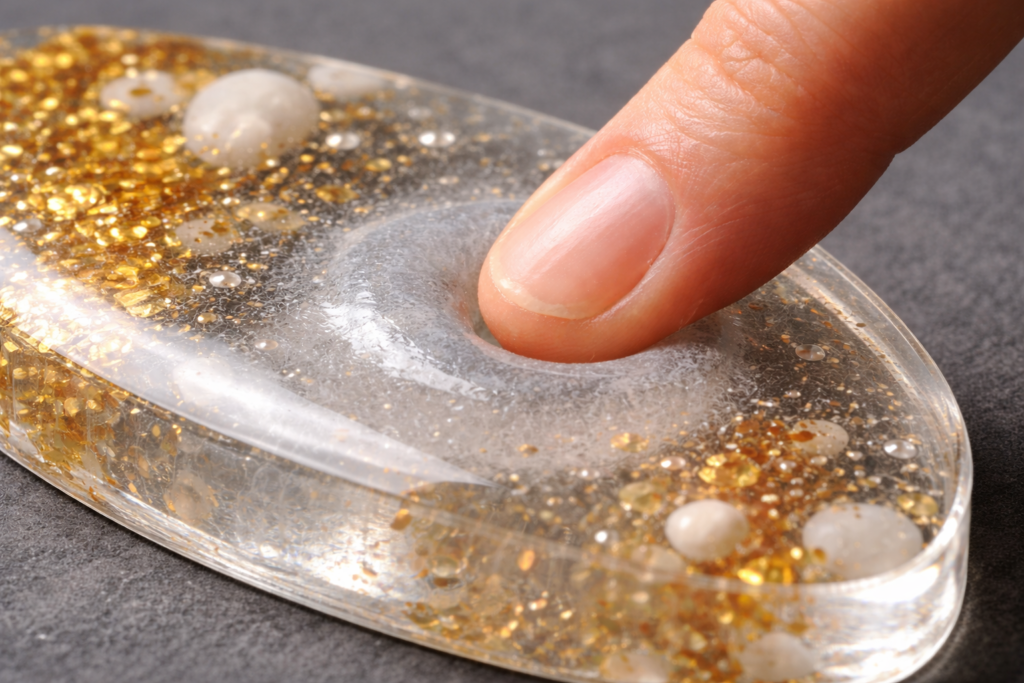
A soft spot feels like a gummy bear – it gives way under pressure, while the rest of the piece is hard. This is different from overall stickiness.
What Causes Soft Spots?
- Under-mixing – one small pocket of unmixed hardener.
- Incorrect ratio – but only in one area (rare).
- Pouring too thick – deep pour resins are formulated for depth; standard coating resins over ½ inch can develop soft cores.
How to Fix Resin Soft Spots
- Excavate the soft area. Use a Dremel, carving tool, or sharp knife to remove all soft resin. Dig until you hit firm resin.
- Clean the cavity. Wipe with isopropyl alcohol and let dry.
- Mix a fresh batch of resin – be extra careful with ratios and mixing time.
- Fill the hole. Overfill slightly to account for shrinkage.
- Let cure fully (24–48 hours), then sand flush.
If the whole piece is soft: Your ratio was off everywhere. Scrap it and restart.
How to Fix Cracks and Fissures in Resin
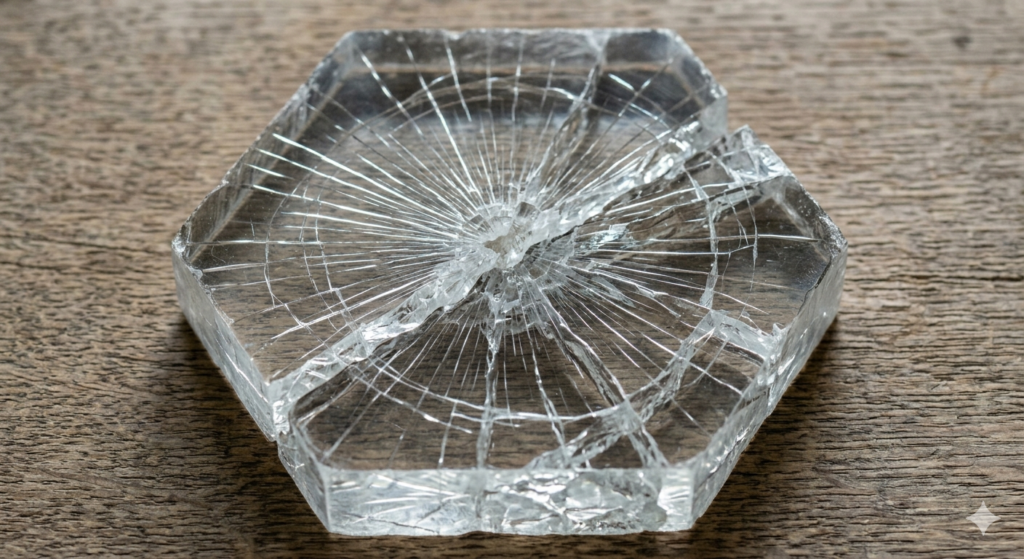
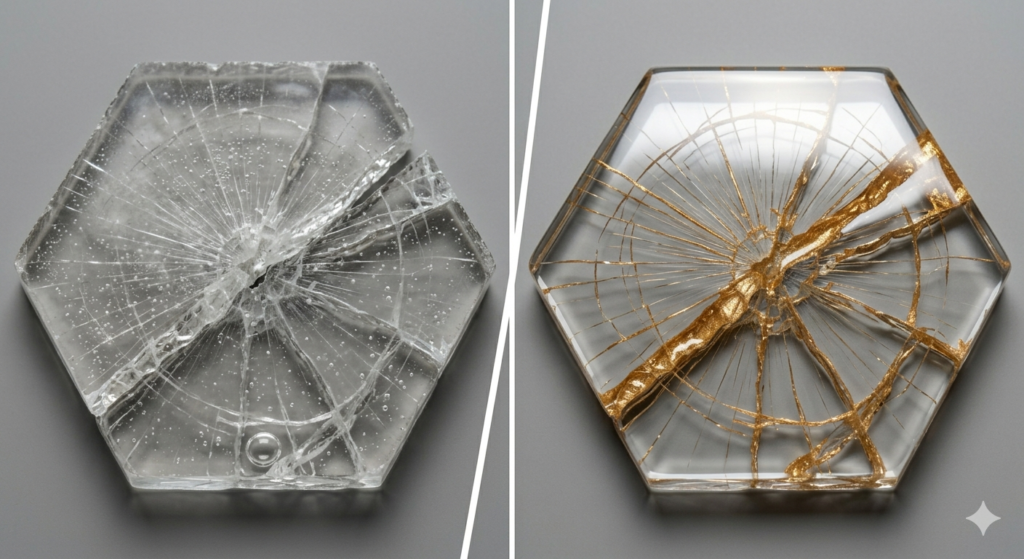
Cracks and fissures are heartbreaking, especially after a long cure. They usually appear during curing, not after.
Why Do Cracks and Fissures Form?
| Cause | Explanation |
|---|---|
| Exothermic overheating | Resin gets too hot (especially deep pours over 1–2 inches). The center expands, cracking the surface. |
| Shrinkage stress | All resin shrinks slightly. If it cures too fast or unevenly, internal stress causes cracks. |
| Temperature fluctuations | A draft or sudden cold snap while curing makes resin contract unevenly. |
| Pouring outside the recoat window | First layer fully cured (glass hard) – second layer can’t bond, leading to “cold cracks” along the seam. |
| Too much heat from a torch | Thermal shock cracks the surface instantly. |
How to Prevent Cracks and Fissures
- Follow the manufacturer’s maximum pour depth (usually ⅛ to ½ inch for coating resins; 1–2 inches for deep pour).
- Pour in thin layers (each layer tacky, not hard, before adding the next).
- Keep curing temperature stable – no fans, open windows, or AC vents.
- Use a deep pour resin for projects over ½ inch.
[Deep Pour Epoxy Resin (1.5 Gallon Kit)]
How to Fix Resin Cracks and Fissures
For hairline cracks (thin, superficial):
- Clean the crack with compressed air and isopropyl alcohol.
- Use a fine-tipped tool (toothpick, syringe, or pipette) to flow thin resin or UV resin into the crack.
- Cure – UV resin under a UV lamp (2–3 minutes) or epoxy resin overnight.
- Sand smooth starting at 220-grit up to 1000-grit, then polish.
For deep fissures (wide or structural):
- Widen the crack slightly with a Dremel or fine saw – this helps the new resin bond.
- Clean thoroughly – any dust or oil will prevent adhesion.
- Mix a small batch of resin (use the same brand if possible).
- Fill the crack, overfilling slightly.
- Let cure fully, then sand flush.
For a decorative repair (kintsugi style):
Mix your resin with gold mica powder or glow pigment before filling. The crack becomes a beautiful gold vein.
[Mica Powder Set for Resin (36 Colors)]
When to Scrap and Start Over
- Cracks run all the way through the piece (structural failure).
- The resin is crumbly or powdery – this means no cure happened.
- Your repair attempt failed twice. Sometimes it’s cheaper and faster to repour.
Resin Troubleshooting FAQs
Why is my resin still sticky after 24 hours?
Low temperature, incorrect ratio, or not mixing enough. Warm it with a heat gun; if still sticky, sand and recoat.
Can I put another layer of resin over sticky resin?
No – the new layer won’t bond properly. Sand the stickiness off first, clean with alcohol, then pour fresh resin.
How do you fix resin that didn’t cure?
Scrape off any uncured liquid. Sand the partially cured surface. Pour a new, correctly measured layer.
Why does resin crack while curing?
Usually from overheating (pour too deep) or temperature swings. Prevent by pouring thin layers and keeping a stable room temperature.
Can you fix fissures in epoxy without starting over?
Yes – clean, fill with thin resin or UV resin, sand, and polish. For deep cracks, use a Dremel to widen and then fill.
Why is my resin bendy after curing?
Bendy resin means it’s under-cured. Either the ratio was off, the temperature was too low, or you didn’t wait long enough (some resins take 72 hours to fully harden).
How long should resin cure before demolding?
Minimum 12–24 hours for most epoxies. Check the manufacturer’s instructions. Demolding too early can cause soft spots or warping.
Will sanding remove hairline cracks?
No – sanding only smooths the surface. Cracks go below the surface. You must fill them first, then sand.
Conclusion
Common resin problems like stickiness, bubbles, soft spots, and cracks can ruin your day – but almost all of them have a fix.
- Sticky resin → check your ratio, mix longer, warm your workspace. Then sand and recoat.
- Bubbles → pop with heat before curing, or sand and flood coat after.
- Soft spots → excavate and refill with fresh resin.
- Cracks & fissures → control pour depth and temperature, then fill with thin resin.
Don’t be afraid to make mistakes. Every resin artist has a drawer of failed experiments. The more you troubleshoot, the better you’ll get at preventing problems in the first place.
Have a resin problem we didn’t cover? Drop a comment below – we answer every question.