
Can I Use a Hair Dryer for Resin Instead of a Heat Gun? (The Honest Truth)
Introduction
You’ve just poured your first batch of resin. The color is perfect, the mold is set up beautifully — and then you see them. Bubbles. Dozens of tiny, maddening bubbles floating just below the surface, threatening to ruin hours of prep work and a not-so-cheap batch of epoxy.
Your heat gun is nowhere to be found, but your hair dryer is sitting right there on the bathroom counter. I can use a hair dryer for resin? Close enough, right?
Here’s the thing: most guides will give you a flat “no” or a breezy “sure, go for it!” — and both answers are doing you a disservice. The real answer is: it depends entirely on how you use it. A hair dryer used correctly can save your pour. A hair dryer used wrong will blow lint into your sticky surface, push liquid resin over the edges of your mold, or worse, circulate resin fumes around the room without actually fixing a single bubble.
This guide is going to give you what those other articles skip — the actual science behind why these two tools behave so differently, and the step-by-step method that makes a hair dryer work for you instead of against you.
Safety note before we begin: Whether you’re using a heat gun or a hair dryer, always work in a well-ventilated space. Heated resin releases VOCs (volatile organic compounds — essentially chemical fumes). Open a window, run a fan away from your work, and if you’re working indoors regularly, consider a respirator rated for organic vapors.
What You’ll Need
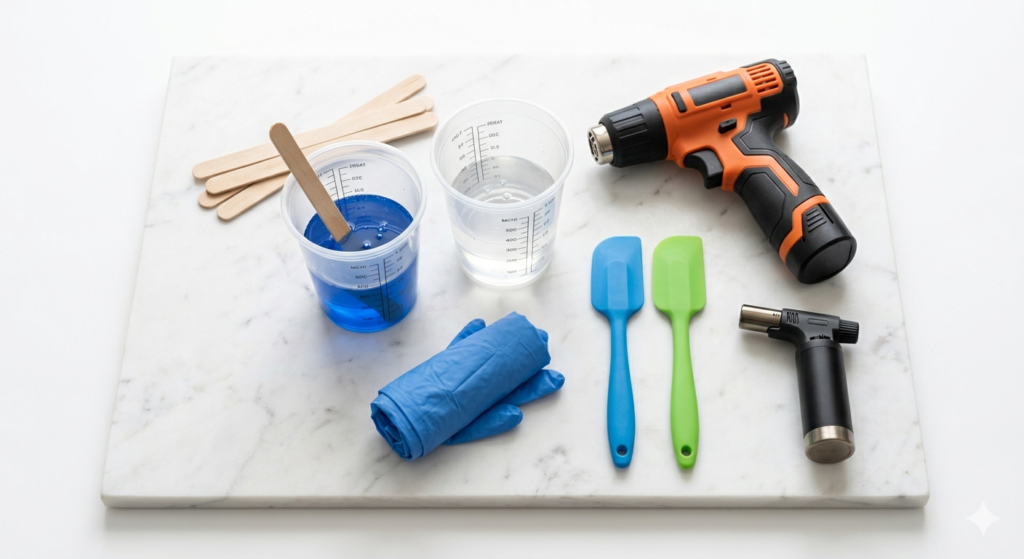
Getting set up with the right materials before you pour makes everything easier — including bubble removal. Here’s what this guide references throughout.
Let’s Resin (Starter Kit) — A great pick for beginners because it’s specifically formulated to be low-odor and self-degassing, meaning it releases bubbles more willingly than cheaper alternatives. Less fighting bubbles from the start means less work later.
Alternatively, ArtResin Epoxy Resin is a strong budget-friendly option with excellent bubble-release properties right out of the bottle.
The Heat Source (Pick Your Level)
Wagner Spraytech Heat Gun — This is the tool most resin artists graduate to, and for good reason. It runs hotter than a hair dryer but produces far less airflow, which is exactly what you want over liquid resin. Think of it as the surgical option.
Your Household Hair Dryer — Yes, it’s on the list. It can work, but only if it has a concentrator nozzle attachment (the narrow one you probably never use). This gives you more focused, manageable airflow. A wide-open dryer is too aggressive for most resin work.
The Secret Weapon
99.9% Isopropyl Alcohol in a fine-mist spray bottle — This is the bubble-fighting trick that experienced resin artists quietly rely on. A light mist over the surface breaks surface tension and pops micro-bubbles on contact, no heat required. Note: Use 91% or higher. Lower concentrations have too much water content and can cloud your resin.
The Supporting Cast
- Silicone stir stick or wooden craft sticks — For mixing and for fishing out any stray dust or debris before it cures in.
- Silicone mat — A lifesaver for your work surface. Cured resin peels cleanly off silicone, saving your table from a permanent epoxy memorial.
- Nitrile gloves — Resin is a skin sensitizer. Prolonged skin contact can cause an allergic reaction that gets worse with each exposure.
The Core Problem: CFM vs. BTU (This Is Why Your Hair Dryer Often Fails)
Before we get to the step-by-step, understanding this one distinction will make everything else click — and it’ll save you from making the most common mistake resin beginners make.
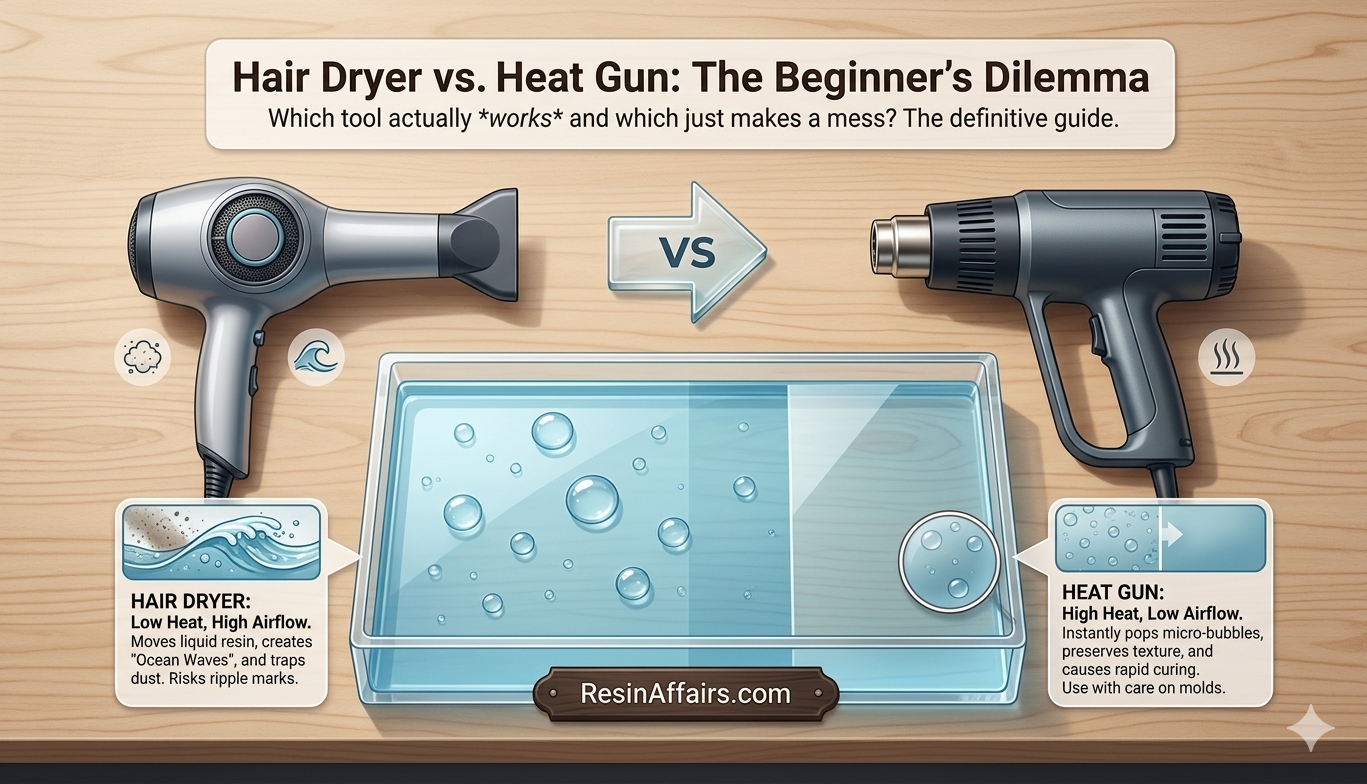
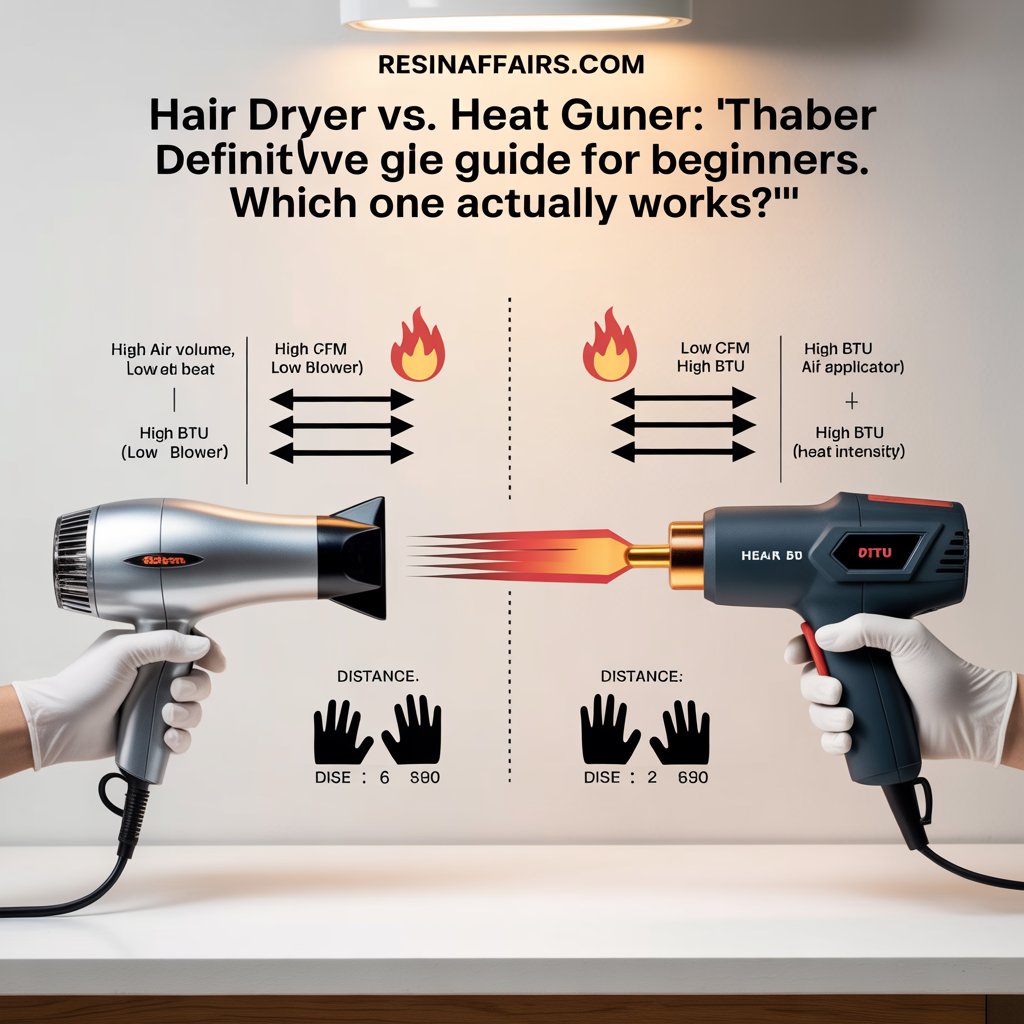
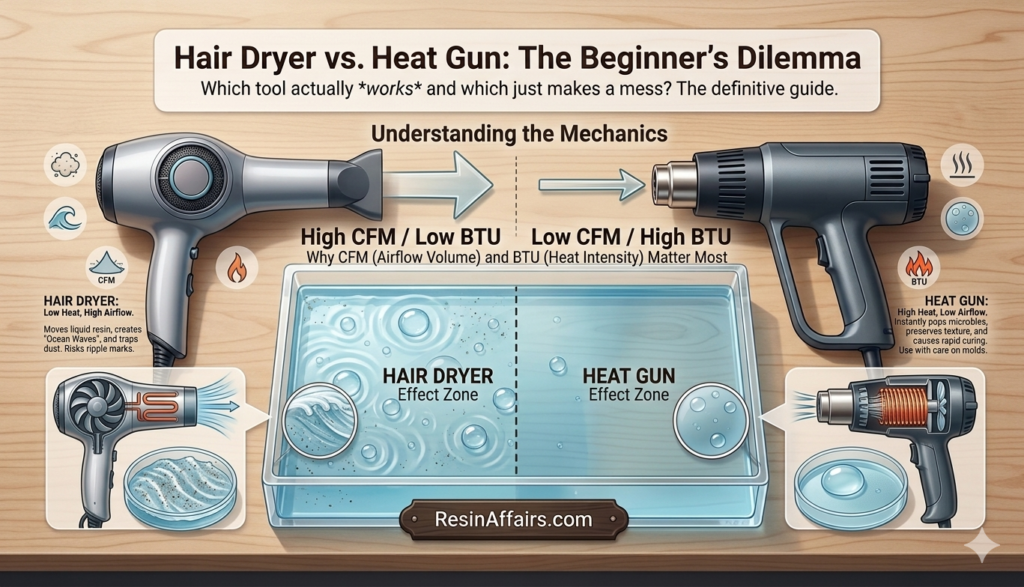
Hair dryers are engineered for airflow. Heat guns are engineered for heat.
In technical terms: hair dryers produce high CFM (cubic feet per minute — the volume of air being pushed out). Heat guns produce high BTU (British Thermal Units — the measurement of actual heat energy).
Think of it this way. A hair dryer is essentially a small leaf blower with a heating element added as an afterthought. Its primary job is to move air across wet hair quickly. The heat is secondary.
A heat gun is the opposite. Its primary job is to deliver concentrated heat to a small area. The airflow is just the delivery mechanism — kept deliberately low so the heat can do its work without physically disturbing whatever it’s aimed at.
Why does this matter for resin?
Bubbles in resin form during mixing, when air gets trapped in the liquid. To pop them, you need to briefly thin the surface tension of the resin so those air pockets can escape. Heat does this beautifully. Even a quick pass of warmth causes the resin to become slightly less viscous (thinner and more fluid, like warming up honey) and the bubbles rise and pop naturally.
High airflow, on the other hand, doesn’t thin the resin — it just pushes it around. Aim a hair dryer too close or too directly and you’ll see the resin ripple and shift like water in a shallow dish. Over a mold, that means resin sloshing toward the edges. Over jewelry pieces, that means your carefully placed inclusions — flowers, glitter, photos — sliding out of position.
So when does a hair dryer actually work?
There are two scenarios where a hair dryer is genuinely useful in resin work:
1. Large, flat, open pours — Like a resin painting or an open-top tray where there are no mold edges to overflow. The airflow has somewhere to go.
2. Ocean wave and texture art — This is where the hair dryer shines. Resin artists deliberately use the high airflow to push pigmented resin into wave-like patterns and cells. The movement IS the technique. If you’ve ever seen those stunning blue-and-white resin ocean pieces, a hair dryer was probably involved.
Where it struggles:
- Deep molds (like river tables or thick jewelry molds)
- Projects with embedded objects that can shift
- Any situation where precision matters over aesthetics
Knowing which category your project falls into is half the battle. A shallow resin tray? Your hair dryer might do just fine. A silicone mold with a carefully placed dried flower at the center? Put the dryer down and reach for the isopropyl alcohol instead.
The Step-by-Step Method: Using a Hair Dryer on Resin (Without Ruining Your Pour)
Work through these steps in order. Each one builds on the last, and skipping ahead is how projects go wrong.
Step 1: The Pre-Heat Trick (Do This Before You Even Mix)
This is the step most beginners skip — and it’s the one that does the most work.
Before you open your resin bottles, place them in a bowl of warm (not hot) water for 5–10 minutes. Think bath-water temperature, around 70–100°F. This gently warms the resin, making it thinner and more fluid before it ever hits your mold.
Thinner resin = air bubbles escape more easily during mixing = fewer bubbles to fight later.
Why this matters: Cold resin is sluggish and thick. Air that gets trapped during stirring has a much harder time rising to the surface on its own. Warming your bottles first is essentially giving those bubbles a head start.
Quick tip: Dry the bottles completely before opening them. Water droplets inside your resin mix will cause permanent cloudiness — a mistake you won’t be able to fix once it cures.
Step 2: Mix Slowly and Deliberately
Pour and mix your resin according to the manufacturer’s ratio — most beginner resins are 1:1 by volume (equal parts resin and hardener). Let’s Resin, for example, is a straightforward 1:1 mix.
Stir slowly along the bottom and sides of the container, not in fast circles. Fast, whipping motions fold air into the mixture, which is the opposite of what you want. Aim for 3–4 minutes of steady, calm stirring.
Think of it like folding egg whites into a batter — patience here saves you effort later.
Step 3: Pour, Then Wait 5 Minutes
Once your resin is in the mold, resist the urge to immediately grab your hair dryer. Let the resin settle for about 5 minutes first.
During this window, a lot of bubbles will rise and pop entirely on their own. You’ll visibly see the surface calming down. Only go in with heat or air after this initial self-leveling period.
Jumping in too early with the dryer agitates resin that’s still finding its level — you’ll create more chaos than you started with.
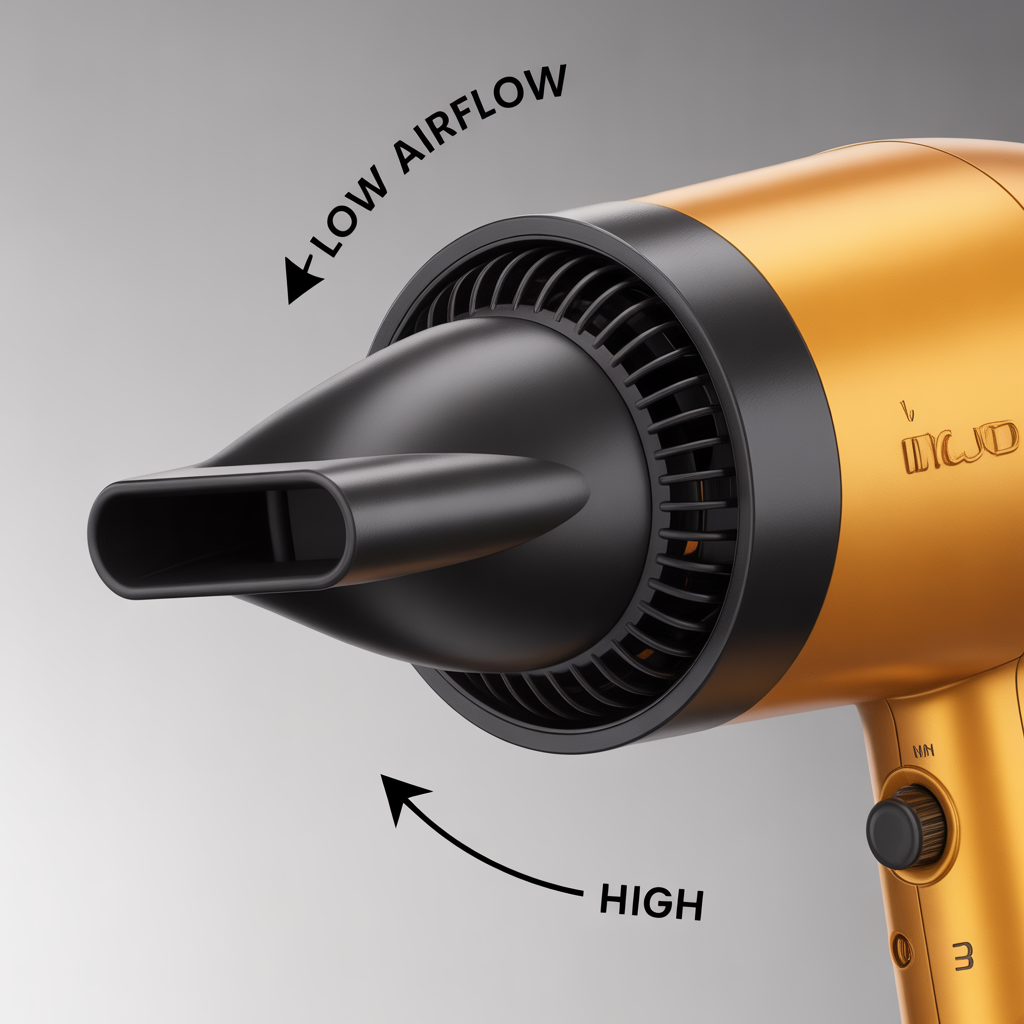
Step 4: Set Your Hair Dryer Correctly
This is where most people go wrong.
Set your dryer to the lowest airflow setting and the highest heat setting available. You are trying to mimic a heat gun as closely as possible — maximizing BTU, minimizing CFM.
- Attach the concentrator nozzle if you have one. This narrows the airflow into a more focused stream and gives you better control.
- If your dryer only has one heat setting, work from a greater distance to reduce the force of the air hitting the surface.
Step 5: The Distance Rule — Stay 6 to 10 Inches Back
Hold the dryer at least 6 inches from the resin surface — 10 inches is safer for beginners.
At this distance, the heat reaches the surface but the air pressure is diffused enough that it won’t create ripples or waves. The closer you get, the more the airflow dominates over the heat.
A simple way to gauge it: hold your free hand flat at the resin surface level. If you can feel strong wind on your hand from the dryer, you’re too close.
Step 6: The Sweep Motion — Never Stay Still
Move the dryer in a slow, constant sweeping motion — side to side, like you’re spray painting a fence. Never hover in one spot.
Staying in one place does two things you don’t want: it overheats a concentrated area (which can cause yellowing or surface wrinkling in some resins) and it allows airflow to build up and push the resin rather than warm it.
One to two slow passes over the surface is usually enough. If bubbles are still appearing, give the resin 60 seconds to settle, then do another pass. Repeated gentle passes beat one aggressive blast every time.
Step 7: The Final Mist
After your heat passes, fill a small spray bottle with 99.9% isopropyl alcohol and hold it about 8–10 inches above the surface.
Give it one or two light pumps — you want a fine mist, not a spray. The alcohol droplets land on the surface, break the remaining surface tension, and pop any micro-bubbles the heat didn’t reach.
This step is particularly effective for the tiny, stubborn pin-sized bubbles that heat alone struggles with.
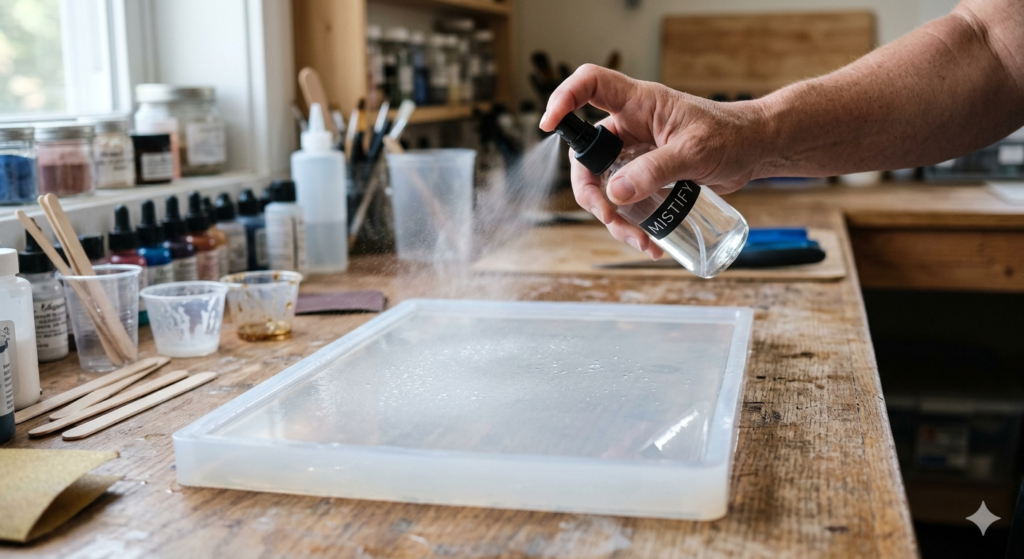
Important: Use isopropyl alcohol sparingly. Too much can slightly cloud the surface of certain resin formulas. One or two pumps is all you need.
Step 8: Cover and Leave It Alone
Once you’re satisfied with the surface, cover your pour with a dust cover — a cardboard box, a plastic storage bin turned upside down, anything that keeps airborne dust and pet hair off the sticky surface.
Set a timer for the resin’s pot life (the window during which it stays workable — usually 30–45 minutes for most beginner resins). If new bubbles appear within that window, you can do one more gentle pass. After that, walk away and let chemistry do its job.
Troubleshooting: When Things Go Wrong (And How to Fix Them Fast)
Resin is forgiving — but only if you catch problems quickly. Most issues have a fix, but the window is your pot life, so read this section before you pour, not after something goes sideways.
Problem 1: Sticky or Tacky Surface After Curing
What it looks like: Your resin has hardened but the surface feels soft, almost like tape. It doesn’t fully firm up even after 24–48 hours.
What caused it: The most likely culprit is cold air from the hair dryer slowing down the curing chemical reaction. Epoxy cures through an exothermic reaction — meaning it generates its own heat to harden. Blasting cold air (or even warm air on the lowest heat setting) can disrupt this process, especially near the surface.
A second cause is off-ratio mixing — if your hardener-to-resin ratio was even slightly off, a tacky surface is the result.
The fix:
- If it’s within the first few hours, try moving your piece to a warmer room (75–80°F is ideal for curing). Gentle ambient warmth can sometimes rescue an under-cured surface.
- If it’s fully cured and still tacky, lightly sand the surface with 220-grit sandpaper and pour a fresh, thin flood coat of properly mixed resin over the top.
Prevention: Always use the high heat setting on your dryer, never cold air. And measure your resin ratio carefully — eyeballing it is the most common beginner mistake.
Problem 2: Dust, Lint, or Hair Embedded in the Surface
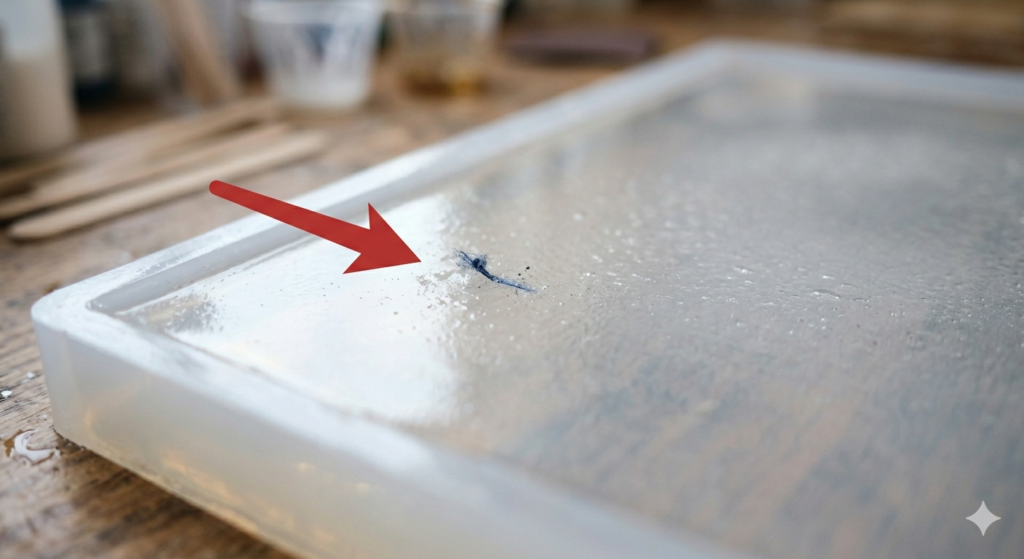
What it looks like: You can see tiny specks, fibers, or a single mortifying pet hair suspended just below the surface of your otherwise perfect pour.
What caused it: This is the hair dryer’s most notorious flaw in resin work. The intake vents on the back of a hair dryer act like a small vacuum, pulling in whatever is floating in the surrounding air — lint, dust, your own hair — and then blasting it straight onto your sticky resin surface.
The fix (while still wet):
- Act immediately. Use a wooden toothpick or the tip of a silicone stir stick to gently lift the debris from the surface. Work slowly — dragging it sideways will smear a trail.
- If the particle is deep, it may be easier to leave it until the resin is in a gel stage (partially set, firm but not hard) and then lift it cleanly. The gel stage typically hits around 4–6 hours in, depending on your resin brand.
The fix (after curing):
- Sand down to the debris level with wet/dry sandpaper, starting at 400-grit.
- Pour a thin finishing coat over the top to restore the gloss.
Prevention: Before you turn on the dryer, clean your work area. Wipe surfaces down, keep pets out of the room, and if possible, point the intake end of the dryer away from your workspace when you first switch it on to blast out any dust sitting inside the barrel.
Problem 3: Ripples, Waves, or Uneven Surface
What it looks like: The resin surface has visible texture — gentle ripples, raised ridges, or a slightly uneven finish rather than the glass-smooth result you were expecting.
What caused it: The airflow from the dryer was too strong, too close, or held in one spot too long. The liquid resin physically moved before it had time to self-level.
The fix (while still wet):
- Stop using the dryer immediately.
- Give the resin 15–20 minutes of undisturbed time. Epoxy is self-leveling, meaning gravity will pull it back toward a flat surface on its own — but only if you stop agitating it.
- Use a toothpick to very gently coax any resin that has bunched near the mold edges back toward the center.
The fix (after curing):
- Wet sand the surface progressively: start at 400-grit, work up through 800, 1500, then 2000-grit.
- Finish with a resin polishing compound or a fresh flood coat for a glossy result.
Prevention: Remember the distance rule from Step 5 — stay 6 to 10 inches back and keep the dryer moving. Ripples almost always come from hovering too close, too long.
Problem 4: Yellowing or Discoloration Near the Surface
What it looks like: A faint yellow or amber tint appears in areas where you applied heat, while the rest of the pour looks clear.
What caused it: Localized overheating. This is more common with cheaper resin formulas that aren’t UV-stabilized, but it can happen with any resin if you apply too much direct heat in one spot.
The fix: Unfortunately, discoloration that has cured in cannot be reversed. Sand back the affected area and apply a fresh coat. Going forward, switch to a UV-stabilized resin like ArtResin, which is specifically formulated to resist yellowing from both heat and light exposure.
Prevention: Keep the dryer moving. Two slow, sweeping passes are always better than one long, stationary blast.
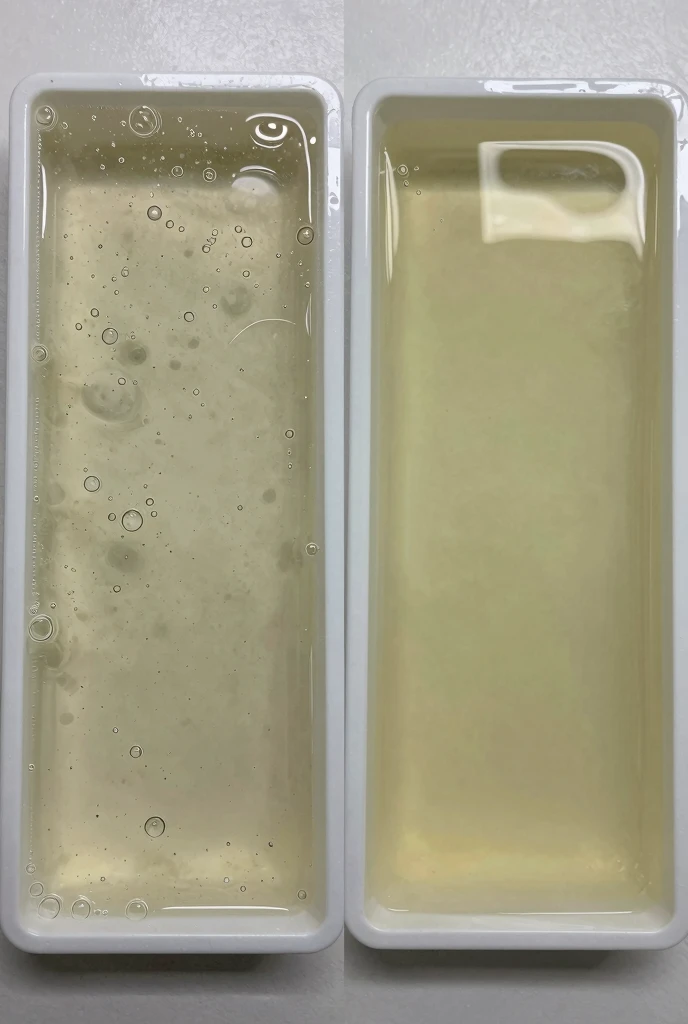
Problem 5: Bubbles Keep Coming Back
What it looks like: You pop a round of bubbles, walk away, come back 20 minutes later and a fresh crop has appeared.
What caused it: This is actually normal behavior and not a sign anything is wrong. As resin cures, it off-gasses — meaning air that was dissolved deeper in the mixture continues to migrate upward toward the surface. This is especially common with thicker pours.
The fix: Simply do another gentle pass with your dryer or a fresh mist of isopropyl alcohol. You can repeat this process as many times as needed within the pot life window. Once the resin reaches the gel stage, new bubbles will stop forming — so this problem has a natural expiry time.
Pro Tips, Alternatives, and When to Skip the Hair Dryer Entirely
You’ve got the core method down. This final section is where we pull everything together — the shortcuts experienced resin artists actually use, the situations where the hair dryer should stay in the bathroom, and a quick-reference guide you can bookmark for your next pour.
The Alternatives: When Heat Isn’t the Answer
Sometimes the smartest move is putting the dryer down entirely. Here are the best non-heat bubble removal methods, ranked by effectiveness.
1. Isopropyl Alcohol Mist (The Everyday Hero)
Already mentioned in Step 7, but worth emphasizing here as a standalone method. For small pours — jewelry, coasters, small trays — a fine mist of 91% isopropyl alcohol is often all you need. No heat, no airflow risk, no dust contamination.
It works by temporarily reducing the surface tension of the resin, allowing bubbles to pop without any physical disturbance to the liquid beneath. For delicate molds with embedded objects, this is almost always the safer first choice.
Best for: Jewelry molds, small coasters, any pour with embedded inclusions.
2. A Toothpick or Skewer (The Surgical Option)
For individual stubborn bubbles — the ones sitting right at the surface that the alcohol mist can’t quite reach — a wooden toothpick is surprisingly effective. Simply touch the tip gently to the center of the bubble. The surface tension breaks and the bubble collapses.
This sounds tediously slow, but for a small jewelry piece with three or four visible bubbles, it’s faster and safer than firing up any heat source.
Best for: Small pieces, precision work, single stubborn bubbles.
3. The Warm Room Method (The Passive Approach)
If you warmed your resin bottles before mixing (Step 1) and your workspace is already at a comfortable temperature, many bubble-prone resins will self-degas with minimal intervention. Simply pouring in a warm room — ideally 75–80°F — and covering the piece reduces bubbles significantly without any tools at all.
This isn’t a complete solution for thick pours, but for thin layers and resin paintings it works better than most beginners expect.
Best for: Thin pours, resin paintings, warm-climate workspaces.
4. The Embossing Heat Gun (The Upgrade Worth Making)
If you find yourself doing resin work more than a few times a month, the Chandler Tool Dual-Temp Embossing Heat Gun is the single best upgrade you can make. It costs roughly the same as a mid-range hair dryer and eliminates almost every problem this guide has covered.
Lower airflow means no ripples, no dust contamination, no resin pushed to the mold edges. Higher focused heat means bubbles pop faster and more completely. It’s not a luxury tool — at this point it’s closer to essential equipment for anyone serious about resin art.
When to Skip the Hair Dryer Entirely
To make this as practical as possible — here’s a straight, honest list of situations where the hair dryer is the wrong tool for the job.
Leave the hair dryer in the bathroom when you’re working with:
- Deep molds over 1 inch thick. The airflow can’t penetrate deep enough to help, and the surface disturbance isn’t worth it.
- Silicone molds with fine detail. The air pressure can push resin into corners unevenly, ruining crisp edges.
- Molds with lightweight embedded objects. Dried flowers, thin paper, small charms — anything that can shift will shift.
- Small jewelry bezels. The pour volume is so small that even gentle airflow can push resin clean over the edge.
- Epoxy with a short pot life (under 20 minutes). You don’t have time for the careful, measured approach this method requires.
The Pro Tips Worth Bookmarking
These are the small habits that separate tidy, consistent results from frustrating pours.
Work in batches of no more than 4 ounces when you’re starting out. Smaller pours are easier to manage, easier to degas, and cheaper to replace if something goes wrong.
Always do a test pour. Before committing your best mold and most expensive pigments, mix a small batch and pour it into a cheap silicone ice cube tray. Watch how it behaves. Every resin brand has its own personality — learning yours on a throwaway pour saves your real projects.
Keep a dedicated resin notebook. Write down your ratio, room temperature, resin brand, and any issues for every pour. After five or six projects, patterns emerge. You’ll know exactly which conditions produce your best work.
Clean your hair dryer intake vents before every resin session. A quick pass with a lint roller or a few seconds with a can of compressed air removes the dust sitting in the barrel before it ends up in your art.
Time your pours for low-traffic moments in your home. Foot traffic stirs up dust. Pets walking nearby do the same. The quieter the room, the cleaner your surface stays during those vulnerable first hours of curing.
The Quick-Reference Cheat Sheet
| Situation | Hair Dryer | Better Option |
|---|---|---|
| Large flat resin painting | ✅ Works well | — |
| Ocean wave / texture art | ✅ Ideal tool | — |
| Small jewelry mold | ⚠️ Use with care | IPA mist or toothpick |
| Deep river table pour | ❌ Skip it | Heat gun |
| Embedded inclusions | ❌ Skip it | IPA mist |
| Quick, precise bubble pop | ❌ Skip it | Toothpick |
One Last Thing
Resin has a learning curve — every experienced artist has a pour they’d rather forget. The goal of this guide isn’t to make the process feel complicated. It’s to hand you the knowledge upfront so your first few projects don’t become your most expensive lessons.
Your hair dryer can be a legitimate resin tool. Used correctly, with the right settings, the right distance, and an understanding of what it can and can’t do — it earns its place on your craft table. And when you’re ready to upgrade, that embossing heat gun will be waiting.
Good luck with your pour.