How to Make an Epoxy Serving Tray: A Beginner-to-Advanced Guide
Introduction
Want to make your own epoxy serving tray at home? You’re in the right place.
An epoxy tray is a handmade tray with a smooth, shiny resin top. You can add colors, swirls, seashells, dried flowers, or even a “river” design. Each tray ends up one-of-a-kind, which is why they look so expensive — and why they make such great gifts.
In this guide, you’ll learn:
- What an epoxy serving tray is and the most popular styles
- The tools and materials you need to get started
- A simple step-by-step tutorial (safe for beginners)
- How to fix common problems like bubbles, soft spots, and cloudy resin
- Creative design ideas like ocean waves, geode, and marble looks
- Pro tips for a glossy, pro-level finish
You don’t need fancy tools or years of experience. If you can measure, stir, and pour, you can make a beautiful tray on your first try.
⚠️ Quick safety note: Epoxy resin needs gloves, eye protection, and good airflow. We’ll cover safety in the next section so you can craft with confidence.
Ready to start? Grab a tray, pick your colors, and let’s make something beautiful.
👉 New to resin? Start with a beginner-friendly kit like this one:
[AFFILIATE LINK — Beginner Epoxy Resin Starter Kit]
What Is an Epoxy Serving Tray? (And Why It Looks So Premium)
An epoxy serving tray is a tray topped with a clear, shiny layer of resin. The resin is a liquid that you mix, pour, and let harden. Once it cures (dries and sets), it turns into a smooth, glass-like surface that’s strong and beautiful.
People love epoxy trays because:
- They look high-end (like something from a boutique shop)
- Every tray is one-of-a-kind
- You can use them to serve drinks, snacks, or decor
- They make amazing handmade gifts
- You can match them to any home style — beachy, modern, boho, rustic, glam
The best part? You don’t need to be an artist. The resin does most of the magic on its own.
Common Epoxy Tray Styles You Can Make
Here are the most popular looks. Pick one that fits your style — or mix a few.
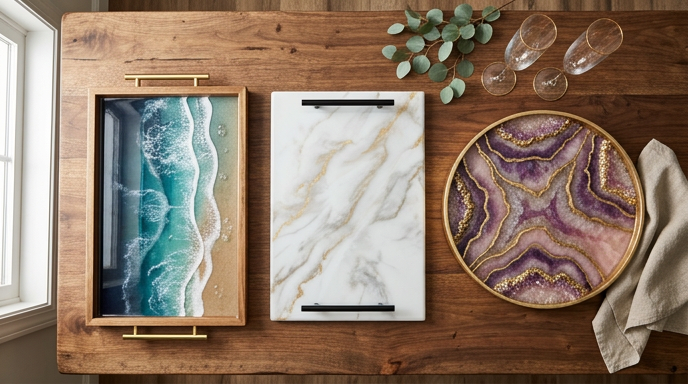
- Clear gloss tray – Shows off the wood grain underneath. Clean and simple.
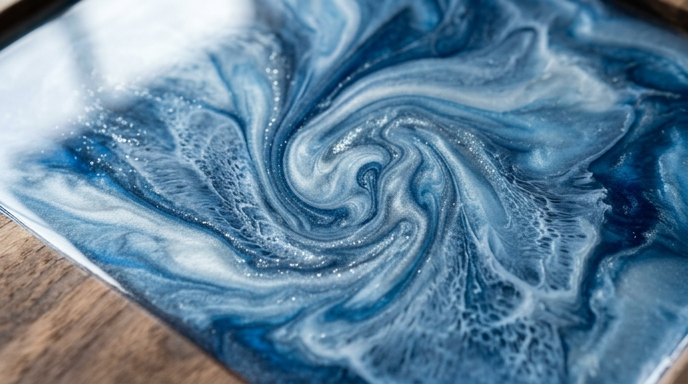
- Ocean / wave tray – Blues, whites, and “waves” made with a heat tool.
- Marble tray – Soft swirls of color that look like real stone.
- Geode tray – Crystal-like patterns with sparkle and shine.
- Seashell or beach tray – Real shells set inside clear resin.
- Floral / botanical tray – Dried flowers or leaves sealed in resin.
- Glitter or shimmer tray – Fun, sparkly, and great for parties.
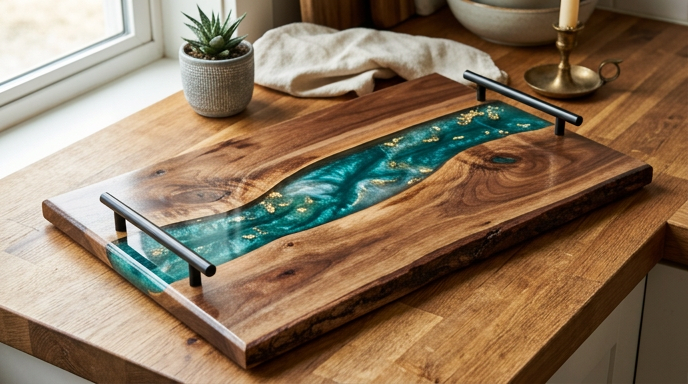
- River tray – A colored “river” running through natural wood.
Not sure which to try first? Start with a clear gloss or marble tray. They’re the easiest and still look stunning.
👉 Want to make a wave-style tray? This is a popular pick for beginners:
[Pre-Made Wooden Serving Tray with Raised Edges]
Key Resin Words to Know (Simple Definitions)
Before we dive into the steps, here are a few words you’ll see a lot. Don’t worry — they’re simple once you know them.
- Resin – The clear liquid that becomes hard and shiny.
- Hardener – The second liquid you mix with resin to make it set.
- Mixing ratio – How much resin vs. hardener you use (always follow the label).
- Cure – When the resin fully dries and becomes solid.
- Self-level – When the resin smooths out on its own.
- Demold – Popping your piece out of a silicone mold (if you use one).
- Seal – A thin coat that stops air bubbles from coming up through wood.
- Pigment – The color you add to the resin (like mica powder or alcohol ink).
💡 Tip: Save this list. You’ll see these words in every resin tutorial.
Tray Base vs. Mold — What’s the Difference?
There are two main ways to make an epoxy tray. Both work great — you just need to know which one you’re doing.
| Method | How It Works | Best For |
|---|---|---|
| Pour on a tray | You pour resin inside a ready-made tray (wood, acrylic, or metal). | Beginners — no demolding needed. |
| Pour in a mold | You pour resin into a silicone tray mold, then pop it out once cured. | Custom shapes, handles, and full-resin trays. |
👉 If this is your first tray, start with the “pour on a tray” method. It’s easier and forgiving.
[Silicone Tray Mold]
[Wooden Serving Tray Blank (for pour-on method)]
Safety First: PPE, Ventilation, and Workspace Setup
Before you pour a single drop, let’s talk safety. Epoxy resin is safe to use if you handle it the right way. It’s just a liquid — but it can irritate your skin, eyes, and lungs while it’s still wet.
Good news: the rules are simple. Wear the right gear, open a window, and protect your space. That’s it.
Personal Protective Equipment (PPE) — What You Really Need
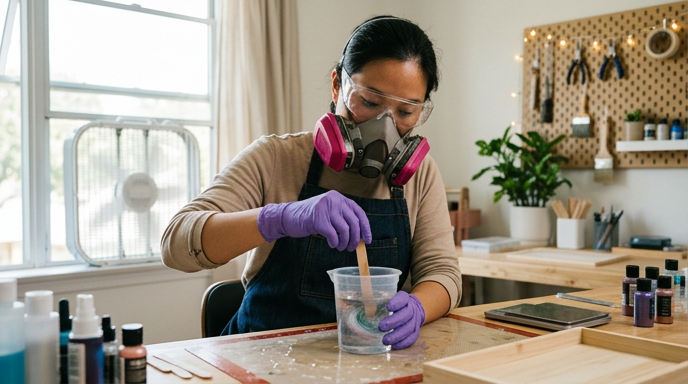
Never skip your gear. Even pros wear it every single pour.
- Nitrile gloves – Resin sticks to skin and can cause rashes. Latex gloves can break down, so nitrile is best.
- Safety glasses – Protects your eyes from splashes when mixing or torching.
- Respirator mask – Not a regular dust mask. Use one rated for fumes (follow your resin brand’s label).
- Old clothes or an apron – Resin drips do not come out of fabric.
- Closed-toe shoes – In case of spills.
💡 Pro tip: Keep a full “resin kit” with your gear so you’re ready every time. No hunting for gloves mid-pour.
👉 Starter safety bundle for resin crafters:
[Nitrile Gloves (Box of 100)]
[Safety Glasses for Crafting]
[Respirator Mask for Resin Fumes]
Ventilation — Why Fresh Air Matters
Wet resin can give off fumes. You don’t want to breathe those in.
Here’s how to keep your air clean:
- Work near an open window or door
- Use a fan to push air out of the room (not toward you)
- Avoid working in a closed closet, bathroom, or small basement
- If you craft a lot, think about an air purifier with a carbon filter
🚫 Do not use resin near food prep areas, pets, or small kids until it’s fully cured.
Workspace Setup — Protect Your Space Before You Pour
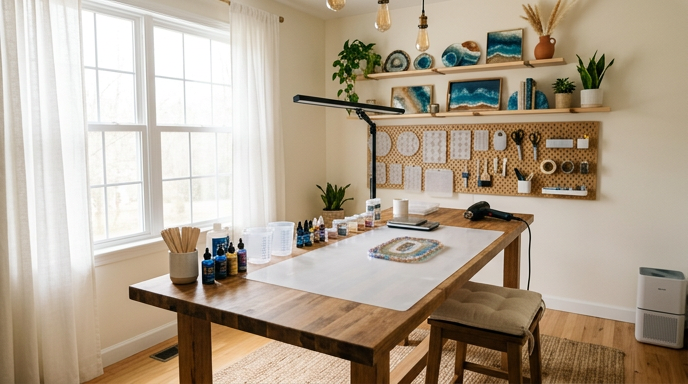
Resin is sticky, drippy, and impossible to scrub off once it cures. A little prep now saves hours of cleanup later.
Follow this simple checklist:
- ✅ Cover your table with a plastic sheet, silicone mat, or trash bags
- ✅ Tape the bottom edges of your tray with resin tape (stops drips)
- ✅ Make sure your table is level (a tilted table = uneven tray)
- ✅ Keep paper towels and isopropyl alcohol nearby for quick spills
- ✅ Have a covering box ready to place over your tray while it cures (keeps out dust)
- ✅ Keep pets, kids, and fans pointed at the resin away during curing
💡 Pro tip: Do a “dry run” before you mix. Lay out your tools, tray, gloves, and décor so you’re not scrambling while the resin is ticking.
👉 Helpful workspace must-haves:
[Silicone Craft Mat (Non-Stick)]
[Resin Tape]
[Isopropyl Alcohol (Cleanup)]
Temperature and Humidity (This One Surprises Beginners)
Resin is picky about weather. If your room is too cold, damp, or hot, your tray may stay sticky, cloudy, or full of bubbles.
Aim for:
- Temperature: around 70–75°F (21–24°C)
- Humidity: below 60%
- Stable conditions for at least 24 hours during curing
🚫 Avoid pouring resin in a cold garage in winter or a steamy room after a shower.
Quick Safety Checklist (Print This!)
Before every pour, run through this list:
- Gloves on
- Safety glasses on
- Respirator mask on
- Windows open / fan running
- Table covered and level
- Tray taped and sealed
- Tools within reach
- Covering box ready
- Phone timer ready for mixing time
✅ If all boxes are checked — you’re ready to create.
Materials & Tools You’ll Need (Starter + Upgrades)
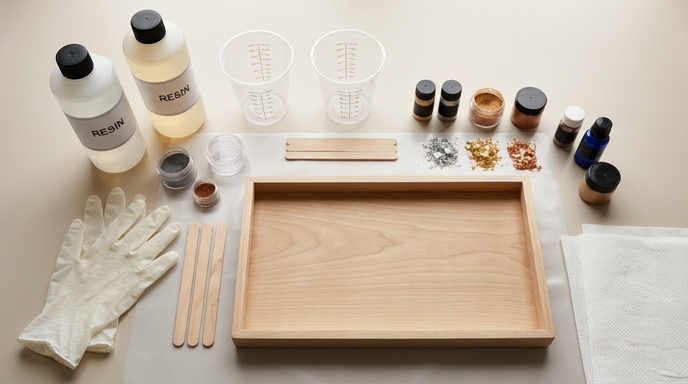
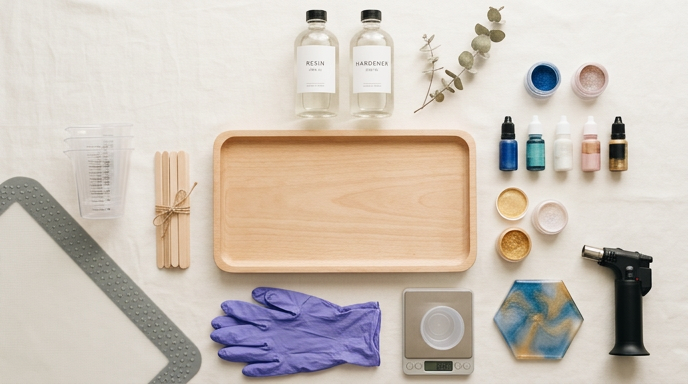
Before you start your first pour, let’s set you up with everything you need. Don’t worry — you don’t need a fancy studio. Most of this fits on a small table.
Here’s the full list, grouped so it’s easy to shop for.
The Epoxy Resin Itself (The Star of the Show)
This is the most important item on your list. Not all resins are the same, so pick the right one for your project.
Look for a resin that is:
- Clear and non-yellowing (stays bright over time)
- Self-leveling (smooths itself out)
- Low-odor (easier on your lungs)
- Food-contact safe — only if you plan to serve food or drinks on it
⚠️ Important: Not all epoxy is food safe. If you want to serve cheese, fruit, or drinks, make sure the label clearly says “food contact safe” once fully cured. Always follow the brand’s instructions.
👉 Beginner-friendly resin picks:
Mixing Tools
Good mixing = smooth, clear resin. Cheap mixing = bubbles, cloudy spots, and stress.
You’ll want:
- Graduated mixing cups (with measurement lines)
- Wooden or silicone stir sticks
- Plastic spreader or rubber squeegee (to move resin across the tray)
- Small plastic cups for mixing pigments separately
💡 Pro tip: Use two cups when mixing. Mix in cup #1, then pour into cup #2 and stir again. This “double mix” helps prevent sticky spots later.
👉 Mixing must-haves:
Your Tray Base (Wood, Acrylic, or Metal)
You can pour epoxy on almost any hard surface — but some work better than others.
Best options:
- ✅ Wood trays – Most popular. Warm, natural, and easy to seal.
- ✅ Acrylic trays – Modern and sleek.
- ✅ Metal trays – Strong and great for rustic looks.
Avoid:
- 🚫 Flimsy or bendable plastic (it can warp)
- 🚫 Trays with no edges (resin will pour right off)
💡 Tip: Pick a tray with raised edges. It acts like a built-in mold.
👉 Popular tray blanks:
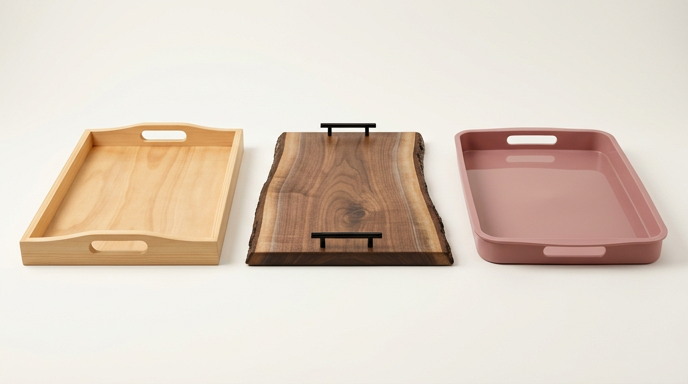
[IMAGE PLACEHOLDER 8 — Tray blanks side by side]
Alt text: “Three blank serving tray options: wooden tray, live-edge tray, and silicone tray mold ready for epoxy”
Pigments, Inks & Shimmer (Color Magic)
This is the fun part. Colors bring your tray to life.
The most popular options:
- Mica powder – Soft, shimmery, and easy to blend. Great for marble + geode looks.
- Alcohol ink – Bold and bright. Perfect for ocean and abstract designs.
- Liquid resin dye – Clean, strong color with no glitter.
- Glitter or shimmer flakes – Adds sparkle (use sparingly!).
- Metallic leaf / foil – Gold or silver accents for a luxe finish.
💡 Start small. A little pigment goes a long way. Too much can weaken the resin.
👉 Favorite color picks:
Decorative Add-Ins (Optional but Beautiful)
Want your tray to feel custom? Add extras before you pour.
Popular add-ins:
- Dried flowers or leaves
- Seashells, sand, or sea glass
- Wood slices or driftwood
- Mosaic tiles or glass chips
- Crushed crystals or stones
- Photos (sealed first!) or quotes printed on paper
💡 Always seal porous items (like paper or dried flowers) with a clear sealer before pouring. This stops air bubbles and color bleeding.
👉 Fun décor options:
Bubble-Busting Tools
Bubbles happen. These tools make them disappear.
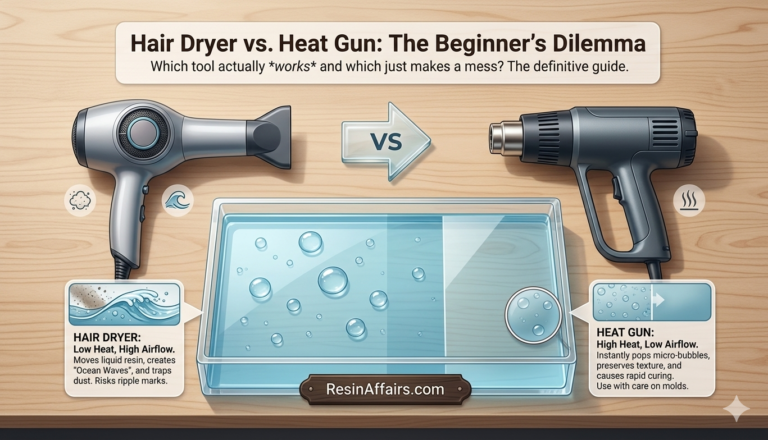
- Heat gun – Gentle, wide heat. Great for beginners.
- Butane/propane torch – Faster, stronger. Use with care.
- Toothpick – For popping tiny stubborn bubbles by hand.
💡 Keep your heat source moving. Holding it in one spot can burn the resin or make yellow spots.
👉 Bubble-fix tools:
Finishing Tools
Once your tray is cured, these help you polish it up.
- 220-grit sandpaper – Smooths rough edges
- Polishing cream – Brings back the shine
- Food-safe cutting board oil – Protects wooden edges
- Soft microfiber cloth – For buffing to a mirror finish
👉 Finishing favorites:
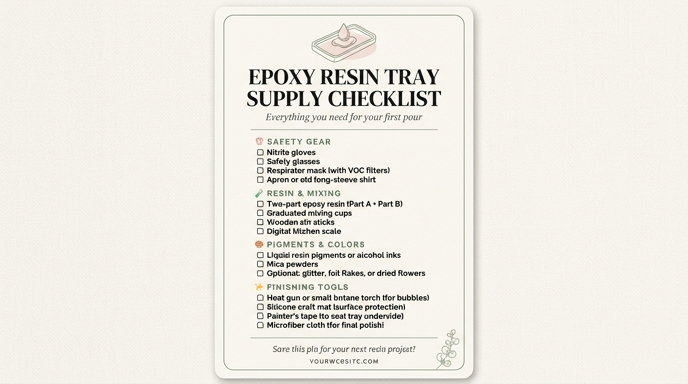
Bonus — A Simple Supply Checklist (Print This!)
Here’s your full shopping list at a glance:
Safety
- Nitrile gloves
- Safety glasses
- Respirator mask
Resin & Mixing
- Epoxy resin + hardener
- Mixing cups
- Stir sticks
- Spreader tool
Tray Base
- Wood, acrylic, metal tray or silicone mold
Color & Decor
- Mica powder / alcohol ink / dye
- Glitter or foil (optional)
- Dried flowers, shells, or tiles (optional)
- Clear sealer spray
Bubble & Finish
- Heat gun or torch
- 220-grit sandpaper
- Polishing cream or board oil
- Microfiber cloth
✅ If you’ve got all of these, you’re fully ready to start.
Step-by-Step: How to Make an Epoxy Serving Tray (Beginner-Friendly)
You’ve got your gear, your tray, and your colors ready. Now it’s time for the fun part — pouring your first tray. 🎨
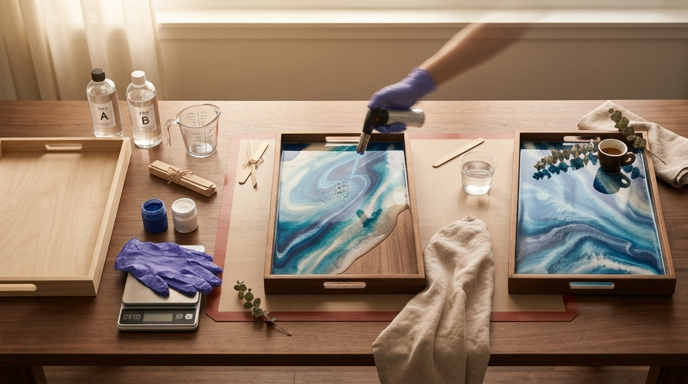
Follow these 8 simple steps, and you’ll end up with a glossy, pro-looking tray you’ll be proud to show off (or gift).
💡 Pro tip: Read all 8 steps first before you mix any resin. Once you start pouring, the clock is ticking.
Step 1 — Prep Your Tray Base
A smooth pour starts with a well-prepped tray.
Here’s what to do:
- Clean the tray – Wipe it down so there’s no dust or oil.
- Sand lightly – If your tray is wood, use 220-grit sandpaper to smooth it.
- Seal the surface – Apply 2–3 thin coats of a clear sealer. This stops bubbles from coming up through the wood.
- Let it dry fully – Don’t rush this step. Wet sealer = cloudy resin later.
💡 Tip: If you want to keep the natural wood look, use a clear sealer. If you want a colored base, paint the tray first, then seal it.
👉 Recommended:
[All-Purpose Clear Sealer Spray]
[Sandpaper Pack]
Step 2 — Arrange Your Decorative Items (Optional)
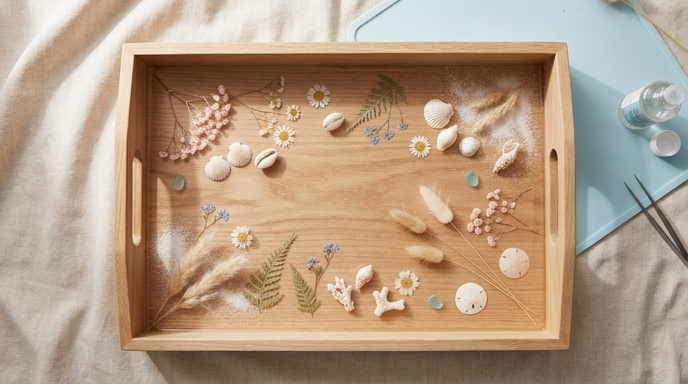
If you’re adding shells, dried flowers, glitter, or wood slices — do it now, before mixing resin.
Steps:
- Lay out your décor on the dry tray
- Move pieces around until the design feels right
- Glue them down with a dot of clear craft glue or sealer
- Let the glue dry fully
🚫 Skipping this step = floating shells and shifting flowers once resin is poured.
👉 Décor ideas:
[Dried Flower Mix for Resin]
[Mini Seashell Variety Pack]
Step 3 — Measure How Much Resin You Need
Too little resin = dry spots. Too much = a drippy mess.
The easy way to measure:
- Pour water into your tray up to the level you want the resin.
- Measure the water in ounces or mL.
- That’s how much total mixed resin you’ll need.
- Dry the tray completely before pouring resin.
💡 Pro tip: Always mix 10% extra just in case. Leftover resin can be used in small molds for coasters or magnets.
Step 4 — Mix Your Epoxy the Right Way
This is where most beginners mess up. Don’t skip the details. 👇
Follow these rules every time:
- Check your resin’s ratio – Usually 1:1 or 2:1. It’s on the bottle.
- Measure by volume (or weight, if the label says so)
- Pour resin + hardener into cup #1 and stir slowly for 2 minutes
- Scrape the sides and bottom as you stir
- Pour into cup #2 and stir for 1 more minute (the “double mix” trick)
- Don’t whip or beat it — slow stirring = fewer bubbles
💡 Tip: Set a timer. Under-mixing = sticky spots that never cure.
👉 Helpful tools:
[Graduated Mixing Cups]
[Reusable Silicone Stir Sticks]
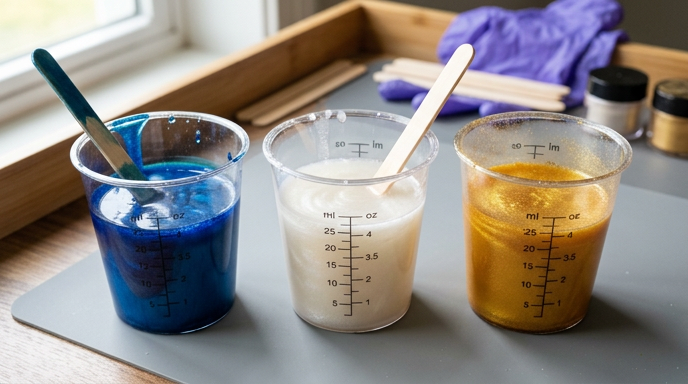
Step 5 — Add Color (If You’re Using Pigments)
Want a marble, ocean, or geode look? Now’s the time to color your resin.
How to do it:
- Split your clear mixed resin into smaller cups (one cup per color)
- Add pigment a little at a time
- Stir gently until fully blended
- Avoid adding too much — it can weaken the resin
Color ideas to try:
- 🌊 Ocean: white + light blue + deep teal
- 🪨 Marble: white + soft gray + gold shimmer
- 💎 Geode: purple + gold + clear with glitter
- 🌸 Boho: blush pink + cream + rose gold
👉 Favorite pigments:
[Mica Powder Set (36 Colors)]
[Alcohol Ink Set]
Step 6 — Pour and Spread the Resin
Time for the magic moment. 🎉
Steps:
- Pour the clear resin (if you’re using any) first
- Then pour your colored resins in patterns — lines, swirls, or puddles
- Use a spreader or stir stick to guide the resin across the tray
- Gently tilt the tray to help resin reach every corner
- Stop spreading once the resin starts to thicken — let it self-level
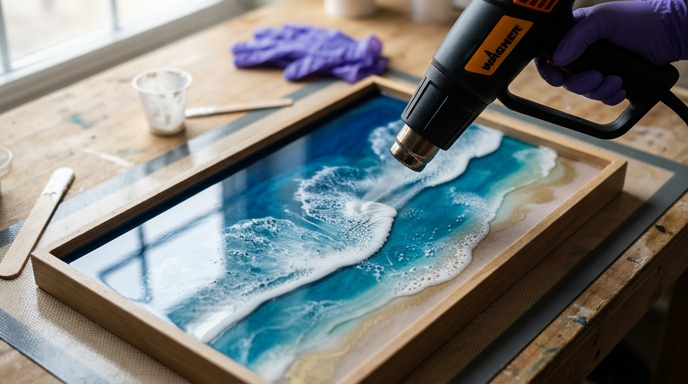
💡 Pro tip: For an ocean look, pour blue first, then drag a stir stick through white to create “waves.” A heat gun finishes the wave effect (next step).
🚫 Don’t keep stirring the resin on the tray. Over-working = muddy colors.
Step 7 — Pop the Bubbles
After pouring, you’ll see tiny bubbles rising to the top. Don’t panic — this is normal.
To remove them:
- Use a heat gun or torch in a sweeping motion
- Hold it 6–8 inches above the tray
- Keep it moving constantly (never hold still)
- Do 2–3 passes over the whole tray
- Use a toothpick for any tiny stubborn bubbles
💡 Bonus: For an ocean wave look, the heat gun will push the white pigment into natural wave patterns. Magic!
👉 Recommended:
[Wagner Heat Gun]
[Refillable Butane Torch]
Step 8 — Cure, Sand & Finish
You’re almost done. Now, patience is your best friend.
Curing:
- Cover the tray with a dust-proof box or lid
- Keep the room at 70–75°F (21–24°C)
- Don’t move the tray for at least 24 hours
- Full cure can take 48–72 hours (check your resin’s label)
After curing:
- Peel off the painter’s tape from the sides
- Sand any rough edges with 220-grit sandpaper
- Wipe with a damp cloth to remove dust
- Polish with a resin polish cream or food-safe board oil
- Buff with a soft microfiber cloth for a mirror shine
✅ Now your tray is officially ready to serve, style, or gift.
👉 Finishing favorites:
[Resin Polishing Kit]
[Food-Safe Cutting Board Oil]
[Microfiber Cloth Pack]
[IMAGE PLACEHOLDER 14 — Final finished tray styled]
Alt text: “Finished glossy epoxy resin serving tray styled with a coffee cup, pastries, and flowers on a kitchen counter”
Beginner’s Quick Recap (Save This!)
If you only remember 8 things, remember these:
- Prep your tray
- Arrange your décor
- Measure your resin
- Mix carefully
- Color your resin
- Pour and spread
- Pop the bubbles
- Cure, sand, polish
✅ That’s the entire process — start to finish.
Creative Epoxy Serving Tray Ideas (Choose Your Style)
Now for the fun part — picking your design. The best thing about epoxy trays? No two are ever the same. You can match any room, mood, or gift idea.
Below are 8 popular styles — from super easy to more advanced. Pick one based on how comfortable you feel. All of them use the same 8 steps you just learned.
1. Clear Gloss Wood Tray (Easiest for Beginners)
This is the simplest design — and still looks stunning.
You just pour clear epoxy over a pretty wood tray. The resin shines up the wood grain and makes everything look polished.
Perfect for:
- Farmhouse or rustic homes
- Gift-giving
- Your first-ever tray
💡 Tip: Choose a tray with a nice wood grain (like acacia or walnut). The resin makes it pop.
👉 Recommended:
[Acacia Wood Serving Tray with Handles]
2. Ocean Wave Tray (Most Popular on Pinterest)
This one looks way harder than it is. The secret? A heat gun.
You pour blue and teal resin into a tray, drag white resin across the top, then use a heat gun to push the white into soft waves.
Perfect for:
- Beachy homes
- Coastal décor lovers
- Summer gifts
💡 Tip: Live-edge wood trays look the most realistic for ocean-style pours.
👉 Recommended:
[Live-Edge Wood Tray Blank]
[Ocean Blue Mica Powder Set]

3. Marble Tray (Elegant and Timeless)
If you love the look of real marble, this one’s for you.
You’ll mix 2–3 soft colors (like white, gray, and gold shimmer), then swirl them gently with a toothpick or stir stick. The colors blend into a dreamy, natural-looking pattern.
Perfect for:
- Modern homes
- Coffee stations
- Luxury-style gifts
💡 Tip: Less is more. Over-stirring muddies the marble effect.
👉 Recommended:
[Mica Powder Set (Earth Tones)]
4. Geode Tray (Statement Piece)
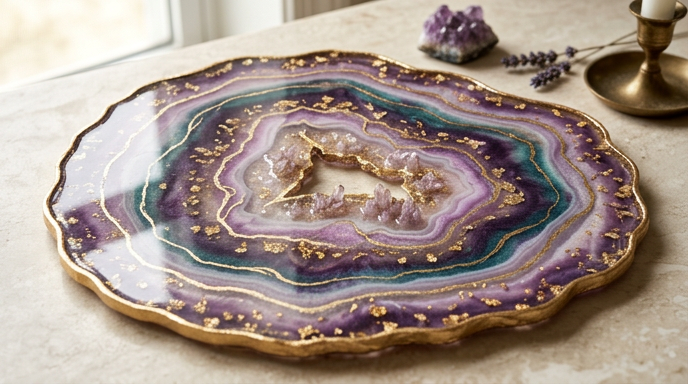
Geode trays look like crystals turned into art. You’ll use layered colors, glitter, metallic foil, and sometimes real stones.
It’s more detailed — but worth it. These trays often sell for $80–$200+ online.
Perfect for:
- Glam décor
- Gifting (weddings, anniversaries)
- Selling on Etsy or at craft fairs
💡 Tip: Use a mix of deep purple, teal, gold, and clear for a jaw-dropping geode look.
👉 Recommended:
[Gold Foil Flakes]
[Geode Resin Pigment Kit]
5. Seashell or Beach Tray
Got shells from your last vacation? Turn them into a tray.
You arrange shells, sand, and sea glass inside the tray, then seal them in crystal-clear resin. Each tray holds a little piece of a memory.
Perfect for:
- Coastal homes
- Vacation keepsakes
- Handmade gifts
💡 Tip: Rinse and dry shells fully before adding them. Sandy shells = bubbles.
👉 Recommended:
[Mini Seashell Assortment]
[Fine Decorative Sand]
6. Floral / Dried Flower Tray
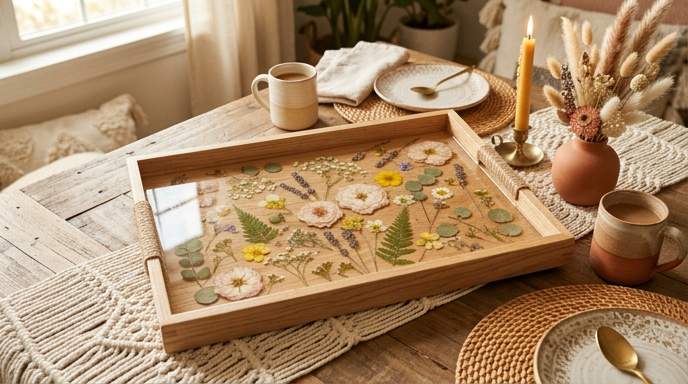
Soft, romantic, and very on-trend. This design uses pressed dried flowers (like roses, pansies, or lavender) sealed in clear resin.
Perfect for:
- Boho and cottagecore homes
- Bridal showers
- Spring décor
💡 Tip: Always seal dried flowers with clear sealer first, or their color may fade when resin touches them.
👉 Recommended:
[Dried Flower Assortment (Real Pressed)]
[Clear Craft Sealer Spray]
7. Glitter & Shimmer Tray (Fun and Festive)
If you love a little sparkle, this is your tray.
You mix glitter or shimmer flakes into the resin — or scatter them across the top before the resin cures. Works great on round trays, heart-shaped molds, or small catch-all trays.
Perfect for:
- Birthday gifts
- Girly vanities and bathrooms
- Party hosts
💡 Tip: Heavy glitter sinks fast. Use fine cosmetic-grade glitter for even shimmer.
👉 Recommended:
[Fine Cosmetic-Grade Glitter Set]
[Round Silicone Tray Mold]
8. River Tray (Advanced — But Stunning)
This is the “wow factor” tray.
A river tray uses two slabs of live-edge wood with a colored resin “river” running between them. It takes more time, tools, and planning — but the results look like high-end art.
Perfect for:
- Intermediate/advanced crafters
- Statement centerpieces
- Selling at premium prices
💡 Tip: Use a deep-pour resin for river designs. Regular resin can overheat in thick pours.
👉 Recommended:
[Deep-Pour Epoxy Resin]
[Live-Edge Wood Slabs (Pair)]
Which Style Should You Try First?
Here’s a quick cheat sheet based on your skill level:
| Skill Level | Best Tray Style |
|---|---|
| 🟢 Beginner | Clear Gloss, Marble, Glitter |
| 🟡 Intermediate | Ocean Wave, Floral, Seashell |
| 🔴 Advanced | Geode, River |
👉 Don’t overthink it. Start simple, build skill, and work your way up.
Bonus Tip — Mix Styles!
Some of the prettiest trays combine two ideas.
Try:
- 🌊 Ocean + seashells
- 🌸 Floral + gold flakes
- 💎 Geode + glitter
- 🪵 Marble + live-edge wood
The more you experiment, the more you’ll find your signature look.
Tips for Selecting Pigments & Additives (So Your Color Looks Right)
Color is where your tray goes from “pretty” to “wow, did you really make this?” 🎨
But not every pigment plays nice with epoxy. Some make the resin cloudy. Others stop it from curing. And some just look different than you expected.
Don’t worry — this section breaks down everything you need to pick the right colors the first time.
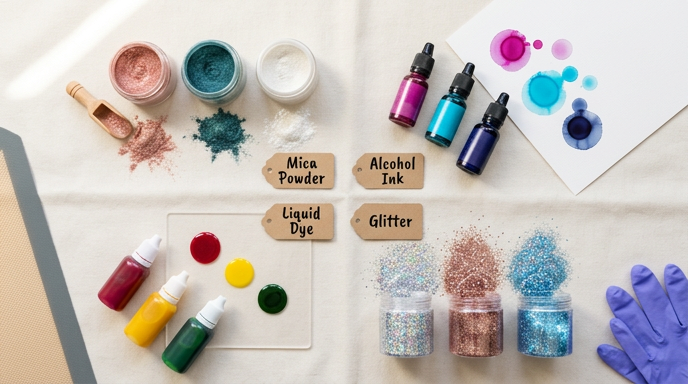
The 4 Main Types of Resin Colorants
Here are the most popular ways to color your resin — and when to use each.
| Colorant | Best For | Good to Know |
|---|---|---|
| 🌟 Mica Powder | Marble, geode, shimmer looks | Easy to blend, beginner-friendly |
| 💧 Alcohol Ink | Ocean, abstract, bright swirls | Very strong — use a few drops only |
| 🎨 Liquid Resin Dye | Solid, deep color blocks | No shimmer, very clean look |
| ✨ Glitter / Foil Flakes | Sparkle and accents | Heavy pieces may sink |
💡 Tip: Beginners should start with mica powder. It’s forgiving, pretty, and easy to mix.
👉 Shop the essentials:
[Mica Powder Pigment Set (36 Colors)]
[Alcohol Ink Set (Bright Colors)]
[Liquid Resin Dye Set]
[Gold Foil Flakes]
How Much Pigment Should You Use?
A little goes a long way. Too much pigment can actually stop your resin from curing.
General rule:
- Pigment should be no more than 6% of your total resin mix
- For most projects, a small pinch of mica or 1–2 drops of alcohol ink per cup is plenty
💡 Start small and add slowly. You can always add more color — you can’t take it out.
Start Small, Test First
Before pouring into your real tray, do this quick test:
- Mix a small cup of resin
- Add a little pigment
- Stir and check the color
- If it looks too light — add a tiny bit more
- Pour a small sample onto a silicone mat or old lid
- Let it cure and check the result
This gives you the true final color (resin often dries darker than it looks in the cup).
Mixing Pigments the Right Way
How you stir matters just as much as what you add.
Do:
- ✅ Add pigment after your resin and hardener are fully mixed
- ✅ Stir slowly to avoid bubbles
- ✅ Scrape the sides and bottom of the cup
- ✅ Mix until color looks smooth and even
Don’t:
- 🚫 Whip or shake the resin
- 🚫 Dump in a huge scoop of pigment
- 🚫 Mix pigment straight into the resin bottle
💡 Pro tip: Use separate cups for each color. This gives you cleaner swirls and patterns.
👉 Must-have:
[Graduated Mixing Cups (Pack of 50)]
[Reusable Silicone Stir Sticks]
Match Colors to Your Tray’s Style
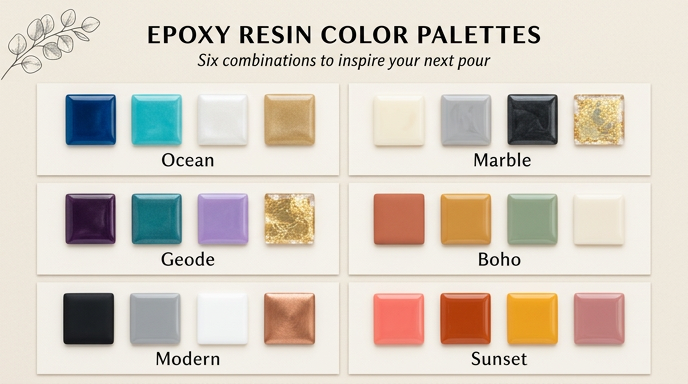
Not sure which colors go together? Here are a few go-to combos that always look good.
🌊 Ocean / Coastal:
White + light blue + deep teal + gold flakes
🪨 Marble / Minimal:
White + soft gray + champagne shimmer
💎 Geode / Glam:
Purple + gold + silver + teal
🌸 Boho / Romantic:
Blush pink + cream + rose gold
🖤 Modern / Moody:
Charcoal + gold + black pearl
🌞 Warm Sunset:
Peach + coral + gold shimmer
💡 Tip: Pick 1 main color, 1 accent color, and 1 metallic. This combo rarely fails.
Fun Additives for Extra Effects
Want to take your tray to the next level? Add one of these.
- ✨ Gold or silver foil flakes – instant luxury
- 💎 Crushed glass or crystals – for a gem-like sparkle
- 🌿 Dried flowers or herbs – soft, nature-inspired looks
- 🌊 Fine sand – perfect for beach-style trays
- 🖼️ Photos or paper cutouts – sealed first, then poured over
💡 Tip: Always seal porous items (paper, flowers, wood slices) before pouring resin. This stops color bleed and bubbles.
👉 Favorite add-ins:
[Gold & Silver Foil Flakes]
[Dried Flower Assortment for Resin]
[Clear Craft Sealer Spray]
Color Mistakes Beginners Make (And How to Avoid Them)
Save yourself some heartbreak. Don’t do these 👇
- 🚫 Using acrylic paint as pigment → makes resin cloudy
- 🚫 Adding water-based dye → stops curing
- 🚫 Using too much pigment → weakens resin
- 🚫 Mixing hot glue, crayons, or marker ink → unpredictable mess
- 🚫 Skipping the test pour → surprise dark colors
- 🚫 Adding pigment before your resin + hardener are fully mixed
✅ Stick to resin-safe pigments labeled for epoxy use.
Quick Color Cheat Sheet (Save This!)
Here’s your beginner-friendly recap:
- 🟢 Easiest: Mica powder
- 🟡 Boldest: Alcohol ink
- 🔵 Cleanest: Liquid resin dye
- ✨ Most dramatic: Foil flakes & glitter
- ⚠️ Avoid: Acrylic paint, water-based dyes, craft paint
💡 Remember: Start with small amounts, test your color first, and stick to 3 colors max for the cleanest look.
Troubleshooting Guide (Fix Common Epoxy Tray Problems)
Even experienced crafters run into resin issues. Bubbles, sticky spots, cloudy finishes — it all happens. The good news? Almost every problem has an easy fix.
Use this section like a quick rescue guide. Scroll to your issue, follow the fix, and save your tray. 💪
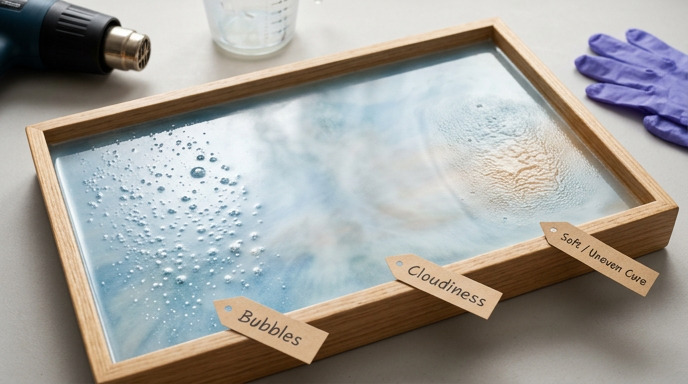
Problem #1 — Bubbles on the Surface
Why it happens:
Bubbles form when you stir too fast or pour onto a porous tray (like raw wood).
How to fix it:
- Use a heat gun or torch in sweeping motions over wet resin
- Hold the heat 6–8 inches away
- Keep it moving constantly
- Pop stubborn tiny bubbles with a toothpick
How to prevent it next time:
- Seal your tray before pouring
- Stir slowly for 3 minutes
- Use the double-mix method
👉 Recommended:
[Wagner Heat Gun for Resin]
[Refillable Butane Torch]
Problem #2 — Sticky or Tacky Resin
Why it happens:
Almost always caused by wrong mixing ratios or under-stirring.
How to fix it:
- If only some spots are sticky → sand lightly and pour a thin fresh topcoat
- If the whole tray is sticky → sand it down, clean with isopropyl alcohol, and pour a new coat
How to prevent it next time:
- Measure resin + hardener exactly
- Stir for the full recommended time
- Scrape the sides and bottom of your mixing cup
💡 Tip: Sticky resin never “dries” on its own. You must cover it with fresh, properly-mixed resin.
Problem #3 — Cloudy or Hazy Resin
Why it happens:
Usually caused by humidity, cold temps, or old resin.
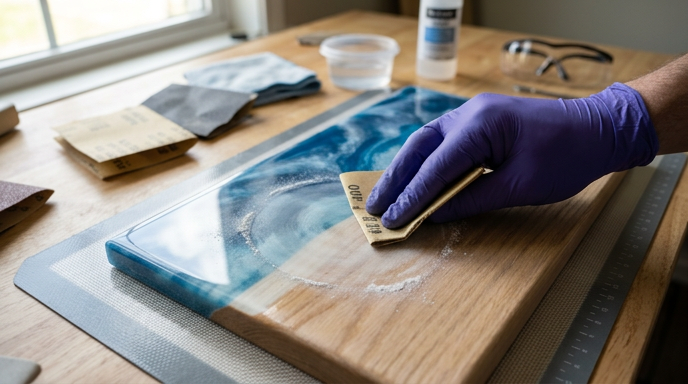
How to fix it:
- Sand the cloudy layer lightly
- Apply a fresh topcoat in a warm, dry room
- Buff with polish cream for extra clarity
How to prevent it next time:
- Keep your room at 70–75°F (21–24°C)
- Keep humidity under 60%
- Don’t use old, expired resin
👉 Recommended:
[Resin Polishing Kit]
Problem #4 — Yellowing Over Time
Why it happens:
Some cheaper resins yellow when exposed to sunlight.
How to fix it:
- Sand lightly and apply a fresh UV-resistant resin topcoat
How to prevent it next time:
- Use resin labeled “UV-resistant” or “non-yellowing”
- Store your tray away from direct sunlight
👉 Recommended:
UV-Resistant Clear Epoxy Resin]
Problem #5 — Uneven Surface / Dips and Bumps
Why it happens:
Your table wasn’t level — or the resin started curing before it could self-level.
How to fix it:
- Wait for full cure
- Sand the surface flat with 220-grit sandpaper
- Pour a thin fresh layer of resin on top
How to prevent it next time:
- Use a level to check your table
- Don’t move the tray once poured
- Stop spreading the resin before it thickens
Problem #6 — Resin Overflowed or Dripped Down the Sides
Why it happens:
Too much resin, or uneven edges.
How to fix it:
- Peel off the painter’s tape after curing
- Sand drips flat
- Polish smooth
How to prevent it next time:
- Tape the bottom edges of your tray before pouring
- Measure resin using the water trick (Step 3)
👉 Recommended:
[Resin Tape]
[Sandpaper Assortment Pack]
Problem #7 — Decorative Items Floating to the Top
Why it happens:
Shells, flowers, or wood pieces weren’t glued down before pouring.
How to fix it:
- If still wet → gently push items back down with a toothpick
- If cured → pour a second clear layer over the top
How to prevent it next time:
- Glue items down with sealer or craft glue
- Let them dry fully before pouring resin
Problem #8 — Colors Mixed Into a Muddy Mess
Why it happens:
You stirred the colors on the tray too much.
How to fix it:
- Sand the muddy layer
- Pour a fresh top coat with new colors
How to prevent it next time:
- Stop swirling as soon as the pattern looks good
- Use 3 colors max
- Let the heat gun do the work for ocean waves
💡 Rule of thumb: Less stirring = cleaner patterns.
Problem #9 — Dust or Hair on the Cured Resin
Why it happens:
Curing area wasn’t covered.
How to fix it:
- Lightly sand the surface
- Pour a thin, fresh topcoat in a dust-free space
How to prevent it next time:
- Always cover your tray with a dust-proof box or lid
- Keep fans, pets, and open windows away from the curing tray
👉 Recommended:
[Dust-Proof Resin Curing Cover]
Problem #10 — Resin Never Fully Cured
Why it happens:
- Wrong ratio of resin to hardener
- Too cold of a room
- Added incompatible pigment (like acrylic paint or water-based dye)
How to fix it:
- Sand down the soft layer (wear a mask!)
- Clean with isopropyl alcohol
- Pour a brand-new correctly-mixed layer on top
How to prevent it next time:
- Follow mixing ratios exactly
- Only use resin-safe pigments
- Cure in a warm, stable room
Quick Problem Finder (Scroll-Friendly Table)
Use this cheat sheet whenever something goes wrong. ⬇️
| Problem | Most Likely Cause | Quick Fix |
|---|---|---|
| Bubbles | Raw wood or fast stirring | Heat gun / torch |
| Sticky | Wrong ratio | Sand + new topcoat |
| Cloudy | Humidity / cold room | Warm room + topcoat |
| Yellowing | Non-UV resin | UV-resistant topcoat |
| Uneven | Table not level | Sand + re-pour |
| Overflow | Too much resin | Tape edges + sand |
| Floating items | Not glued | Glue before pouring |
| Muddy colors | Over-stirring | Use 3 colors + heat gun |
| Dust | Open curing area | Dust-proof cover |
| Not curing | Wrong mix / cold | Sand + re-pour |
When to Start Over vs. When to Fix It
Not every mistake is fixable — and that’s okay.
Fix it if:
- The issue is only on the top layer
- The tray is structurally solid
- You can sand + pour a fresh coat
Start over if:
- The whole tray is soft or bendy
- The resin never cured at all
- The tray warped from heat or chemicals
💡 Remember: Every “ruined” tray is a lesson. Real pros have stacks of failed pours behind their best work.
Advanced Techniques (For Intermediate Makers)
Made your first tray? Nice work. 🎉
Once you feel confident with basic pours, it’s time to level up. Advanced techniques give your trays that “how did they even make this?!” look — and they can turn your hobby into a serious side hustle.
Below are the most popular next-level tricks — explained simply, so they don’t feel scary.
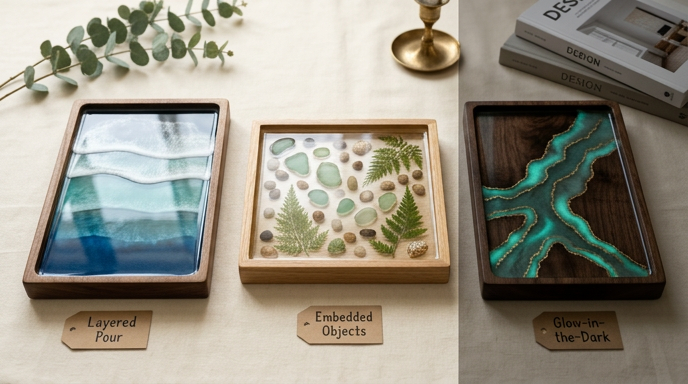
1. Layered Pouring (For Depth and Dimension)
Layered pouring means pouring resin in stages. Each layer cures, then you pour a new one on top. This creates real depth — like you’re looking into water.
Great for:
- Ocean trays with floating waves
- Geode trays with crystal depth
- Floral trays with flowers at different “heights”
How to do it:
- Pour your base layer (colored or clear)
- Let it cure for 4–6 hours (tacky, not hard)
- Add decorations or pigments on top
- Pour a second clear layer over it
- Repeat for as many layers as you want
💡 Tip: Pour each new layer thin. Thick pours can heat up and crack.
👉 Recommended:
[Crystal Clear Casting Resin]
[Silicone Layering Spreader]
2. Deep Pour Epoxy (For Thicker Trays and River Designs)
Regular resin can only be poured in thin layers. If you pour too thick, it overheats, cracks, or yellows.
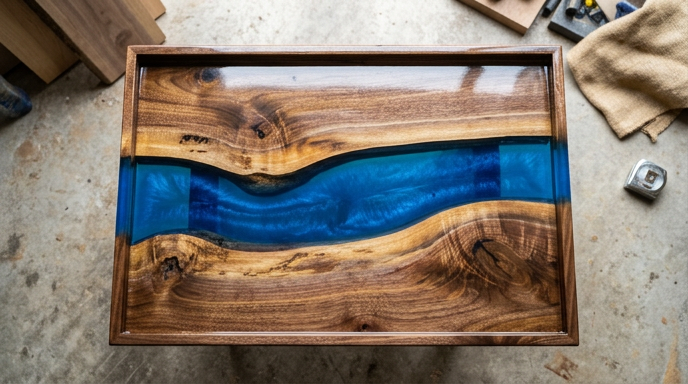
Deep pour resin is designed for thick pours — up to 1–2 inches in a single layer. This is what makes river trays and chunky statement trays possible.
When to use deep-pour resin:
- Live-edge river trays
- Thick charcuterie boards
- Large trays with raised edges
Important rules:
- Cure slowly (48–72 hours)
- Keep your room cool and stable
- Use fewer bubbles tools — deep pour is naturally self-releasing
👉 Recommended:
[Deep Pour Epoxy Resin (Up to 2 inches)]
3. Embedding Real Objects
Embedding = sealing real items inside resin. Done right, this looks incredible. Done wrong, it looks cloudy, bubbly, or moldy.
Favorite embedding ideas:
- Dried flowers and leaves
- Seashells and sand
- Wood slices
- Photos or printed quotes (sealed first!)
- Coins, crystals, or keepsakes
- Small toys (for kids’ trays)
Pro tips:
- Seal porous items (paper, flowers, wood) first
- Use a clear resin layer underneath to glue items in place
- Pour a top clear layer thick enough to fully cover the object
- Avoid anything wet, moldy, or metal-prone-to-rust
👉 Helpful tools:
[Clear Sealer Spray]
[Dried Flower Assortment]
4. Glow-in-the-Dark Resin
Yes — you can make trays that glow. 🌙
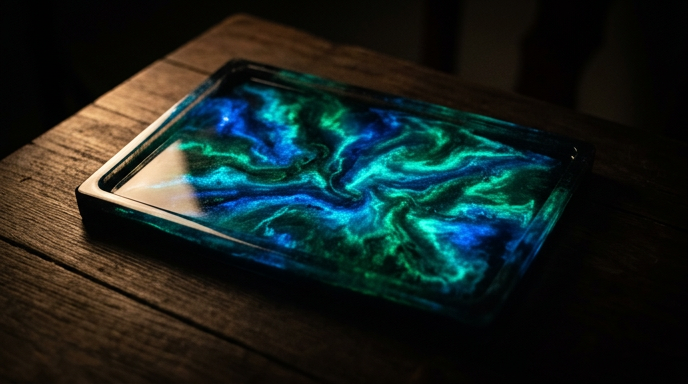
How? You mix glow pigment powder into clear resin, then pour as normal. Once charged in sunlight or a lamp, the tray glows softly in the dark.
Great for:
- Night-stand trays
- Accent pieces
- Kids’ rooms
- Unique gifts
How to do it:
- Mix clear resin + hardener
- Add glow pigment (up to 15% of the mix)
- Stir slowly to avoid bubbles
- Pour like any normal layer
- Let it cure, then charge in sunlight or under a UV lamp
💡 Tip: Use white or clear resin with the glow pigment. Dark colors block the glow.
👉 Recommended:
[Glow-in-the-Dark Resin Pigment (Multi-Color)]
[Small UV Charging Lamp]
[Glow resin tray]
Alt text: “Epoxy resin tray glowing blue and green in the dark after being charged with light”
5. Alcohol Ink Swirls (For Bold Abstract Art)
Alcohol inks create those dreamy abstract swirls you see on Pinterest.
How it works:
- Pour your base resin
- Drop alcohol ink straight onto the wet resin
- The ink spreads out on its own, creating swirls
- Use a heat gun to move the ink further
Great for:
- Modern art-style trays
- Bold, moody color combos
- Gift pieces that feel one-of-a-kind
💡 Tip: Use 2–3 ink colors max or the tray will look muddy.
👉 Recommended:
Alcohol Ink Set (Artist Grade)]
6. Metallic Foil & Gold Leaf Accents
This one adds instant luxury. It’s one of the easiest ways to make a tray look “premium.”
How to use foil:
- Sprinkle foil flakes between resin layers (not on the surface)
- Or drop them into wet resin for a floating look
- Pair with neutral colors (white, black, soft blues) for maximum pop
Great for:
- Geode trays
- Wedding or anniversary gifts
- Glam home décor
👉 Recommended:
[Gold & Silver Foil Flakes]
[Imitation Gold Leaf Sheets]
7. Mixed Media Trays (Combining Techniques)
Once you’re comfortable, try combining two or more advanced techniques.
Popular combos:
- 🌊 Ocean waves + seashell embedding
- 💎 Geode + gold foil + glow pigment
- 🌸 Floral embedding + deep pour
- 🌅 Alcohol ink + metallic leaf
- 🌑 Glow resin + dark marble
💡 Mixed media trays can sell for 2–3x more than basic trays online.
Safety Reminders for Advanced Pours
Bigger trays = bigger risk if you skip safety.
- Always wear gloves, glasses, and a respirator
- Work in a well-ventilated area
- Never pour deep resin near open flames
- Cure far from kids, pets, and food spaces
- Watch your resin’s working time — big pours heat up fast
Advanced Skills Cheat Sheet (Save This!)
| Technique | Best For | Level |
|---|---|---|
| Layered Pour | Depth, realism | 🟡 Intermediate |
| Deep Pour | Rivers, chunky trays | 🔴 Advanced |
| Embedding | Keepsakes, florals | 🟡 Intermediate |
| Glow Resin | Night trays, gifts | 🟡 Intermediate |
| Alcohol Inks | Abstract art | 🟡 Intermediate |
| Metallic Foils | Luxury accents | 🟢 Easy-Intermediate |
| Mixed Media | Signature trays | 🔴 Advanced |
✅ Pick one new skill at a time. Master it, then move on to the next.
FAQs About Epoxy Serving Trays
Still have questions? You’re not alone. These are the most-asked questions by beginners (and even some pros). Short, clear answers — no fluff.
[IMAGE PLACEHOLDER 27 — FAQ lifestyle image]
Alt text: “Finished epoxy resin serving tray holding a coffee cup and pastries with a small plant nearby”

1. Is epoxy resin food safe?
Some are, some aren’t.
Only epoxy that is labeled “food contact safe” (once fully cured) is safe to serve food on. Always check the brand’s label.
💡 Tip: Even with food-safe resin, don’t cut directly on the tray or use it for hot food.
👉 Recommended:
[Food-Contact Safe Epoxy Resin]
2. Can you put hot food or drinks on an epoxy tray?
Not really. ⚠️
Most epoxy trays can handle warm plates or cups — but not hot pans or boiling drinks. High heat can dent, dull, or yellow the resin.
Safe for:
- Coffee cups (under 140°F / 60°C)
- Pastries and snacks
- Cold drinks and fruit
Not safe for:
- Hot pans straight from the stove
- Boiling tea kettles
- Freshly microwaved food on bare resin
💡 Use a coaster or placemat for extra protection.
3. How long does epoxy resin take to cure?
It depends on the brand, but here’s the general rule:
- Tack-free (dry to touch): 6–12 hours
- Safe to demold: 24 hours
- Fully cured (ready to use): 48–72 hours
Colder rooms = longer cure times. Warm rooms (around 72°F) = faster cure.
4. How do I clean an epoxy serving tray?
Super easy. Treat it like a piece of glass.
- Wipe with a soft damp cloth
- Use mild dish soap if needed
- Skip harsh chemicals, bleach, or abrasive sponges
- Dry with a microfiber cloth for a shiny finish
🚫 Never put an epoxy tray in the dishwasher — the heat can ruin it.
5. Can you use an epoxy tray outside?
Yes, but with limits.
- ✅ Covered patios, shaded areas
- ✅ Parties and events (short-term sun)
- 🚫 All-day direct sunlight → may yellow
- 🚫 Freezing temps → may crack
💡 Use a UV-resistant resin for outdoor trays.
👉 Recommended:
[UV-Resistant Clear Epoxy Resin]
6. Why is my resin still sticky after 24 hours?
Usually one of three reasons:
- Wrong mixing ratio – measure carefully next time
- Under-stirring – always stir for the full recommended time
- Cold room – resin needs 70–75°F (21–24°C) to cure
Fix:
Sand the sticky layer lightly, then pour a fresh correctly-mixed top coat over it.
7. Can I fix mistakes after the resin has cured?
Yes — almost always.
- Bubbles? Sand + pour a topcoat
- Sticky spots? Sand + pour a topcoat
- Dust in the resin? Sand + pour a topcoat
- Ugly colors? Sand + pour a new colored layer on top
💡 Truth: Most resin “mistakes” can be saved with one more pour.
8. Do I need a mold or can I pour on a regular tray?
Both work! But each is different.
- Pouring on a tray → best for beginners (no demolding)
- Pouring in a mold → best for custom shapes
If this is your first project, start with a wood or acrylic tray with raised edges.
👉 Recommended:
[Wooden Tray with Raised Edges]
[Silicone Tray Mold (for Custom Shapes)]
9. What’s the best epoxy for beginners?
Look for resin that is:
- Clear and non-yellowing
- Self-leveling
- Low-odor
- Budget-friendly (starter kits under $40 are perfect)
- Has simple 1:1 mixing ratios
👉 Recommended:
[Beginner Epoxy Resin Starter Kit]
10. Can I sell my epoxy trays?
Yes! Handmade trays sell very well.
Popular places to sell:
- Etsy
- Facebook Marketplace
- Instagram (DM sales)
- Local craft fairs
- Online boutique shops
Price range (for reference):
- Basic trays → $25–$50
- Mid-level designs → $60–$100
- Advanced (geode, river) → $150–$300+
💡 Pro tip: Take bright lifestyle photos of your trays holding real food or drinks. Styled photos sell way more than plain ones.
11. How do I make my tray extra shiny?
Three simple tricks:
- Pour a clear topcoat as the final layer
- Sand edges smooth with 220-grit sandpaper
- Buff with polish cream and a microfiber cloth
👉 Recommended:
[Resin Polishing Kit]
[Microfiber Cloth Pack]
12. How long do epoxy trays last?
With proper care — many, many years.
Quality epoxy is strong, waterproof, and resists normal wear.
To make yours last longer:
- Keep it out of direct sunlight
- Don’t place hot pans on it
- Clean gently with soft cloths
- Store upright or flat (not leaning)
13. Is resin dangerous?
Only while it’s wet.
Cured resin is safe, non-toxic, and fine to touch. But during mixing and pouring:
- Wear gloves
- Wear a respirator mask
- Keep the room ventilated
- Keep pets and kids away
Once cured, it’s hard, safe, and smooth.
14. Can I pour resin over paint or stain?
Yes — but let the paint/stain fully dry first (usually 24–48 hours).
💡 Tip: Seal the painted surface with a clear sealer before pouring. This stops bubbles and color bleeding.
15. What’s the #1 mistake beginners make?
Mixing the resin wrong.
Most failed trays come from:
- Wrong ratio
- Under-stirring
- Adding incompatible pigments
If you get the mixing right, 80% of problems disappear.
Printable Checklist (Quick Summary)
Here’s your full process in one clean, printable list. 🖨️
Use this as a quick reference every time you make a new tray. Keep it in your craft room, save it to your phone, or pin it to Pinterest for later.
✅ Before You Start
- Room is well-ventilated
- Table is level
- Table is covered with plastic or silicone mat
- Gloves, safety glasses, and respirator ready
- Pets and kids are in another room
- Dust-proof cover is nearby
✅ Tray Prep
- Tray is clean and dry
- Lightly sanded (if wood)
- Sealed with 2–3 thin coats
- Sealer is fully dry
- Bottom edges taped with painter’s tape
- Decorations arranged + glued down (if using)
✅ Measuring & Mixing
- Resin + hardener amounts measured correctly
- Mixed at the exact ratio on the label
- Stirred for the full time (usually 3 minutes total)
- Double-mixed in a second cup
- Pigments added slowly and mixed in separate cups
✅ Pouring
- Clear resin poured first (if using)
- Colors poured in patterns — not stirred too much
- Resin spread evenly with a spreader or stir stick
- Tray tilted to reach the corners
- Stopped spreading once resin began to thicken
✅ Bubble Removal
- Heat gun or torch used in sweeping motion
- Heat source held 6–8 inches away
- Stubborn bubbles popped with a toothpick
- No burning, scorching, or yellow spots
✅ Curing
- Tray covered with a dust-proof box
- Room is 70–75°F (21–24°C)
- Humidity is under 60%
- Tray is not moved for at least 24 hours
- Fully cured before sanding (48–72 hours)
✅ Finishing
- Painter’s tape removed
- Edges sanded with 220-grit sandpaper
- Surface wiped clean
- Polished with resin cream or board oil
- Buffed with a microfiber cloth
✅ Safety & Cleanup
- Leftover resin disposed of safely
- Cups, tools, and gloves thrown out
- Work surface wiped clean with isopropyl alcohol
- Workspace closed until fully aired out
🎉 You’re Done!
Your tray is ready to:
- Style on a coffee bar ☕
- Serve snacks or drinks 🍷
- Gift to someone special 🎁
- Photograph and sell online 💵