Editorial & Safety Standards
Resin Affairs is a craft-education site written for hobbyists working with epoxy and UV resin at home. Safety information appears throughout the site — on product pages, in tutorials, and in dedicated guides like our Resin Safety Hub — because working with any reactive chemical safely starts with understanding what you’re handling.
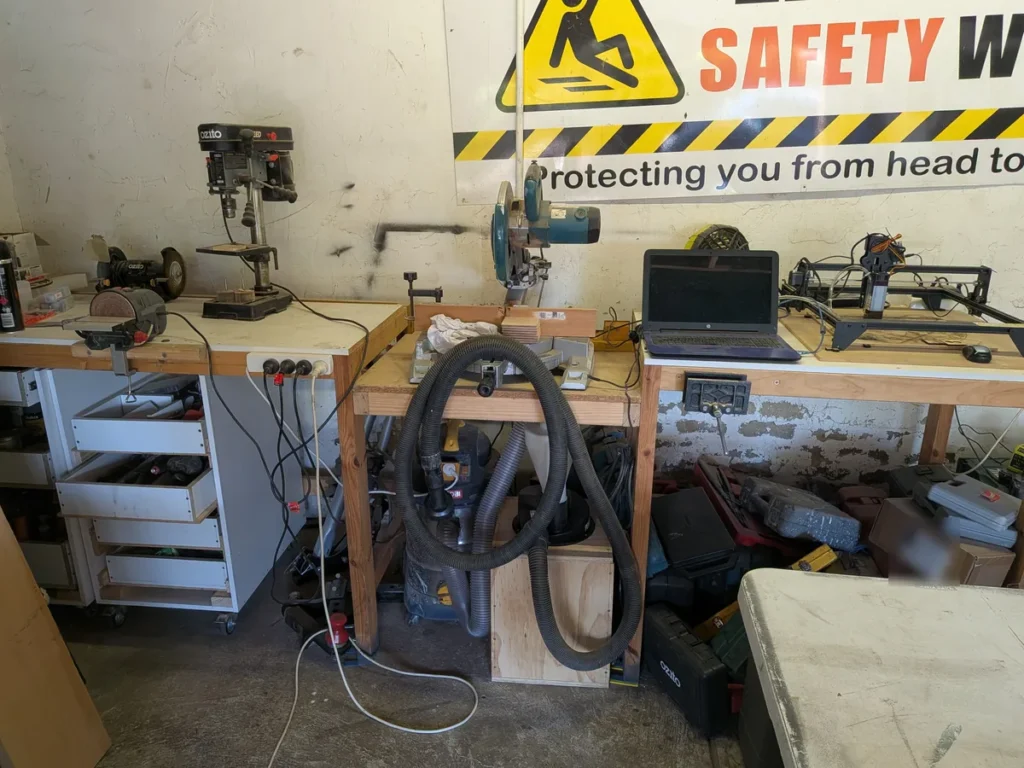
I buy cheap tools, but I don’t scrimp on safety. Gloves, eye protection, a respirator, ear protection and fume extraction are non-negotiable in my shop.
What we cover
We write about beginner craft procedures: how to read a product label and Safety Data Sheet (SDS), how to set up a ventilated, contained workspace, what personal protective equipment (gloves, respirators, eye protection) is appropriate for a given task, and general handling precautions that reduce exposure during mixing, pouring, and sanding.
What we don’t do
We do not provide medical advice, toxicity assessments, diagnoses, treatment recommendations, or personalized chemical-exposure guidance. Nothing on this site should replace a conversation with a qualified clinician or occupational hygienist about your specific health situation. If you have a personal concern — including about pregnancy, a respiratory condition, or a skin reaction — bring the exact product label and SDS to that conversation.
Who writes this content
Safety and craft content on Resin Affairs is written and maintained by Alex Rivers, the site’s editor, who has hands-on experience working with composite materials. Alex is not a chemist, toxicologist, or medical professional. Where a piece makes a specific safety claim, we base it on the manufacturer’s product label and Safety Data Sheet, and on published guidance from recognized workplace-safety bodies (such as OSHA and NIOSH) rather than on personal opinion or anecdote.
How we review it
Every safety-related page is checked against this standard before it’s published or substantially updated: does it name where the claim comes from, does it distinguish “cured” product safety from handling-stage exposure, and does it point the reader toward a real professional rather than implying this site is one. Pages that touch higher-stakes topics — like our guide on resin use during pregnancy — carry an additional sourcing note stating who compiled the page and when it was last reviewed.
Corrections
We get details wrong sometimes, and we’d rather fix them than leave them. If you spot an error — a mischaracterized ingredient, an outdated safety recommendation, anything — email admin@resinaffairs.com. Corrections are noted on the article they affect.
Independence
Our product recommendations are independent of any affiliate relationship. We may earn a commission if you buy through a link on this site (see our Affiliate Disclosure), but that never determines what we recommend.
Last reviewed: 22 September 2026.