Epoxy Resin vs. UV Resin: Which Is Right for Your First Project?
Disclosure: This article contains affiliate links. If you purchase through these links, we may earn a small commission at no extra cost to you. We only link to gear we would use ourselves.
As an Amazon Associate I earn from qualifying purchases.
Imagine this: You’ve spent the last hour scrolling through a feed of crystal-clear resin coasters, shimmering jewelry, and those stunning “river tables” that look like frozen art. You’re inspired, you’re excited, and you’re ready to buy your first kit.
But then you hit the product page and freeze. There are two completely different worlds here: Epoxy Resin and UV Resin. One asks you to mix chemicals and wait for days; the other asks you to buy a special lamp and wait for minutes.
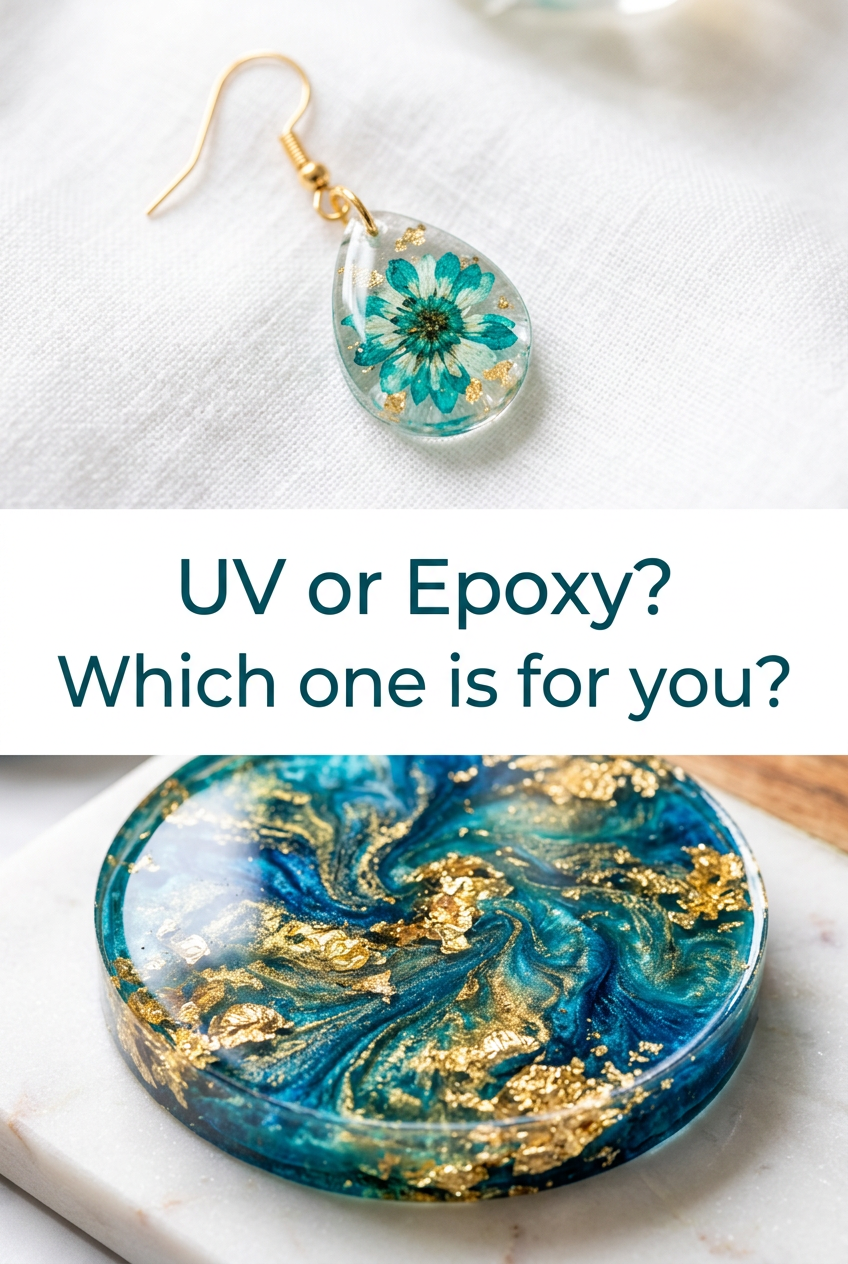
If you’re feeling overwhelmed, you aren’t alone. Choosing between epoxy vs uv resin for beginners is the very first “fork in the road” of your crafting journey. The good news? Neither one is “better”—they are simply different tools for different jobs.
By the end of this guide, you’ll know exactly which one fits your personality, your workspace, and the projects you’re dreaming of making.
💡 BEGINNER TIP: You don’t have to pick a “side” forever! Many experienced crafters keep both on their shelves—UV resin for the tiny details and Epoxy for the big masterpieces.
🧰 Recommended Kit for This Project
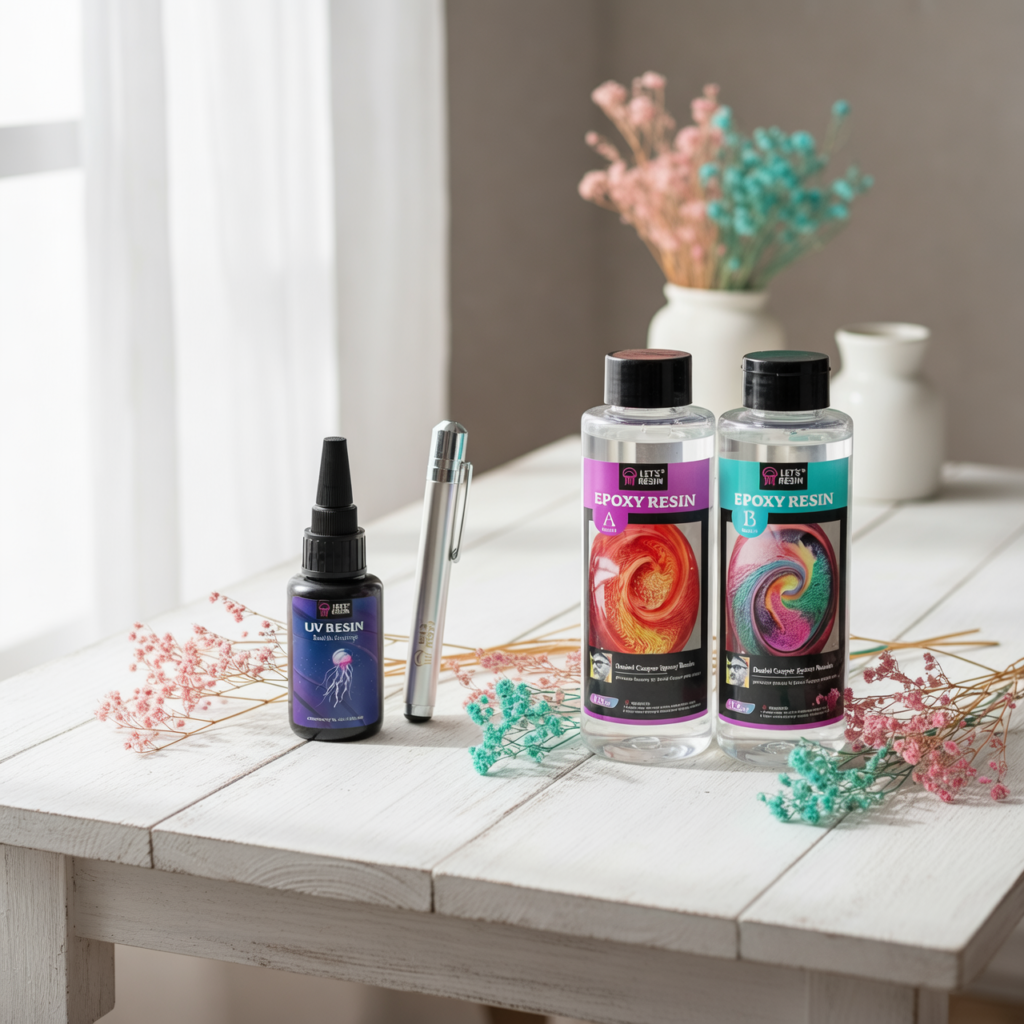
- LET’S RESIN UV Resin with Light, 200g Starter Kit — the fast-cure option this guide compares — cures in minutes under the included lamp
- Let’s Resin Sphere & Pyramid All-in-One Kit — the slower, stronger epoxy option — four silicone molds, a 12-color glitter set and dried flowers included
- NoCry Anti-Fog Safety Goggles — PPE for either resin type
📋 Get the Free Resin Safety & Prep Checklist
A one-page printable checklist covering PPE, ventilation, and workspace setup — so you’re not hunting through this guide mid-pour. Enter your email and we’ll send it straight over.
Free. We only email when there’s something useful, never more than twice a month, and you can unsubscribe anytime. Privacy Policy
Epoxy vs UV Resin for Beginners: What’s the Difference?
If you want the “Quick Answer,” here it is: The main difference between epoxy and UV resin for beginners is the curing process.
Epoxy resin is a two-part system. You mix a resin and a hardener together, which starts a chemical reaction. This reaction takes a long time to finish—usually between 24 and 72 hours—but it results in a rock-solid, durable piece of art.
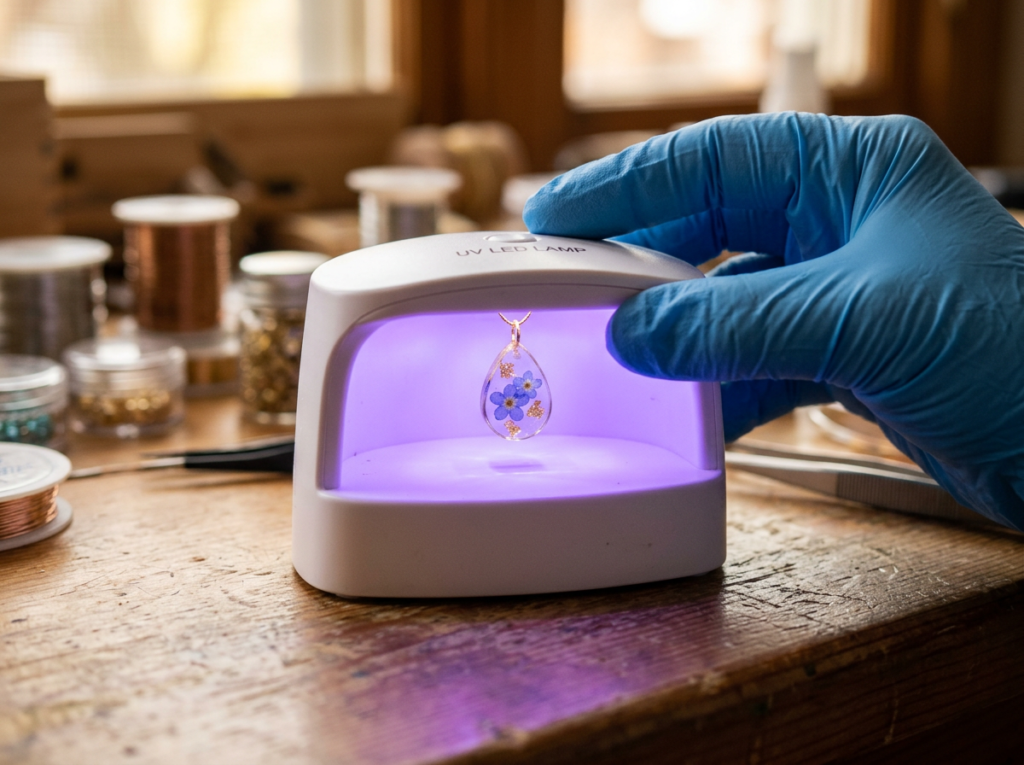
UV resin is a one-part system. It stays liquid until it is exposed to ultraviolet (UV) light, so store it capped and out of sunlight. Once you put it under a UV lamp or in direct sunlight, it cures fast (usually 2–4 minutes per thin layer, longer for thicker or pigmented pieces).
At-a-Glance Comparison
| Feature | UV Resin | Epoxy Resin |
|---|---|---|
| Mixing | None (Straight from bottle) | Required (Resin + Hardener) |
| Cure Time | 2–4 min per thin layer | 24–72 Hours |
| Equipment | UV Lamp required | Mixing cups & sticks |
| Best For | Tiny items, jewelry, charms | Coasters, trays, river tables |
| Pour Depth | Very thin (about 1/16 inch, or 2 mm, per layer) | Can be very deep |
| Cost | Higher per ounce | Lower per ounce |
Safety First: Which Resin is Safer for Home Use?
Before we talk about the fun stuff, we have to talk about safety. Resin is a chemical, and like any chemical, it needs to be respected. Whether you choose UV or Epoxy, you cannot skip safety gear.
⚠️ SAFETY WARNING: Never use latex gloves when working with resin. Resin can seep through latex, causing skin irritation. Always use nitrile gloves.
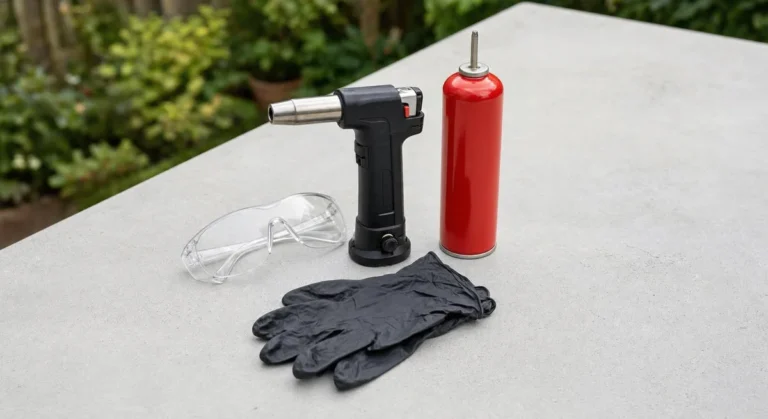
The Essential Safety Kit
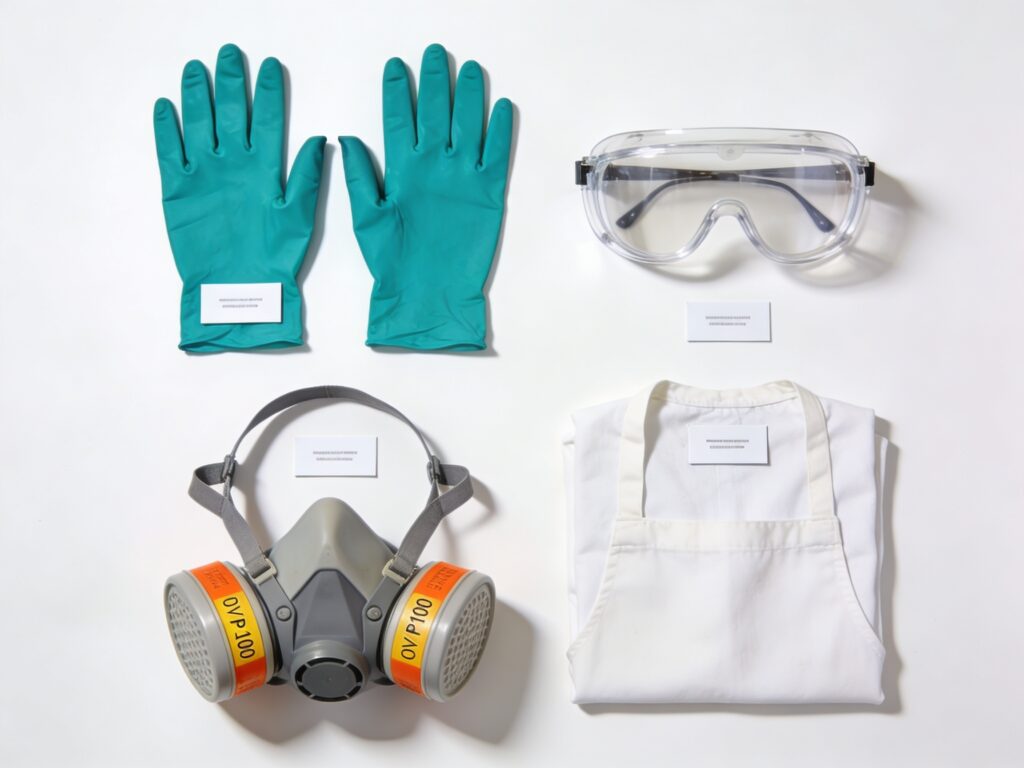
Regardless of which resin you buy, you need these three things:
- Nitrile Gloves: To protect your skin from “sensitization” (developing a permanent allergy to resin).
- Safety Glasses: To protect your eyes from accidental splashes.
- Ventilation: Open a window or use a fan. Resin fumes can cause headaches if you’re in a sealed room.
Specific Hazards to Know
For Epoxy Users:
Epoxy can undergo an “exothermic reaction.” This means that if you pour too much resin too deeply in one go, the chemical reaction creates heat. In extreme cases, the resin can actually smoke or crack. Always follow your brand’s “maximum pour depth” guidelines.
For UV Users:
The resin can irritate the skin, but the UV light is the other hazard. Looking directly into a high-powered UV lamp for long periods can damage your eyes. Use a lamp with a protective shield or wear UV-blocking glasses.
UV Resin: The “Instant Gratification” Path
If you’re the kind of person who wants to see results now, UV resin is your best friend. It is often called the “gateway resin” because it removes almost all the scary parts of the process.
Why Beginners Love It
The biggest draw is that there is no mixing. You simply unscrew the cap, pour the liquid into your mold, and you’re done. You don’t have to worry about measuring ratios or accidentally creating a sticky mess.
Because it cures in minutes, it is the best resin for jewelry beginners. If you make a mistake, you can often just wipe it away or add another layer and cure it again immediately.
The Trade-offs
UV resin isn’t perfect. There are three things you need to keep in mind:
- The Depth Limit: UV light can only penetrate so deep. If you pour a thick chunk, the top will harden, but the center will stay liquid. Keep your layers to about 1/16 inch (2 mm).
- The Cost: UV resin is more expensive per ounce than epoxy. It’s great for earrings, but too costly for a coffee table.
- The Lamp: You must have a UV lamp.
❓ COMMON QUESTION: “Do I need a professional-grade lamp?”
Not necessarily! For beginners, we highly recommend the Let’s Resin UV Resin Light. It’s an affordable, compact 18W lamp made for small pieces like earrings and keychains. Most craft UV resins cure at 365–405 nm, so check that your resin’s label matches.
Epoxy Resin: The Path to Big, Bold Creations
While UV resin is about speed, epoxy resin is about scale and strength. If you want to make something that will be used every day—like a tray, a coaster, or a piece of furniture—epoxy is the only way to go.
The Power of the Two-Part System
Epoxy consists of a resin and a hardener. When you mix them, they create a bond that is incredibly strong and crystal clear. Because it cures slowly, it is perfect for deep pour resin for beginners. You can fill deep molds or encapsulate large objects without worrying about the center staying liquid.
The “Learning Curve”
Epoxy is more demanding than UV resin:
- Precision is Key: If you mix “roughly,” you might end up with sticky spots. You need to be exact.
- The Bubble Battle: Stirring introduces air bubbles. You’ll need a torch or a heat gun to pop them.
- The Great Wait: You have to wait at least 24 hours before you can touch your project.
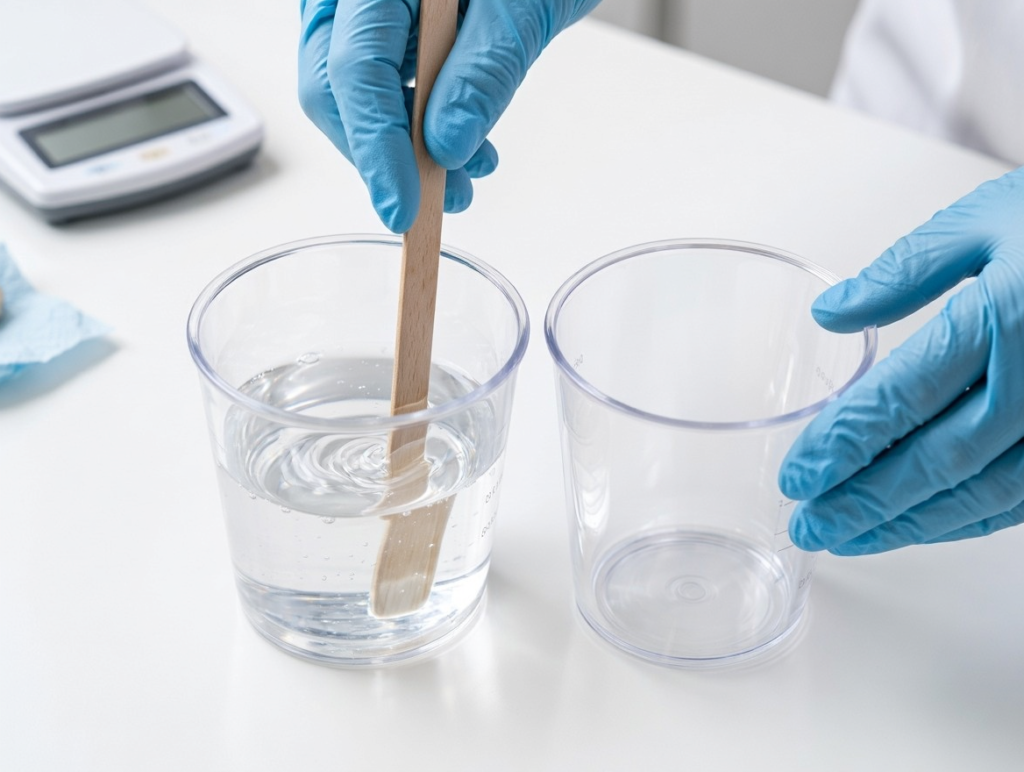
✅ PRO TIP: To avoid
resin mixing mistakes, use the “Double Cup Method.” Mix your resin in one cup, then pour the mixture into a second clean cup and mix again. This ensures no unmixed resin from the sides of the first cup ends up in your project!
Which One Should You Choose? (The Decision Matrix)
Find the statement below that sounds most like you:
- “I want to make a few pairs of earrings today, and I don’t want to spend hours cleaning up.” → Choose UV Resin.
- “I want to make a beautiful serving tray or deep coasters, and I don’t mind waiting a couple of days.” → Choose Epoxy Resin.
- “I have a small apartment.” → UV resin is the smaller, quicker job, but it still needs gloves, eye protection and airflow. If you can’t ventilate well, read our PPE guide before choosing either.
- “I love the process of measuring and mixing, and I want the most durable result possible.” → Choose Epoxy Resin.
Avoid These First-Timer Pitfalls
- The “Gooey Center” (UV Resin): Caused by pouring too thick. The Fix: Pour in thin layers. Cure for 1 minute, add more, cure again.
- The “Sticky Spot” (Epoxy Resin): Caused by poor mixing. The Fix: Stir slowly but thoroughly. Scrape the sides and bottom of the cup.
- The “Bubble Bath” (Epoxy Resin): Normal, but visually messy. The Fix: Gently run a butane torch over the surface after pouring.
Frequently Asked Questions
Which resin is easier for a total beginner?
UV resin is significantly easier because it requires no mixing, eliminating the risk of “wrong ratios.”
Can I use UV resin for large projects?
Not really. It’s too expensive for large pours, and the light cannot penetrate deep layers. Use epoxy for anything larger than a coin.
Why is my epoxy resin still sticky after 24 hours?
Usually due to an incorrect mixing ratio or under-mixing. You can sometimes fix this by pouring a thin “top coat” of fresh, perfectly mixed resin over the top.
Do I need a respirator for UV resin?
It has fewer VOCs, but it contains acrylates, which are strong skin sensitizers. A well-ventilated room is a must. If you can’t ventilate well or can smell it, use a NIOSH-approved respirator with organic-vapor cartridges. Dust and surgical masks don’t filter vapor.
Is one resin more durable than the other?
Yes. Epoxy is generally stronger, more impact-resistant, and better for functional items.
Ready to Start Your Resin Journey?
Whether you choose the instant magic of UV resin or the bold durability of epoxy, the most important thing is to just start.
If you’re still undecided, we recommend starting with a small Let’s Resin UV Jewelry Starter Kit to get a feel for the material with zero mixing required. Once you’re ready to tackle bigger projects, move up to a professional-grade Lets Resin Epoxy Resin Starter Set.
Now, go grab your nitrile gloves, open a window, and start creating!
Keep Learning on ResinAffairs.com
Made your choice? Here’s where to go next:
- 💍 Resin Jewelry for Beginners → — pendants, earrings and charms, the easiest way to start with UV resin.
- ☕ How to Make Epoxy Resin Coasters → — the classic first project, with a full supply list and troubleshooting.
- 🧪 Which Type of Resin Should You Use? → — epoxy, polyester, polyurethane and UV resin compared, with a quick pick guide.
- 🚀 How to Start Resin Crafting → — the beginner roadmap: what to buy first, what to skip, and the easiest first project.
- 🔦 UV Resin for Beginners: The Complete Starter Guide → — everything about UV resin in one place: gear, first projects, and beginner mistakes to avoid.
This post contains affiliate links. If you purchase through our links, we may earn a small commission at no extra cost to you. We only recommend products we genuinely believe are helpful for beginners.
Enjoyed this guide? Join the Resin Affairs newsletter for new tutorials, safety tips, and project ideas straight to your inbox.