Resin PPE for Beginners: Gloves, Masks, Ventilation, and Setup
If you are new to resin crafts, safety gear can feel confusing. The beginner-safe answer is simple: always follow the label and safety data sheet for your exact resin product, then use PPE that reduces skin, eye, and breathing exposure.
PPE stands for personal protective equipment. If you are still learning the basics, start with ResinAffairs’ guide to what resin is before choosing safety gear. For resin beginners, that usually means gloves, eye protection, protective clothing, ventilation, and sometimes respiratory protection depending on the product, workspace, and project. CDC NIOSH says some epoxy and resin components can be hazardous before they cure, and it recommends wearing the right PPE for the specific epoxies or resins being used (CDC NIOSH).
This guide explains the safety gear resin beginners should understand before their first pour. It is educational, not medical advice or a substitute for product-specific safety guidance.
⚠️ Please read this first.
Resin Affairs is a craft-education site, not a medical or occupational-health source. This guide is a plain-English summary of what safety agencies and resin manufacturers publish about working with epoxy, applied to small-scale hobby resin work. Your product’s label and Safety Data Sheet (SDS) always come first — if anything here conflicts with them, follow the SDS. If you have symptoms, a known allergy or asthma, or you’re pregnant, talk to a doctor rather than relying on any article, including this one. How we approach safety content →
Sourcing & review: This page is written and maintained by Alex Rivers based on published guidance from CDC/NIOSH, OSHA’s respiratory-protection standard, NIOSH’s respirator approval program, DermNet (a dermatologist-written reference), epoxy manufacturers’ own safety guidance (WEST SYSTEM, ArtResin) and product Safety Data Sheets, checked against our editorial & safety standards. It has not been reviewed by a doctor or a certified industrial hygienist. Last reviewed: 23 September 2026.
Affiliate disclosure: This post may contain affiliate links. If you buy through these links, ResinAffairs may earn a small commission at no extra cost to you. We only recommend supplies that fit beginner-safe resin crafting. As an Amazon Associate, ResinAffairs earns from qualifying purchases.
🧰 Recommended Kit for This Project
- 5 mil Nitrile Gloves — thin enough for real dexterity, thick enough to actually protect your hands from uncured resin
- 3M 65023 Quick Latch Respirator (Medium) + 60923 Organic Vapor/Acid Gas/P100 Cartridges — the real fix for resin fumes — a cheap dust mask does not filter these vapors
- NoCry Anti-Fog Safety Goggles — splash protection that will not fog up mid-pour
📋 Get the Free Resin Safety & Prep Checklist
A one-page printable checklist covering PPE, ventilation, and workspace setup — so you’re not hunting through this guide mid-pour. Enter your email and we’ll send it straight over.
Free. We only email when there’s something useful, never more than twice a month, and you can unsubscribe anytime. Privacy Policy
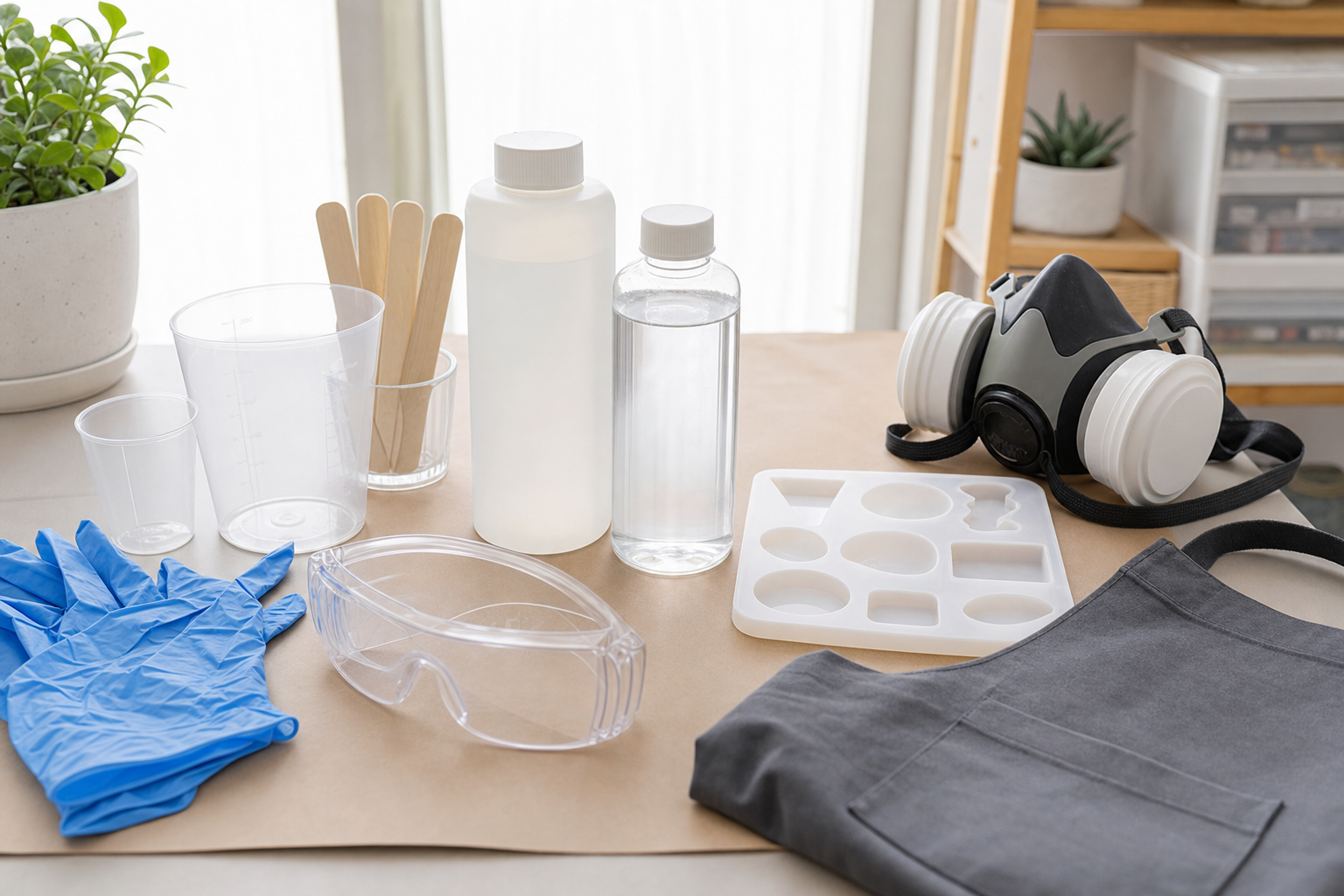
Quick PPE Checklist for Resin Beginners
Before opening your resin bottles, set up these basics:
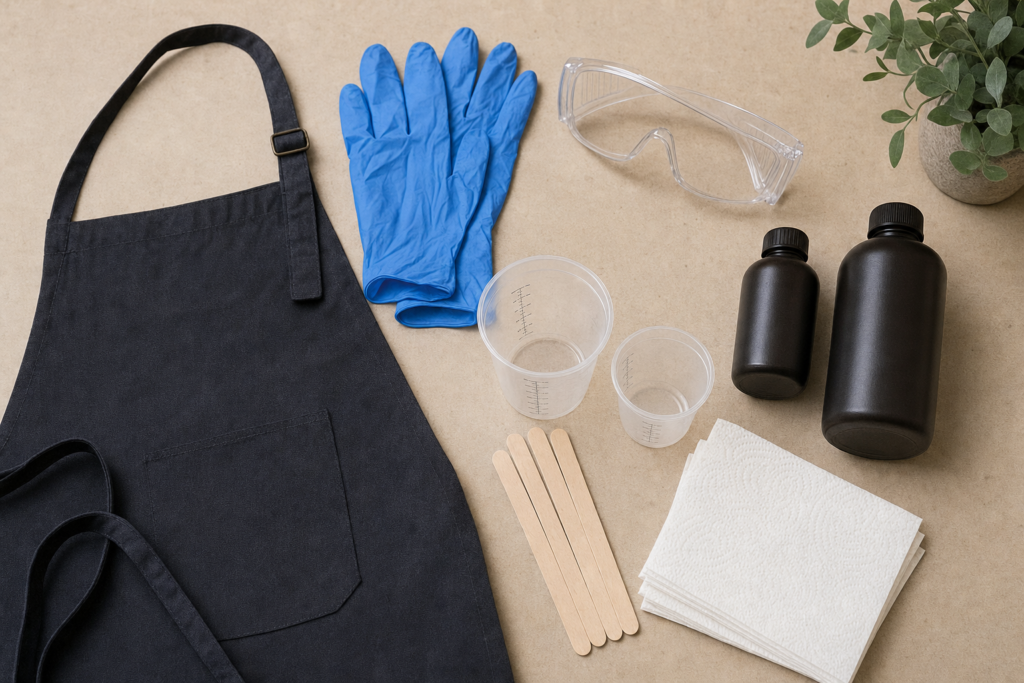
- Nitrile gloves
- Safety glasses or goggles
- Long sleeves or a dedicated apron
- Silicone mat or protected work surface cover
- Good ventilation
- Paper towels and a trash bag
- Product label and safety data sheet
- Respirator with organic-vapor cartridges if any of the situations in the respirator table below apply
Once your protective equipment and workspace are ready, follow our guide to mixing epoxy resin before opening and combining the two components.
The goal is to stop uncured resin and hardener from touching your skin, splashing into your eyes, or building up in your breathing space.
Why Resin PPE Matters
Epoxy resin usually comes as two parts: resin and hardener. Once mixed, they cure into a hard surface, but before curing, some components need careful handling. CDC NIOSH says cured epoxies and resins are usually safer to handle than uncured components, and epoxies generally become much less toxic polymers as they cure (CDC NIOSH).
The risk is highest while the materials are still liquid, sticky, or partly cured. DermNet explains that uncured epoxy resin systems can include chemicals that may cause irritant or allergic contact dermatitis (DermNet).
Beginner safety callout: Do not rely on smell. CDC NIOSH warns that smelling or not smelling a chemical is not a good indicator of whether you are safe, because harmful levels cannot always be smelled (CDC NIOSH).
Why small exposures matter: WEST SYSTEM explains that you can become sensitized to epoxy after many exposures or just one — and once you are, further (sometimes increasingly severe) reactions become likely with future exposures, even to tiny amounts (WEST SYSTEM). PPE isn’t about avoiding one big spill; it’s about keeping every small contact from adding up.
Gloves: Your First Line of Defense
Gloves are the first PPE item most resin beginners should buy. They protect your skin from sticky uncured resin, hardener, and accidental contact while measuring, mixing, pouring, and cleaning.
Nitrile gloves are the best beginner default. DermNet recommends nitrile rubber or nitrile butatoluene gloves for epoxy resin exposure protection (DermNet). ArtResin also says gloves should be your first line of defense and notes that it uses nitrile gloves because they are stronger than latex and do not contain the allergenic compounds commonly associated with latex (ArtResin).
For a beginner resin kit, choose disposable nitrile gloves that fit snugly but are not so tight that they tear. Buying a larger box is practical because gloves should be replaced whenever they become sticky, torn, or contaminated.
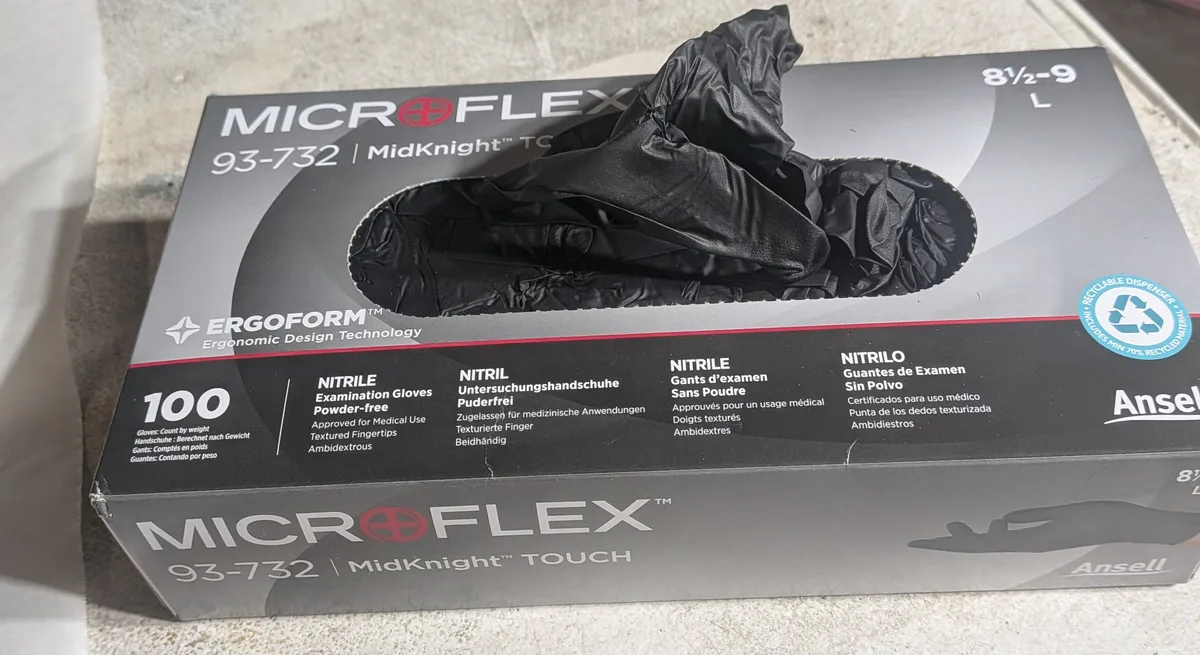
Avoid using bare hands, even for a “quick” pour. Also avoid reusing disposable gloves. If resin gets on a glove, remove it carefully and put on a fresh pair before touching bottles, tools, doors, phones, or your sink.
Gloves don’t block resin forever. DermNet notes that resin can get through ordinary rubber gloves in about 30 seconds, and that vinyl and neoprene aren’t fully protective (DermNet). That’s why nitrile is the default — and why you change a glove as soon as resin gets on it, rather than finishing the pour first.
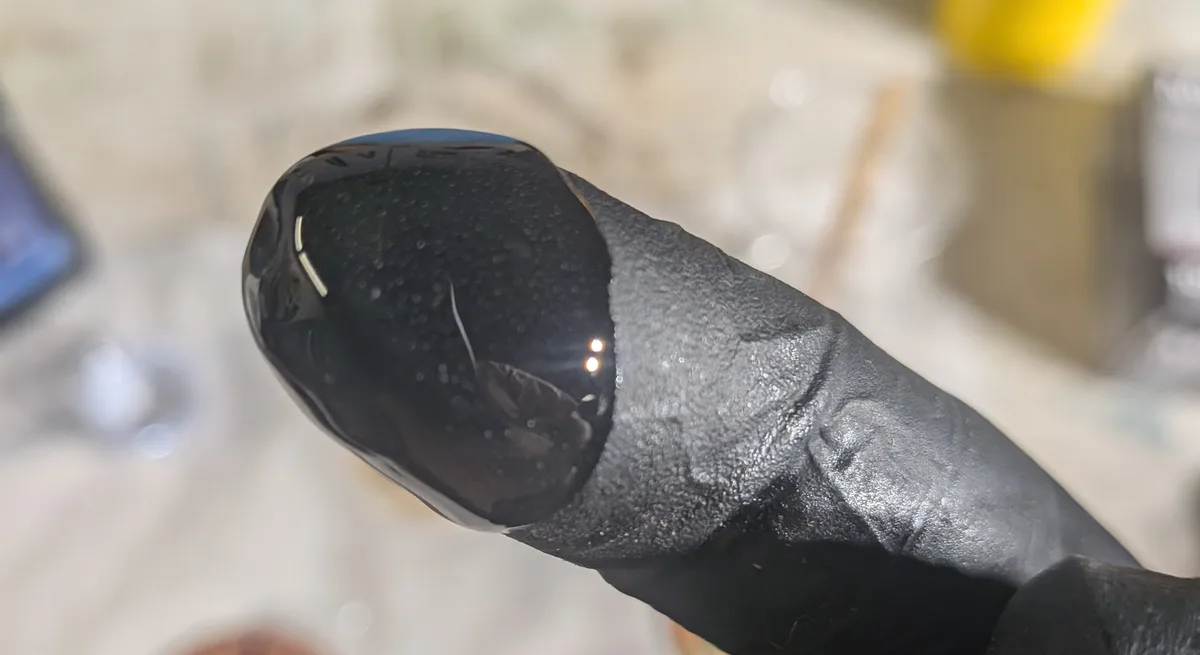
From my bench: The gloves I pour in are Ansell Microflex MidKnight Touch, black nitrile, 4.3 mil at the fingers and 2.8 mil at the palm. They fit and grip well. They feel thin around the wrist and palm, but the fingers feel solid, which gives a natural feel while you work. Through a full pour they didn’t tear, and no resin got through, even with resin on a fingertip and across the palm. Thin is fine for pouring. What matters is that the glove doesn’t tear or let resin through, so swap it the moment it does either. I haven’t tested them with solvents or for sanding.
Beginner glove tips
- Keep extra gloves nearby before you start.
- Change gloves if they tear, feel sticky, or touch uncured resin.
- Do not touch your face, phone, or cabinet handles with resin gloves.
- Wash your hands after removing gloves.
Eye Protection: Safety Glasses or Goggles
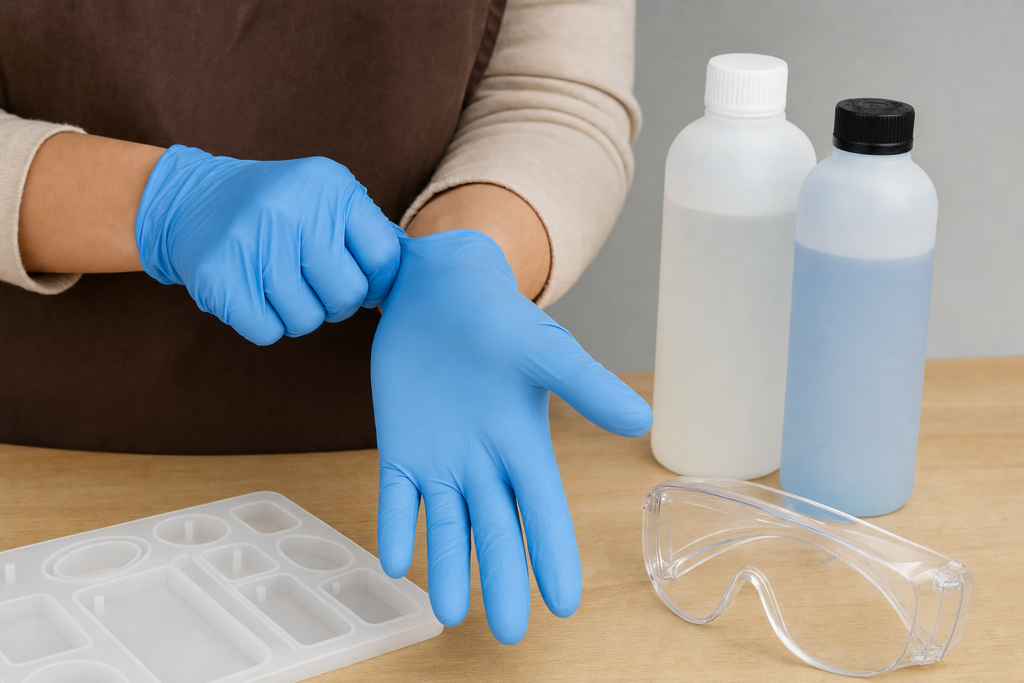
Eye protection matters because resin work includes measuring, stirring, pouring, scraping, and sometimes using heat or tools. A small splash is unlikely, but it is serious enough that beginners should plan for it.
CDC NIOSH recommends eye protection such as safety glasses or goggles if there is any chance of splashing epoxy or resin chemicals into the eyes (CDC NIOSH). WEST SYSTEM also lists goggles or safety glasses as protective equipment appropriate for epoxy work and describes gloves, eye protection, and protective clothing as the recommended minimum for most epoxy users (WEST SYSTEM).
For beginners, wraparound safety glasses are often easier to wear than bulky goggles. If you are pouring larger amounts, working above eye level, or using tools that may flick resin, goggles give more coverage.
Look for wraparound safety glasses or splash goggles that feel comfortable enough to wear for the whole project. The best safety gear is the gear you will actually keep on from setup through cleanup.
If resin splashes in your eyes: flush immediately with clean water under low pressure for 15 minutes, holding the eyelids open, then get medical attention (WEST SYSTEM). Check the first-aid section of your own product’s SDS too, and don’t rub.
Working with UV resin? The same glove rules apply — uncured UV resin is a skin sensitizer too. Don’t look straight into the curing lamp, and consider UV-blocking safety glasses for lamp work.
Clothing and Aprons: Cover More Skin
Resin can be difficult to remove from clothing, and uncured resin should not sit against your skin. Wear long sleeves, old clothes, or a dedicated apron that you do not mind ruining.
CDC NIOSH says to change clothing as soon as possible if epoxy or resin chemicals get on clothes (CDC NIOSH). WEST SYSTEM also advises changing clothes immediately after an epoxy spill and not continuing to wear clothing that cannot be cleaned fully (WEST SYSTEM).
Choose practical clothing. Avoid dangling sleeves, bracelets, scarves, or loose hair that could drag through wet resin.
A simple craft apron can help protect your clothes, but it should not replace gloves, eye protection, or good ventilation. Choose something washable or dedicated only to resin work.
Ventilation: Fresh Air Matters
Ventilation means moving fresh air through your workspace so vapors do not build up around you. CDC NIOSH recommends increasing ventilation as much as possible when using epoxies and resins (CDC NIOSH).
A beginner-friendly setup is a protected craft table near fresh airflow, away from food, pets, children, and bedrooms. WEST SYSTEM says safe-shop setup can include ventilation and that ventilation can range from advanced exhaust systems to basic floor or window fans, depending on the job and exposure (WEST SYSTEM).
If your space is tiny, closed, or poorly ventilated, pause before mixing resin. It is better to move the project than to try to fix airflow after resin is already curing.
If you use a fan, choose a basic portable fan to help move air through the room, not directly across your open resin cup toward your face or project. Airflow should support ventilation without blowing dust into wet resin.
Simple ventilation setup
Choose a room away from food preparation, open a window if weather and safety allow, and use airflow to move air away from you. If you are wondering about heat tools and airflow, see Can I Use a Hair Dryer for Resin Instead of a Heat Gun?. Keep the project covered while curing and leave the area ventilated for the cure time recommended by the product.

Masks and Respirators: What Beginners Need to Know
This is the most confusing resin PPE topic, so start with one rule: a dust mask, cloth mask, or surgical mask is not the same as a respirator.
CDC NIOSH says charcoal masks or surgical masks will not protect you from these chemicals, and respirators must be used correctly to be effective (CDC NIOSH). WEST SYSTEM says respiratory protection for epoxy vapors may include an air-purifying respirator with an organic vapor or multi-contaminate cartridge, while protection against epoxy dust and nuisance dust may use a dust or mist mask or respirator with an N95 rating or better (WEST SYSTEM).
For beginners, this means the right respiratory protection depends on the job. Mixing and pouring liquid resin is not the same as sanding cured or partly cured resin. If you are also choosing resin for your first project, read our guide to which type of resin to use.
If your resin label, safety data sheet, workspace, or sanding step calls for respiratory protection, look for a properly fitting respirator with organic vapor cartridges rather than relying on a cloth mask or surgical mask. Always match the respirator and cartridge type to the product instructions instead of guessing.
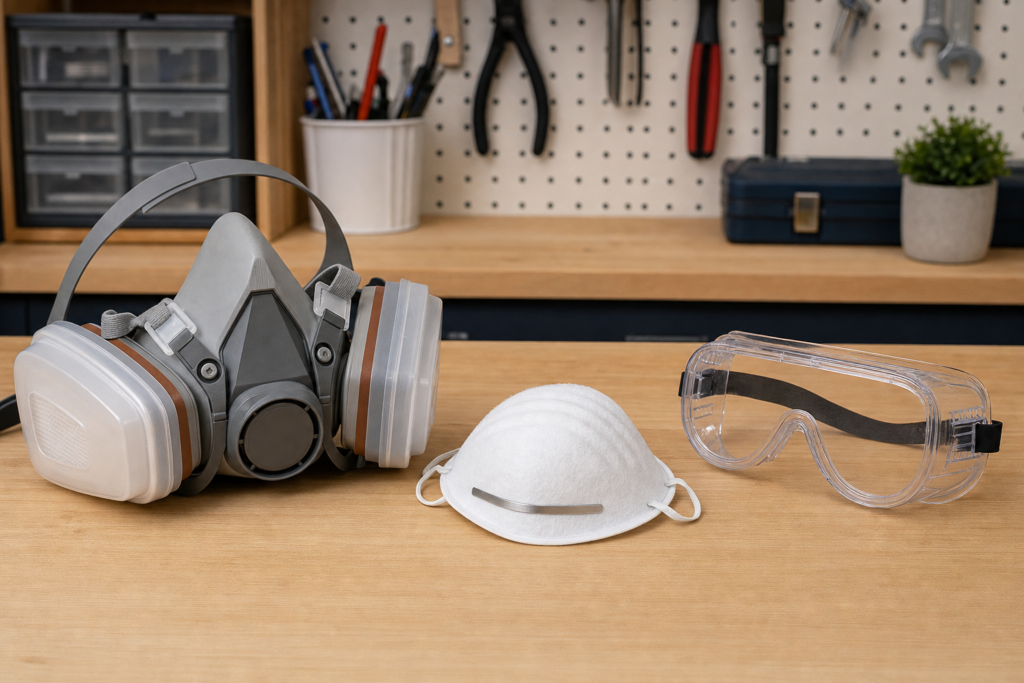
When do you need a respirator?
| Situation | What to use |
|---|---|
| Small pours in a room with real cross-ventilation, and you can’t smell the resin | Ventilation, gloves and eye protection are the usual baseline — follow your product’s SDS |
| Indoors without cross-ventilation, larger or deeper pours, using a torch or heat gun, or you can smell resin | A NIOSH-approved half-face respirator with organic-vapor (OV) cartridges |
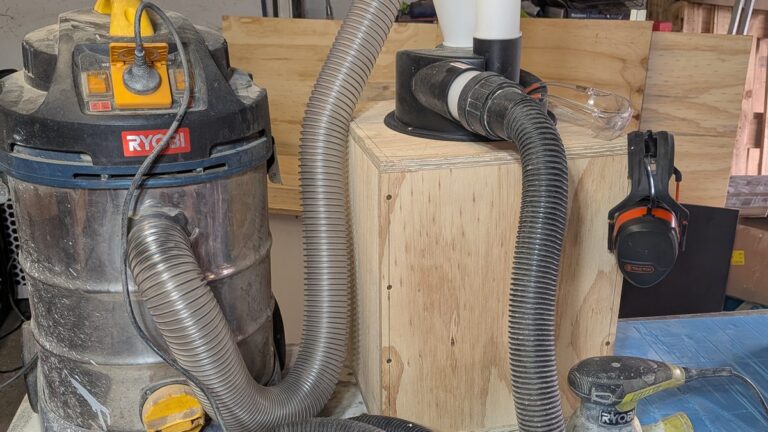
| Sanding, drilling or cutting fully cured resin | An N95-rated mask as a minimum for dust (WEST SYSTEM); P100 filters are better, plus dust collection at the sander |
| Sanding anything that isn’t fully cured | Don’t. The dust is still chemically reactive, so wait out the full cure time |
| Pregnant, asthmatic, or you’ve reacted to resin before | Talk to your doctor first (see the pregnancy guide) |
Respirator basics that actually matter
- Check it’s NIOSH-approved. NIOSH’s Respirator Approval Program lets you look up a model’s approval.
- Fit is everything. A respirator only works with a tight seal against your face — facial hair under the seal breaks it.
- Take the fit-and-breathing question seriously. In workplaces, OSHA’s respiratory protection standard (29 CFR 1910.134) requires fit testing and a medical evaluation before anyone wears a respirator — a good signal of how much fit and breathing matter, even at home.
- Change cartridges on schedule. Follow the manufacturer’s change schedule and store cartridges sealed between sessions. If you can smell resin through the mask, change them now — but don’t wait for a smell, because a spent cartridge can feel exactly like a fresh one.
What About “Non-Toxic” or “Low-VOC” Resin?
Beginner resin labels can be misleading if you read them too casually. “Non-toxic,” “low odor,” “low-VOC,” or “safe for home use” does not mean you can skip gloves, ventilation, or label directions.
ArtResin says its product is safe for home use when used as directed in a well-ventilated area, but still tells users to wear gloves, work in a well-ventilated area, and use the safety data sheet as the go-to reference for safety questions (ArtResin).
The safest beginner habit is to treat every resin product with respect. Read the label, check the safety data sheet, and use PPE even if the product sounds gentle.
Safe Workspace Setup
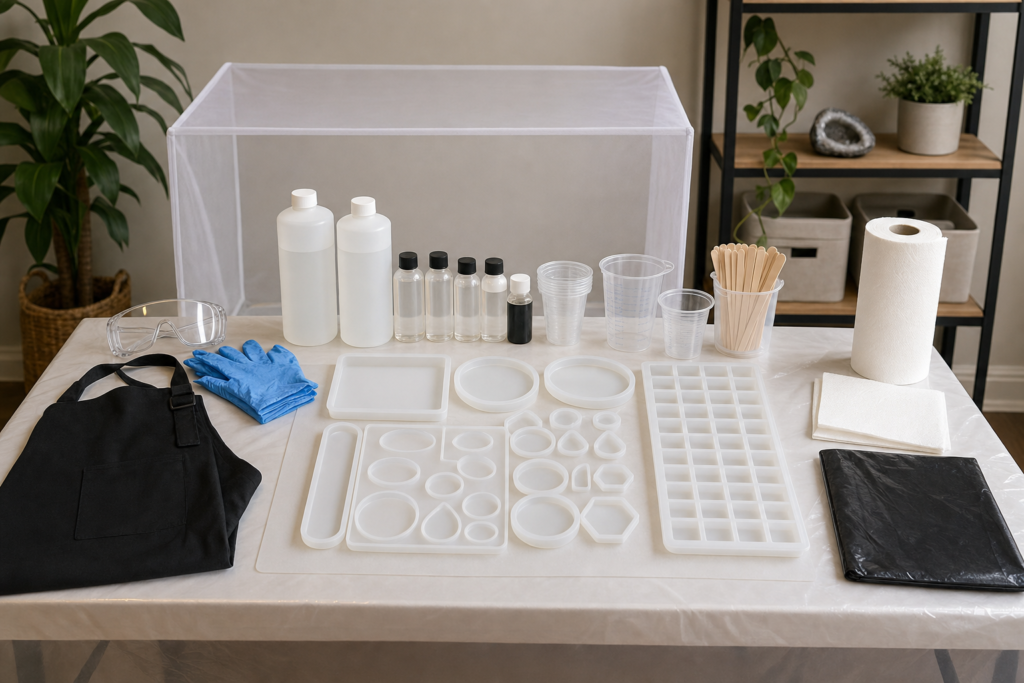
Good PPE works best when your workspace is organized. A cluttered table makes it easier to spill resin, knock over cups, or touch clean items with sticky gloves.
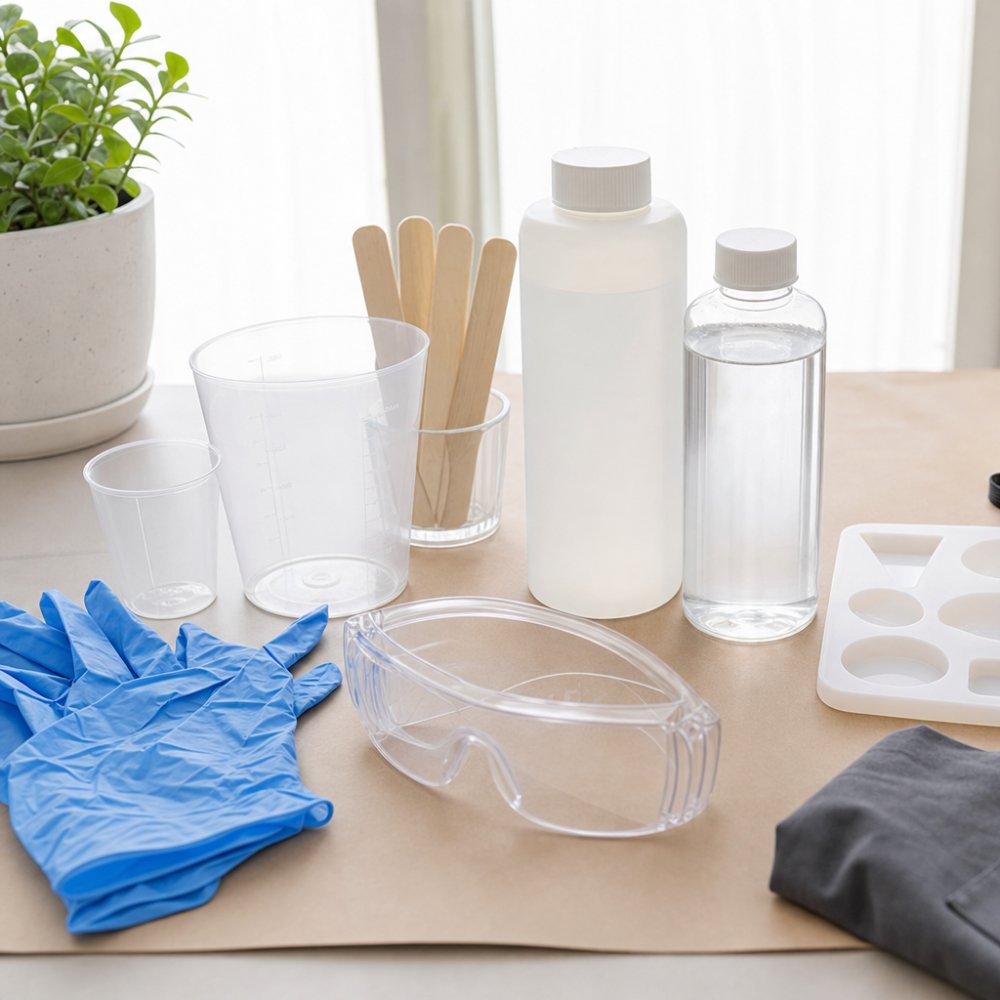
Set up your table before opening the bottles. Place your mold, cups, stir sticks, colorants, paper towels, trash bag, timer, gloves, goggles, and dust cover within reach.
Keep food, drinks, phones, children’s items, and pet supplies away from the resin table. If you need to check a recipe, timer, or article, do it before your gloves are sticky.
Useful beginner setup items include graduated mixing cups, reusable silicone stir sticks, a silicone work mat, silicone molds, and a simple dust cover. These are practical supply links, not requirements to buy a specific brand.
Beginner setup checklist
| Area | What to do |
|---|---|
| Table | Cover it with a silicone mat, plastic sheet, or disposable cover. |
| Airflow | Work in a ventilated area and avoid breathing directly over the cup. |
| PPE | Put on gloves and eye protection before opening resin. |
| Tools | Lay out cups, sticks, mold, timer, and paper towels first. |
| Cleanup | Keep a trash bag nearby so contaminated items do not spread. |
| Curing | Cover the piece with a dust cover and leave it undisturbed for the full cure time. |
What to Do If Resin Gets on Your Skin
If uncured resin or hardener gets on your skin, stop and clean it promptly. CDC NIOSH says to wash the skin or change clothing as soon as possible if epoxy or resin chemicals get on your skin or clothes (CDC NIOSH).
DermNet says skin should be washed with soap and water if contact occurs (DermNet). ArtResin also warns not to use varsol, vinegar, alcohol, or acetone to clean resin off skin because these can help break down resin in a way that may enable skin absorption (ArtResin).
Our rule goes one step further, following WEST SYSTEM: wipe off what you can, use a waterless hand cleaner for resin or mixed epoxy and soap and warm water for hardener, then wash with soap and warm water (WEST SYSTEM).
If you notice irritation, swelling, itching, eye exposure, breathing symptoms, or a burn-like reaction, stop using the product and seek medical advice.
Common Beginner PPE Mistakes
- Wearing latex gloves: Latex is not the best beginner default for epoxy resin. Use nitrile gloves unless your product’s safety data sheet recommends something more specific.
- Putting PPE on too late: Wear gloves and eye protection before opening the bottles because resin accidents often happen during measuring.
- Using a surgical mask as a resin respirator: CDC NIOSH says surgical masks will not protect you from these chemicals (CDC NIOSH).
- Sanding too soon: WEST SYSTEM warns against contact with sanding dust from partially cured epoxy (WEST SYSTEM).
- Spreading resin with sticky gloves: Change gloves as soon as they become messy so you do not contaminate bottles, taps, phones, and tools.
Final Beginner PPE Recommendation
If safety mistakes lead to sticky, cloudy, or uneven results, see ResinAffairs’ guide to common resin problems and how to fix them. For most beginner resin craft sessions, start with nitrile gloves, safety glasses or goggles, protective clothing, a covered table, and good ventilation. For a broader beginner supply list, read Essential Resin Tools Every Beginner Needs. Add respiratory protection when your resin label, safety data sheet, workspace, project size, sanding step, or health situation calls for it.
If you want a simple shopping list, start with nitrile gloves, safety goggles, a silicone work mat, mixing cups, stir sticks, and a dust cover. Add a respirator with organic-vapor cartridges whenever any situation in the respirator table above applies — if you work indoors without real cross-ventilation, that will be most sessions.
FAQ
What PPE do you need for resin?
Most beginners should use nitrile gloves, eye protection, protective clothing, a covered work surface, and good ventilation. CDC NIOSH recommends wearing the right PPE for the specific epoxies or resins used and following the label or safety data sheet (CDC NIOSH).
Do you need a respirator for resin?
It depends on the product, workspace, ventilation, and project. WEST SYSTEM says respiratory protection for epoxy vapors may include an air-purifying respirator with an organic vapor or multi-contaminate cartridge (WEST SYSTEM).
Can you use a surgical mask for epoxy resin?
No, do not rely on a surgical mask for resin chemical protection. CDC NIOSH says charcoal masks or surgical masks will not protect you from these chemicals (CDC NIOSH).
How do you ventilate a resin workspace?
Work in a room with fresh airflow, keep your face away from the mixing cup, and avoid small enclosed areas. CDC NIOSH recommends increasing ventilation as much as possible when working with epoxies and resins (CDC NIOSH).
What should you do if resin gets on your skin?
Is an N95 mask enough for resin?
For sanding dust, an N95 is the minimum WEST SYSTEM lists (WEST SYSTEM). For fumes from mixing, pouring or curing, no — an N95 filters particles, not vapor. For vapor you need a respirator with organic-vapor cartridges.
How often should you change respirator cartridges?
Follow the cartridge manufacturer’s change schedule, store cartridges sealed between sessions, and replace them straight away if you can smell resin through the mask. Don’t wait for a smell, though — a spent cartridge can feel exactly like a fresh one.
Are latex or vinyl gloves OK for resin?
Nitrile is the better default. DermNet recommends nitrile rubber or nitrile butatoluene gloves for epoxy and notes that vinyl and neoprene aren’t fully protective (DermNet).
Sources
- CDC / NIOSH — About Epoxies and Resins and Reproductive Health (ventilation, gloves, eye protection, respirators, and why smell isn’t a safety test): https://www.cdc.gov/niosh/reproductive-health/prevention/epoxies-resins.html
- DermNet — Allergy to epoxy resin (glove materials, skin washing): https://dermnetnz.org/topics/allergy-to-epoxy-resin
- WEST SYSTEM — Preventing Overexposure (PPE, respirator cartridges, skin cleanup, eye first aid): https://www.westsystem.com/safety/preventing-overexposure/
- WEST SYSTEM — Health Effects from Overexposure (sensitization, sanding dust): https://www.westsystem.com/safety/health-effects-from-overexposure-to-epoxy/
- ArtResin — What safety precautions should I take?: https://www.artresin.com/blogs/artresin/what-safety-precautions-should-i-take-when-using-artresin
- OSHA — Respiratory Protection standard, 29 CFR 1910.134: https://www.osha.gov/laws-regs/regulations/standardnumber/1910/1910.134
- NIOSH — Respirator Approval Program: https://www.cdc.gov/niosh/rap/index.html
This article is general information only and is not a substitute for your product’s Safety Data Sheet or for advice from a doctor. Resin Affairs has no medical staff. If you have a reaction, stop working and get medical advice.
Keep Learning on ResinAffairs.com
Once your PPE is sorted, here’s where to go next:
- 🛡️ Is Epoxy Resin Safe? → — the honest beginner safety guide: risks, ventilation and what to do if resin gets on your skin.
- 🥄 How to Mix Epoxy Resin → — ratios, the two-cup method and cure times, step by step.
- 🚀 How to Start Resin Crafting → — the beginner roadmap: what to buy first, what to skip, and the easiest first project.
- 🤰 Can You Use Epoxy Resin While Pregnant? → — what workplace-safety agencies say about uncured resin, and how to talk it through with your doctor.
- 🫧 Visit the Resin Safety Hub → — the full safety reference this checklist is drawn from.
- 🧬 Is Resin Plastic? → — what resin actually is at a chemical level, and how it differs from everyday plastic.
Enjoyed this guide? Join the Resin Affairs newsletter for new tutorials, safety tips, and project ideas straight to your inbox.