How to Make Epoxy Resin Coasters (Without Ruining Your First Batch)
Disclosure: This article contains affiliate links. If you purchase through these links, we may earn a small commission at no extra cost to you. We only link to gear we would use ourselves.
As an Amazon Associate I earn from qualifying purchases.
🧰 Recommended Kit for This Project
- Deep coaster molds, 4-pack (round and square) — the mold style this tutorial is built around
- Lets Resin Epoxy Resin — the resin used in this guide’s mixing-math walkthrough
- Mica Powder Pigments — for the color add-ins covered later in this guide
- Small Butane Culinary Torch — the de-bubble tool this guide recommends over a lighter
Introduction: Let’s Squash That Fear Right Now
Terrified of wasting expensive resin on a batch of sticky, bubbled coasters? You are absolutely not alone.
Every single day, beginners just like you search for a guide that doesn’t just list the steps — but actually explains why each step matters. Because here’s the truth: most coaster projects don’t fail because of bad luck. They fail because of one or two tiny, completely avoidable mistakes that nobody bothered to mention.
That’s exactly what this guide fixes.
We’re going to cover everything the other tutorials skip over — the mixing math so you never run short mid-pour, the leveling trick that is honestly the #1 reason beginner coasters go wrong, and the exact temperature your room needs to be for a perfect cure. By the end, you’ll have a clear, confident process you can follow every single time.
Your first batch isn’t going to be a disaster. Let’s make sure of it.
What You’ll Need: Your Complete Beginner’s Supply List
One of the best things about making resin coasters is that the supply list is short. You don’t need a fully-equipped craft room — just the right tools for the job. Here’s exactly what to grab, and why each item earns its place on the list.
🧪 The Resin Itself
Our Top Pick for Beginners: Lets Resin Epoxy Resin
This is the resin I’ve poured and tested myself. What I found:
- Simple 1:1 mix. Equal parts A and B by volume.
- It wants a warm room. At about 85°F it set within a day and was scratch-hard at two days. In a cool garage (about 71 to 75°F) it was still rubbery after 26 hours.
- Hard and still clear at six days, with no cloudiness. Too early to judge long-term yellowing.
- The catches. My box had no gloves, eye protection or mold, so buy those separately. The leaflet says “non-toxic”, which I take to mean the resin once it has cured. The liquid parts are a different matter: the hardener label says DANGER, so wear nitrile gloves and eye protection every time you pour.
Read the full Let’s Resin starter kit review for the photos and cure times.
Also Worth Knowing:
- TotalBoat Table Top Epoxy — A coating epoxy with about 40 minutes of working time. TotalBoat says it can be sanded after about 24 hours at 70°F and reaches full cure in 5 to 7 days.
- Craft Resin Epoxy — Craft Resin says its formula releases air bubbles on its own while the resin is warm, and it recommends pours about 1/4 inch deep. A fantastic upgrade once you’ve done your first batch.
Not sure epoxy is the right resin for what you’re making? See which type of resin to use for your project.
🟣 Silicone Coaster Molds
Our Pick: Deep coaster molds, 4-pack (round and square)
Don’t try to cut corners here with cheap molds. A quality silicone mold with a deep edge (at least ¼ inch / 6mm deep) is non-negotiable for two reasons:
- The deep edge gives your coaster enough thickness to actually be sturdy and functional.
- Silicone is naturally non-stick — once your resin is fully cured, your coaster simply pops right out with no damage to the mold or the piece.
Look for molds that advertise a high-gloss interior finish. That glossy inner surface transfers directly to your coaster, giving it that professional glass-like shine without any extra sanding or polishing.
🥄 Mixing Cups & Stir Sticks
Our Pick: Graduated Plastic Mixing Cups + Silicone Stir Sticks
- The graduated markings on the mixing cups are critical. You need to measure your resin and hardener accurately — eyeballing it is how you end up with a sticky, never-curing mess.
- Go for silicone stir sticks over wooden craft sticks. Cured resin peels right off silicone, so you can rinse them and reuse them indefinitely. Wooden sticks are single-use and can also introduce tiny air bubbles from their porous surface.
🔥 A Butane Torch or Heat Gun
Our Pick: Small Butane Culinary Torch
This is the tool beginners most often ask, “Do I really need this?” — and the honest answer is yes, strongly recommended.
After you pour your resin, tiny air bubbles will rise to the surface. A quick, sweeping pass with a torch or heat gun pops those bubbles in seconds, leaving a perfectly smooth, glass-like surface. Without it, you’re relying on luck.
A small butane kitchen torch (the kind used for crème brûlée) works perfectly and gives you more control than a full-size heat gun. We’ll show you exactly how to use it safely in the step-by-step section below.
🧤 Safety & Prep Gear
Don’t skip this section. This is the stuff that protects you.
| Item | Why You Need It |
|---|---|
| Nitrile Gloves (not latex) | Epoxy resin is a skin sensitizer. Repeated skin contact can cause an allergic reaction that gets worse over time. Always wear gloves. |
| Respirator Mask (half-face, organic-vapor cartridges) | An N95 or dust mask only stops dust, not resin vapors. Use a half-face respirator with organic-vapor (OV) cartridges, and add P95/P100 pre-filters for sanding. |
| Safety Glasses | Splashes happen, especially while stirring. |
| Silicone Craft Mat | Cured resin peels right off silicone, saving your entire work table. This is a genuine lifesaver. |
| Bubble Level | This might be the most underrated tool on this list. More on this below — it’s crucial. |
📋 Get the Free Resin Safety & Prep Checklist
A one-page printable checklist covering PPE, ventilation, and workspace setup — so you’re not hunting through this guide mid-pour. Enter your email and we’ll send it straight over.
Free. We only email when there’s something useful, never more than twice a month, and you can unsubscribe anytime. Privacy Policy
🎨 Color Add-Ins (Optional But Highly Recommended)
| Product | Best For | Notes |
|---|---|---|
| Mica Powder Pigments | Metallic, shimmer effects | A little goes a long way — start with ¼ tsp per cup |
| Alcohol Inks | Fluid, organic color patterns | Spreads beautifully in resin; great for galaxy or ocean effects |
| Acrylic Paint | Bold, opaque color | Use sparingly — a few drops per ounce, well under 6% of your total resin volume or it can affect curing |
✅ Your Quick-Reference Shopping Checklist:
- Beginner Epoxy Resin Kit (Resin + Hardener)
- Round Silicone Coaster Molds (Deep-Edge)
- Graduated Mixing Cups
- Silicone Stir Sticks
- Small Butane Torch
- Nitrile Gloves
- Respirator Mask
- Safety Glasses
- Silicone Craft Mat
- Bubble level
- Mica Powders or Alcohol Inks
The Step-by-Step System: How to Make Epoxy Resin Coasters
⏱️ Project Time Overview:
- Active Working Time: 30–45 minutes
- Cure to Touch: 24 hours
- Ready to Use: about 72 hours (full hardness ~7 days)
- Difficulty Level: Beginner-Friendly ✅
Before You Touch Anything: Set Up Your Space
This is the step most tutorials skip straight past, and it’s the one that costs beginners the most heartache.
Five minutes of prep work here will save your entire project. Do not skip it.
Step 1: Level Your Work Surface
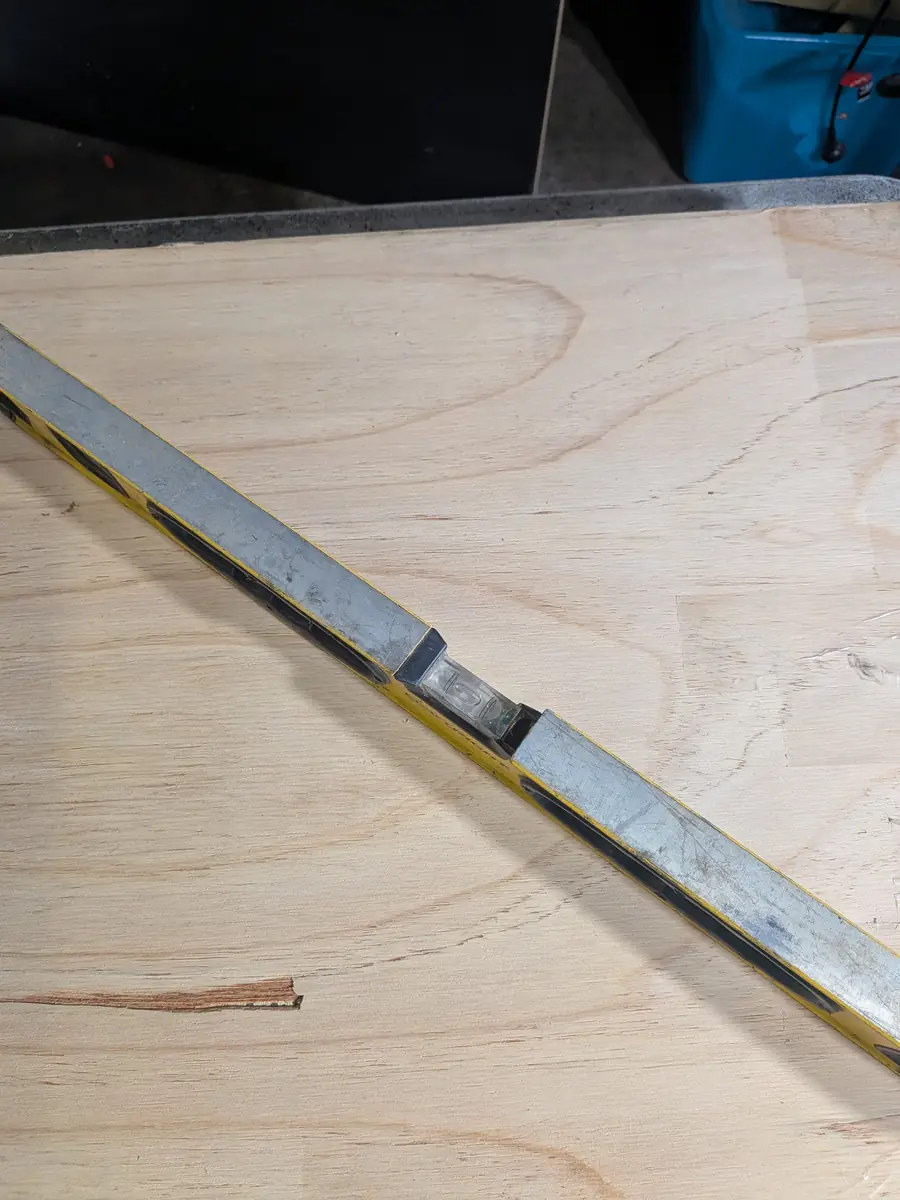
This is the single most important step in this entire guide. Read that again.
Epoxy resin is a liquid. It will follow gravity without question. If your table has even the slightest tilt — and most tables do, even ones that look perfectly flat — your resin will slowly migrate to one side as it cures.
The result? A coaster that’s thick on one side and paper-thin on the other. Or worse, one that pours right over the edge of your mold entirely.
Here’s what to do:
- Place your bubble level directly on your work table. Check it in two directions — left to right, and front to back.
- If the bubble isn’t perfectly centered, slide a folded piece of card or a thin book under the table leg until it is.
- Place your silicone molds on the table and check the level again. The molds themselves can sit slightly uneven on a textured surface.
- Don’t move the table again once you’ve confirmed it’s level. Seriously — bumping it mid-cure is a very common beginner mistake.
💡 Pro Tip: A small, cheap bubble level costs about $5 at any hardware store. It is, without question, the best $5 you will spend on this hobby.
Step 2: The Mixing Math — Never Run Out (or Over) Again
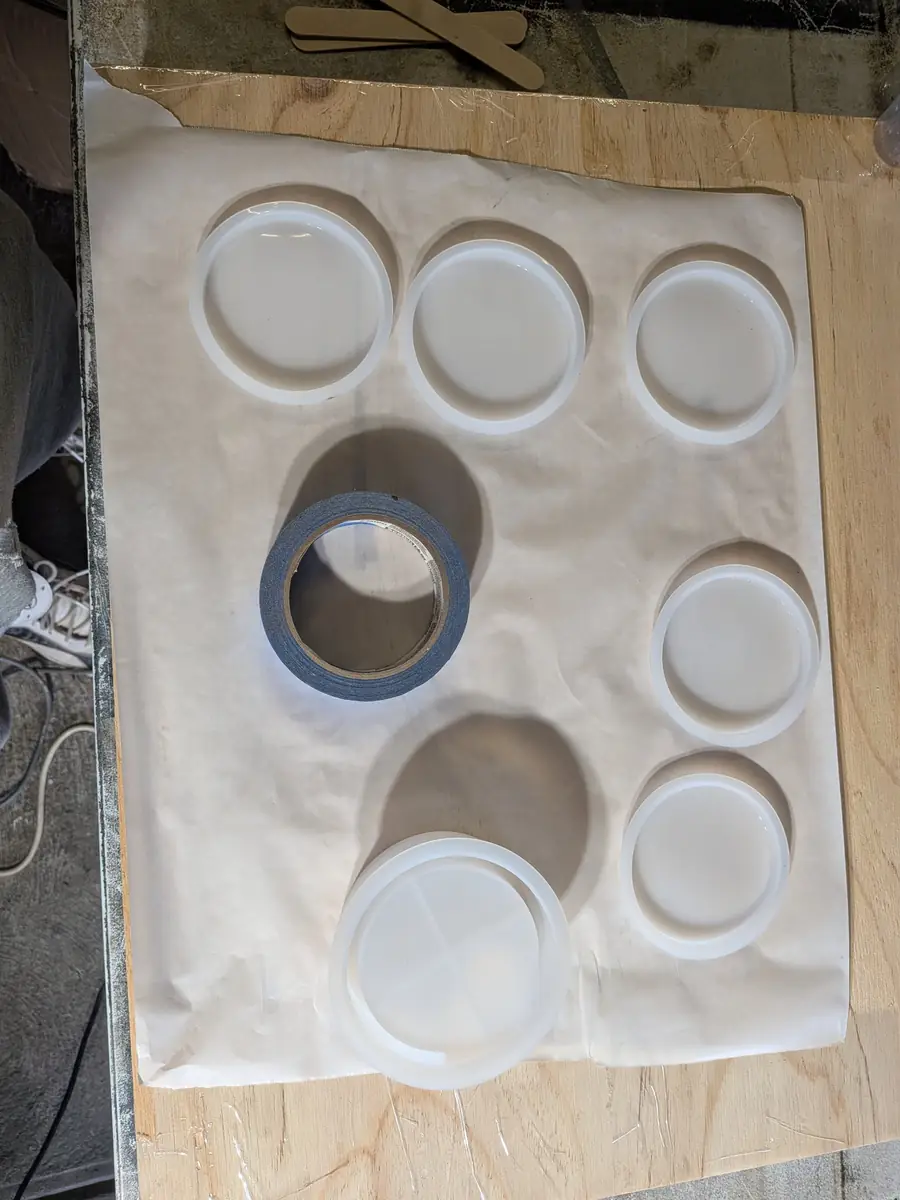
Here’s the part that every other guide glosses over, and it’s why so many beginners either run out of resin mid-pour or mix way too much and waste expensive product.
The formula is simple:
Volume of Mold (in cubic inches) ÷ 1.8 = Ounces of mixed resin needed
But first, you need to know two measurements for your specific mold:
- The diameter (width across the circle)
- The depth (how tall the walls of the mold are)
📊 Resin Volume Quick-Reference Table
| Mold Diameter | Mold Depth | Resin Needed (per coaster) | For a Set of 4 |
|---|---|---|---|
| 3.5 inches | ¼ inch (6mm) | ~1.5 oz mixed | ~6 oz total |
| 3.5 inches | ⅜ inch (9mm) | ~2 oz mixed | ~8 oz total |
| 4 inches | ¼ inch (6mm) | ~2 oz mixed | ~8 oz total |
| 4 inches | ⅜ inch (9mm) | ~3 oz mixed | ~12 oz total |
| 4.5 inches | ¼ inch (6mm) | ~2.5 oz mixed | ~10 oz total |
| 4.5 inches | ⅜ inch (9mm) | ~3.5 oz mixed | ~14 oz total |
⚠️ Important: Always mix about 10% more than you think you need. A little extra is far less painful than running short with three coasters done and a fourth mold sitting empty. For other sizes, or a mold that isn’t round, my resin calculator works it out and splits it into Part A and Part B for your ratio.
For a 1:1 resin like our top pick, here’s how to split your total:
If your table says you need 8 oz of mixed resin for a set of four coasters:
- Measure 4 oz of Resin (Part A) into your mixing cup
- Measure 4 oz of Hardener (Part B) into the same cup
- Total mixed = 8 oz ✅
Step 3: Add Your Color
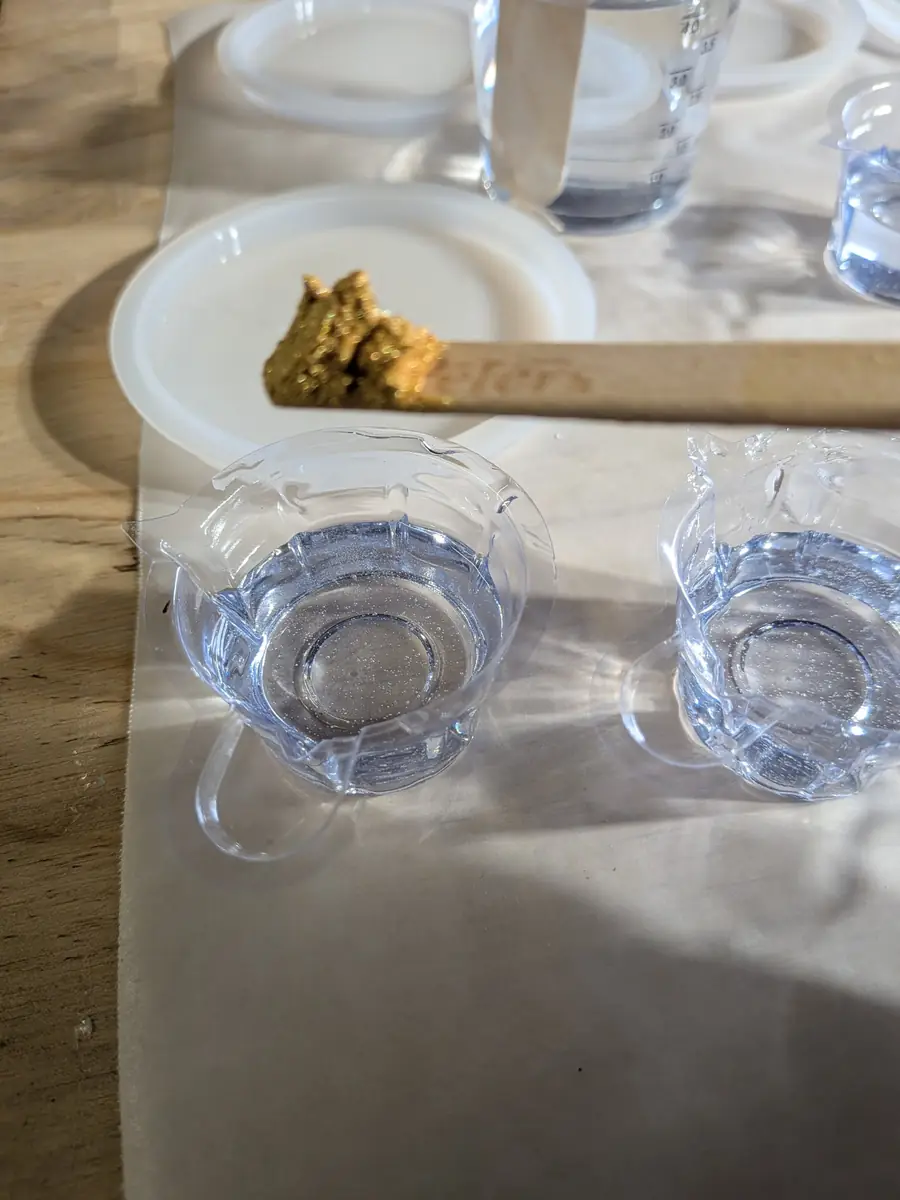
Now comes the fun part. But there are a few rules that protect your cure.
For Mica Powders:
- Add your mica powder to your mixed resin (after combining Part A and Part B).
- Start with ¼ teaspoon per 2 oz of resin. You can always add more — you can’t take it out.
- Stir slowly until the powder is fully incorporated with no streaks.
For Alcohol Inks:
- Add 3–5 drops per 2 oz of resin as a starting point.
- Alcohol inks are highly concentrated — a little genuinely goes a long way.
- These create beautiful organic swirls and don’t need to be fully mixed in. A light stir gives a marbled effect.
The Golden Rule of Colorants:
Never exceed 6% colorant by volume of your total mixed resin. Too much pigment or ink interferes with the chemical reaction between resin and hardener, and you’ll end up with soft spots or a surface that never fully hardens.
Step 4: The Mixing Technique — Slow & Steady Wins
This step has more impact on your finished coaster than almost anything else. Bad mixing = sticky coaster. Full stop.
Here’s the exact technique:
- Combine your measured resin and hardener in your graduated mixing cup.
- Set a timer for 3 full minutes. This is non-negotiable.
- Stir slowly and deliberately in a figure-8 pattern. Don’t stir fast — fast stirring whips air bubbles into the resin.
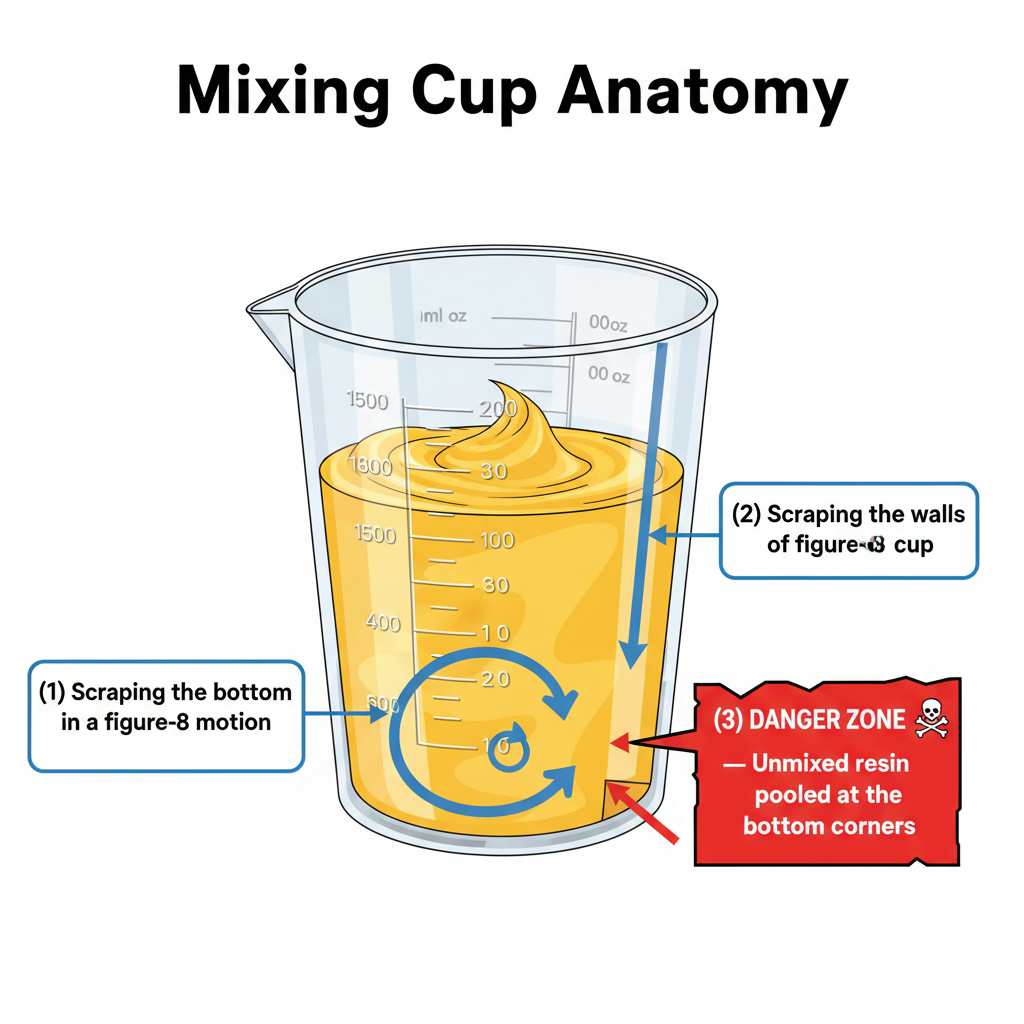
- Every 30 seconds, scrape the sides and bottom of the cup with your silicone stir stick. Unmixed resin hides in the corners and along the walls. This unmixed material is the #1 cause of sticky, tacky spots on a finished coaster.
- At the 2-minute mark, switch to a fresh cup and pour the mixture in, then stir for one more minute. This “scrape and transfer” technique ensures you leave any stubbornly unmixed resin clinging to the old cup behind.
⚠️ Know Your “Pot Life”: Pot life is the amount of time you have to work with your resin after mixing before it starts to thicken and become unworkable. For most beginner epoxies, this is roughly 30–45 minutes at room temperature (check your label). Don’t dawdle. Mix with intention and move to your pour promptly.
Step 5: The Pour
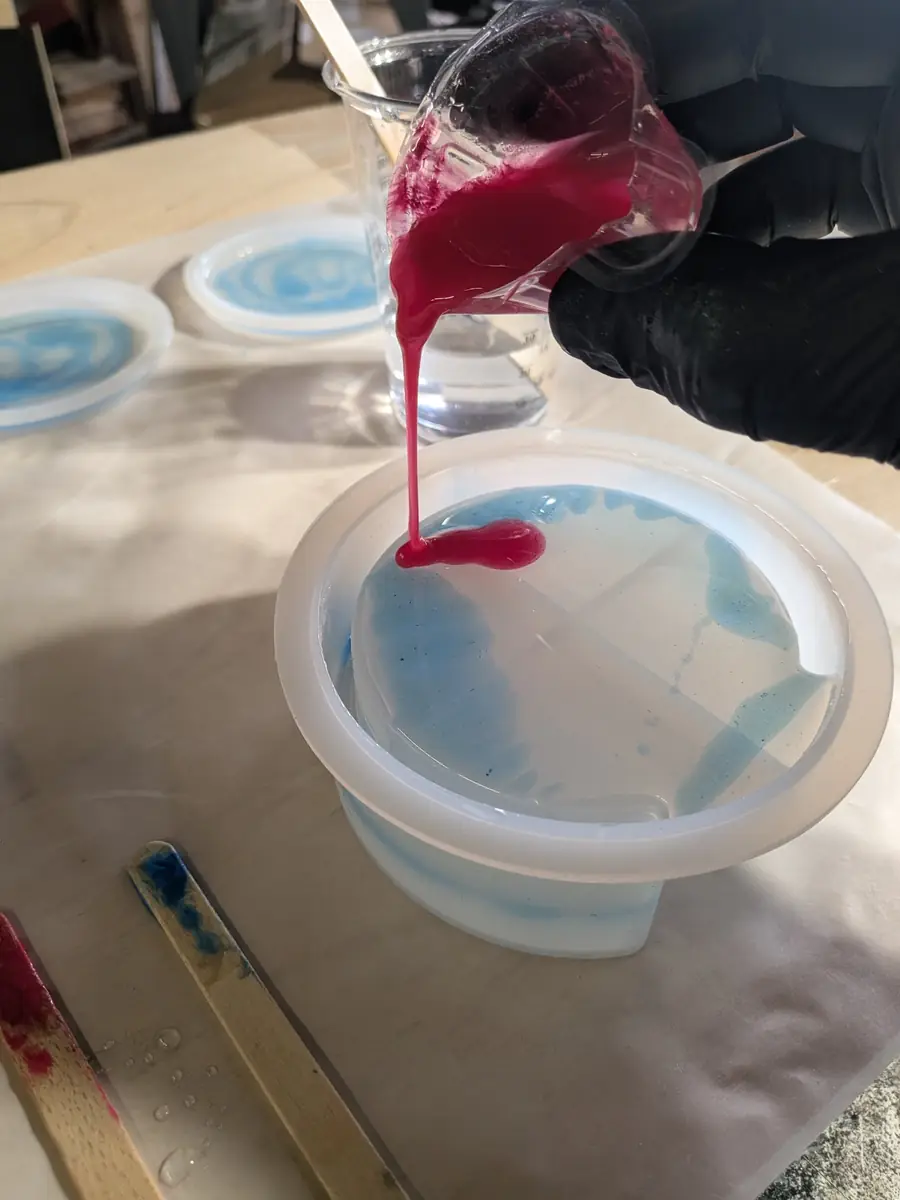
You’re ready to pour. Keep these three things in mind:
- Pour slowly and in a circular motion, starting from the outside edge and spiraling inward toward the center. This technique minimizes the air you introduce during the pour itself.
- Pour in a thin, steady stream — don’t dump it. The higher the stream falls, the more air gets trapped.
- Fill to just below the top rim of your mold. Resin will self-level slightly, and overfilling causes it to creep over the edges, creating a messy lip on your finished coaster that requires sanding.
- Gently tap the mold on the table three or four times after pouring. This encourages larger trapped bubbles to rise to the surface on their own.
Step 6: The De-Bubble Pass — Your Secret Weapon
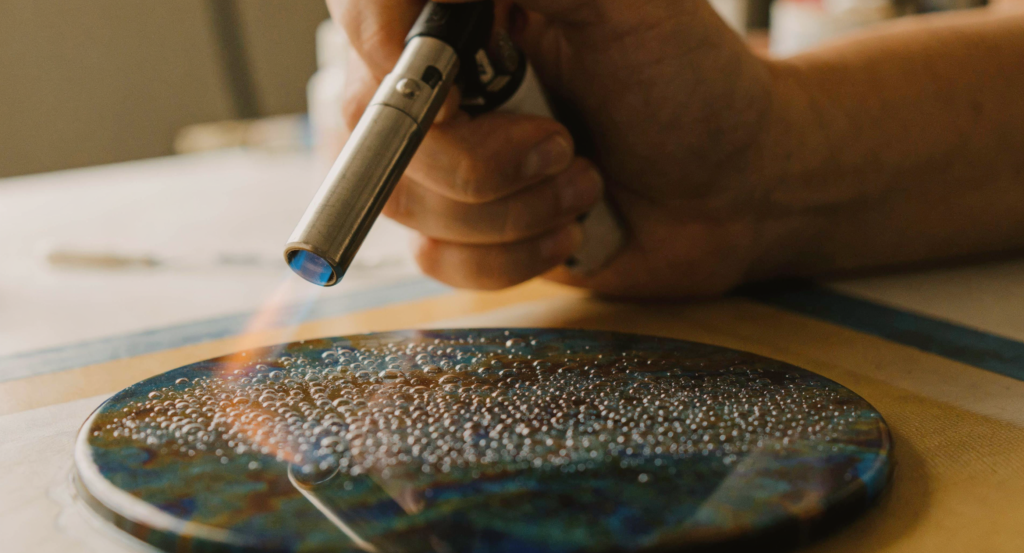
Wait 3–5 minutes after your pour before doing this step. You want the resin to settle first.
Then, grab your butane torch and follow this technique exactly:
- Hold the torch 4 to 6 inches above the surface of the resin. Not closer.
- Keep the flame moving at all times — a slow, steady sweeping motion from left to right.
- Never hold the flame in one spot. Lingering causes scorching, yellowing, and can crack your mold.
- One to two passes is usually all you need. The heat briefly lowers the surface tension of the resin, allowing bubbles to pop and release.
- Check the surface under a light. If you still see bubbles, wait two more minutes and do one additional pass.
💡 No torch? No problem. A craft heat gun works too: hold it 6–8 in above the surface and keep it moving. Skip the lighter, and don’t blow on the resin through a straw. Your breath adds moisture, and it puts your face right over wet resin.
Step 7: The Cure — The Waiting Game (Done Right)
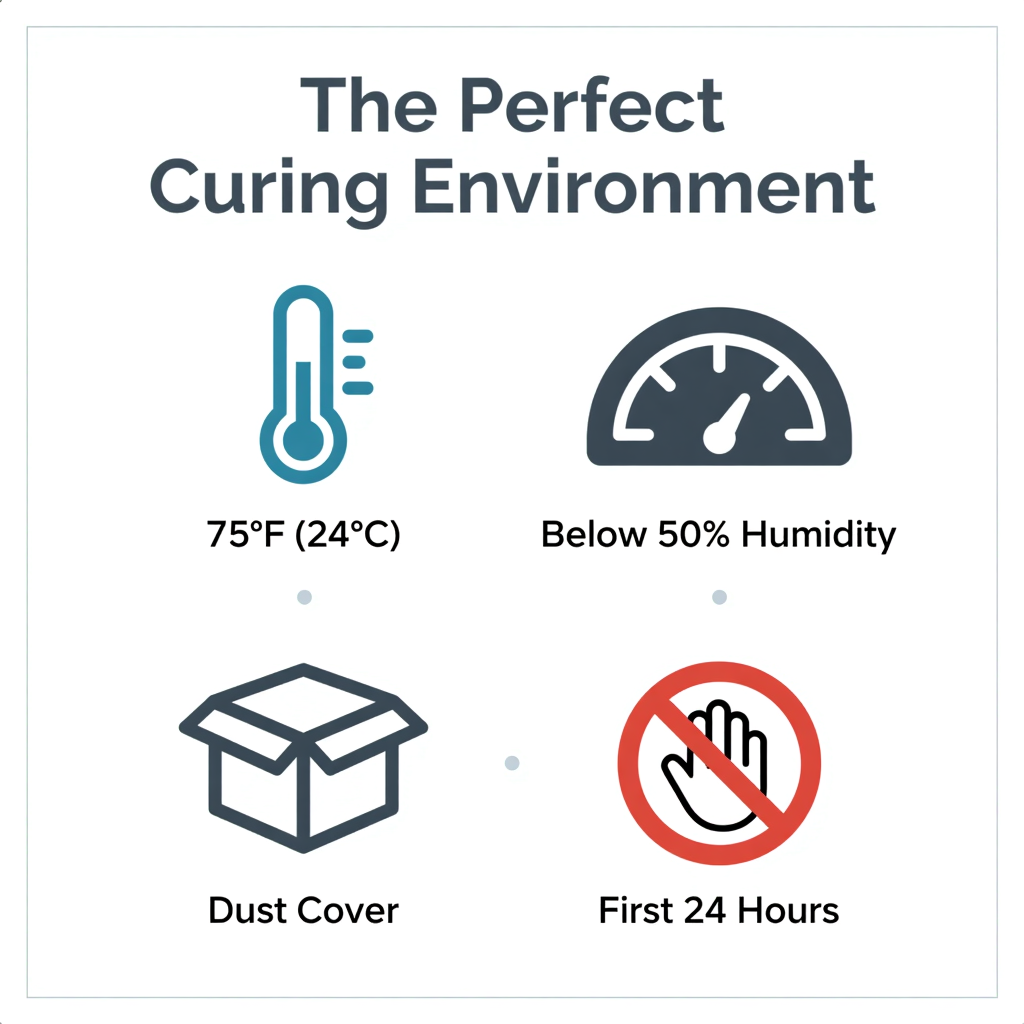
You’ve poured, you’ve de-bubbled, and now you hand the project over to chemistry. Your only job for the next 72 hours is to protect your workspace.
✅ Temperature: 72°F–77°F (22°C–25°C) is your target zone.
This is the “Goldilocks” range for epoxy curing. Too cold (below 65°F) and the cure slows dramatically, leaving a soft, flexible result. Too hot (above 85°F) and the resin can cure unevenly or develop a yellow tint over time.
✅ Humidity: 50–60% if possible.
High humidity is the enemy of clear resin. Moisture in the air can react with the surface of your curing resin and cause a white, cloudy, or waxy film to form on top. If you live somewhere humid, run a dehumidifier in your craft space.
✅ Dust Cover: Essential.
Any dust, pet hair, or debris that lands on your resin in the first 12 hours will be permanently embedded in your coaster. Cover your molds with a cardboard box, a plastic storage tote turned upside down, or a purpose-built dome cover. Just make sure it doesn’t touch the surface of the resin.
✅ Leave It Completely Alone for 24 Hours.
We know. It’s tempting to check. But touching, prodding, or moving your molds during the first 24 hours is one of the most common reasons for fingerprints, dents, and uneven surfaces on a beginner’s first batch.
🔗 Curious what’s actually happening inside your resin as it cures? It’s an exothermic chemical reaction — the molecules are cross-linking into a solid polymer. Read the science in our guide: What is Resin? (Or jump straight to the timeline below for the practical cure-to-touch, demold, and full-cure schedule.)
⏱️ Your Curing Timeline at a Glance
| Time After Pour | What’s Happening | What You Should Do |
|---|---|---|
| 0–3 hours | Resin is liquid and flowing | Nothing — don’t touch it |
| 3–12 hours | Resin is gelling (like thick honey) | Still nothing — leave it alone |
| 12–24 hours | Surface is hard to touch | Still in the mold — do not demold yet |
| 24–48 hours | Safe to demold carefully | Pop coasters out of molds gently |
| 72 hours | Fully cured and hard | Safe to gift, use, and admire |
Step 8: Demolding Your Coasters
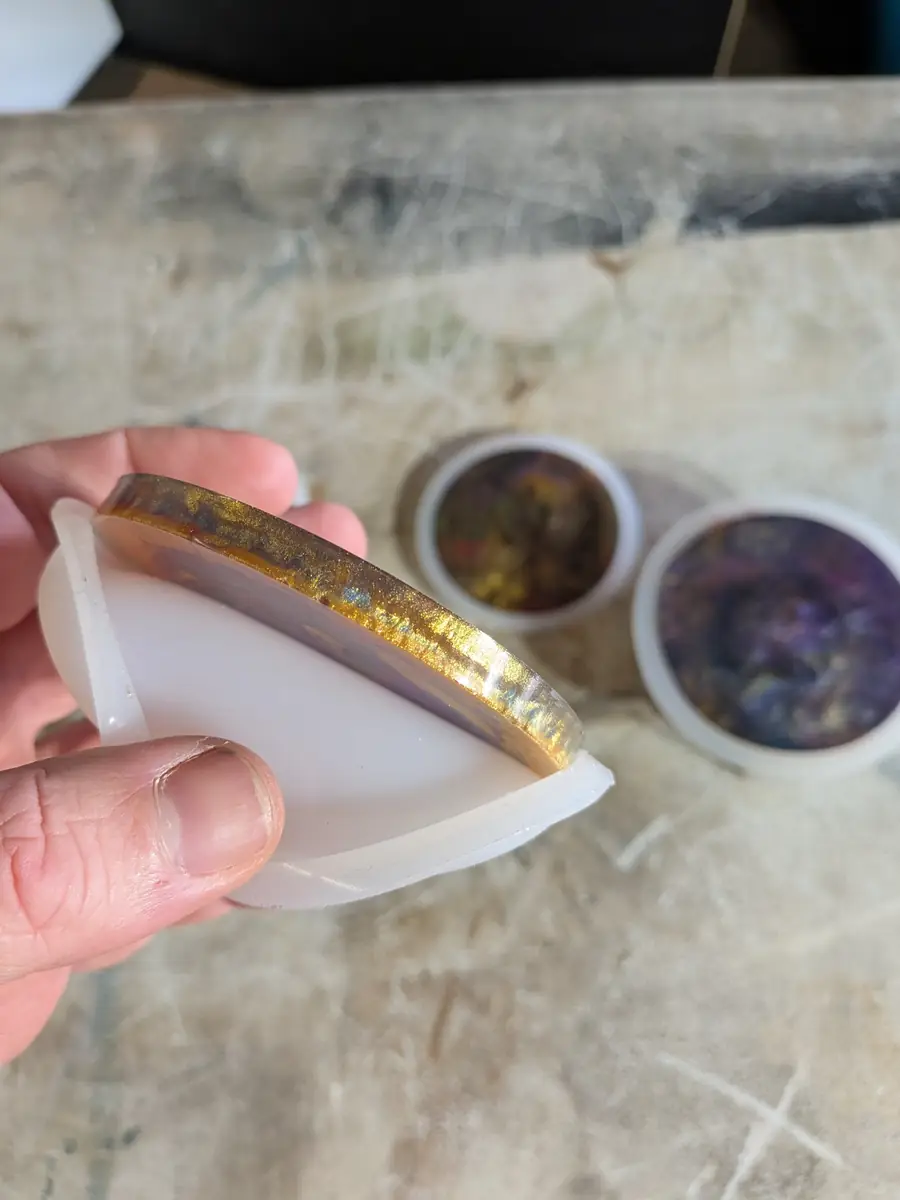
This moment is deeply satisfying. Here’s how to do it without causing any damage:
- Wait the full 24–48 hours before attempting to demold. If the coaster still feels flexible or rubbery, it needs more time. Put it back and check again in a few hours.
- Gently flex the silicone mold from the outside, working around the edges first. The coaster will begin to pull away naturally.
- Don’t force it. If it’s resisting, it’s not ready. Forcing it causes cracking, surface damage, and a lot of frustration.
- Once released, inspect the edges. You may have a very thin “flash” (a tiny ridge of resin that crept under the mold edge). This sands off easily with 400-grit sandpaper and a light touch. Wear a dust mask while you sand.
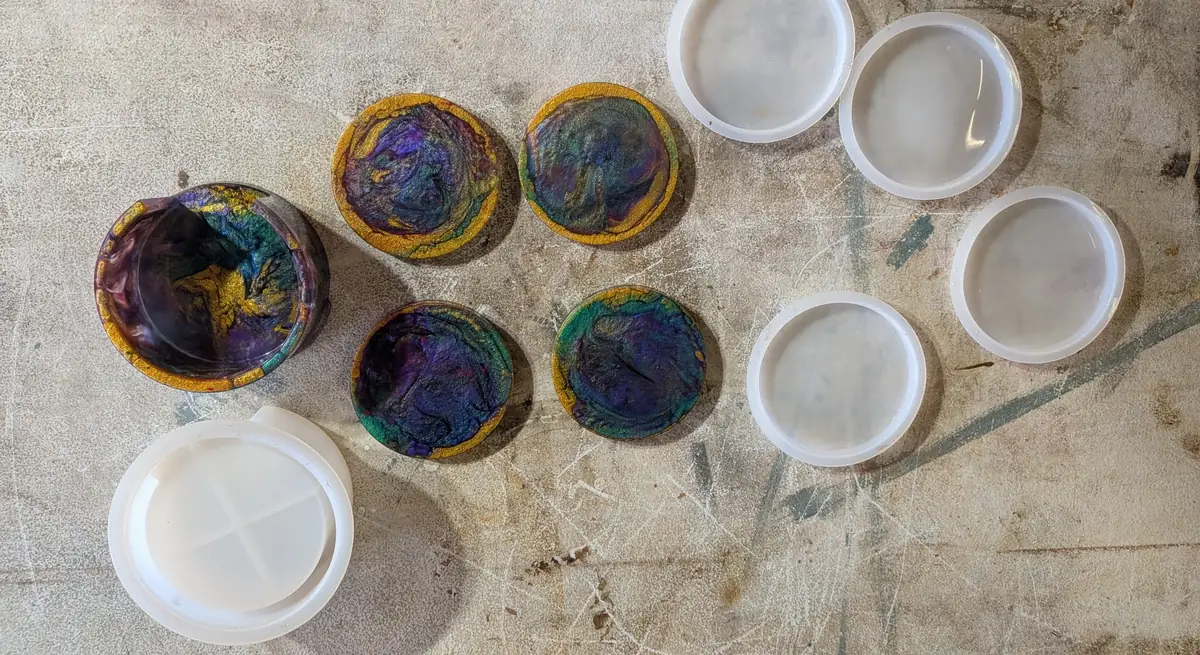
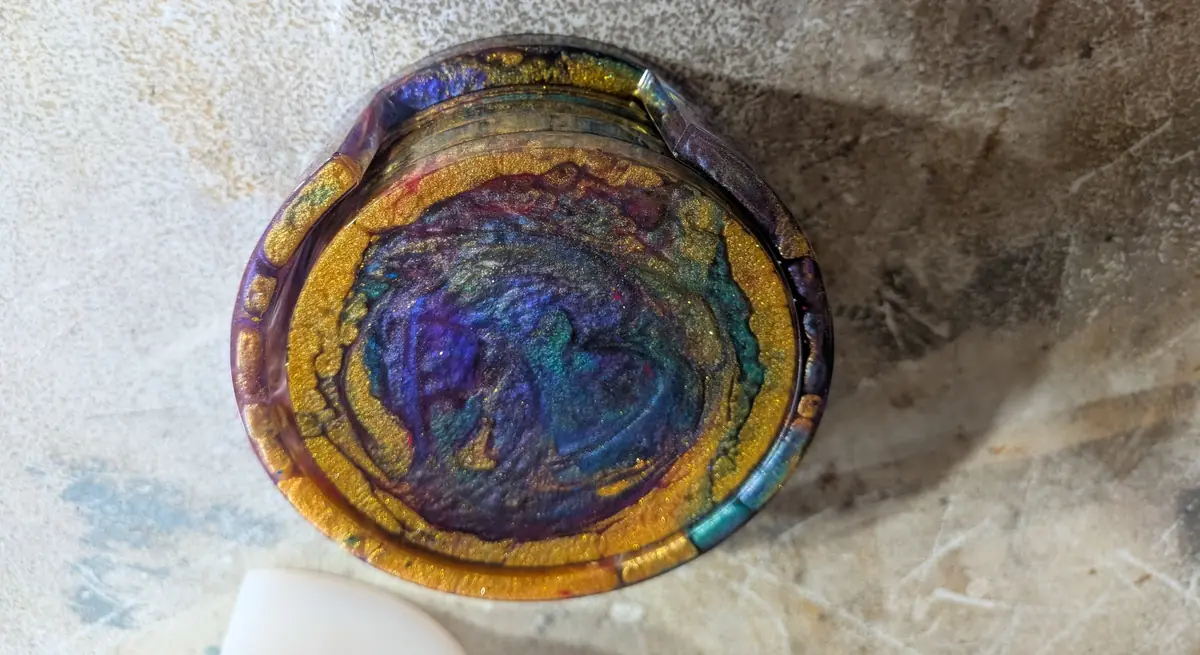
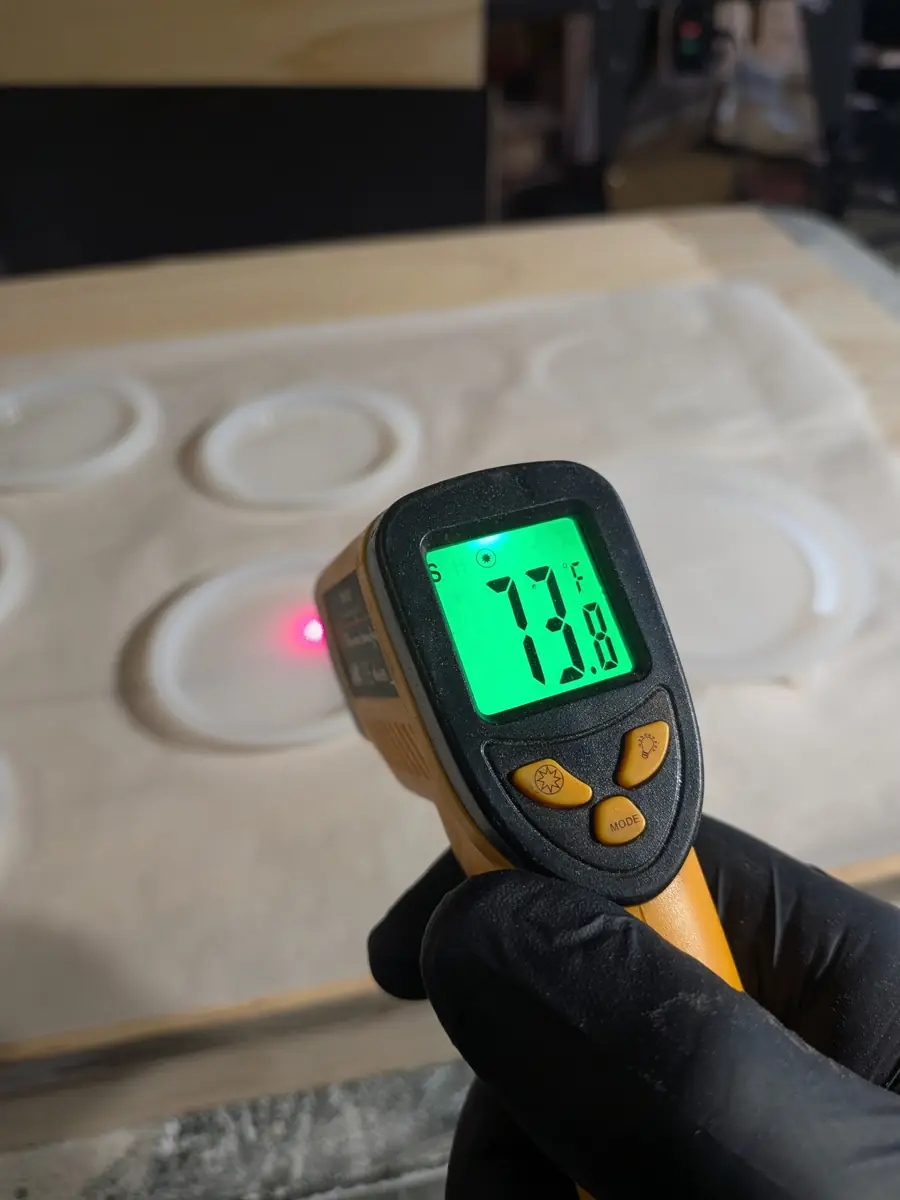
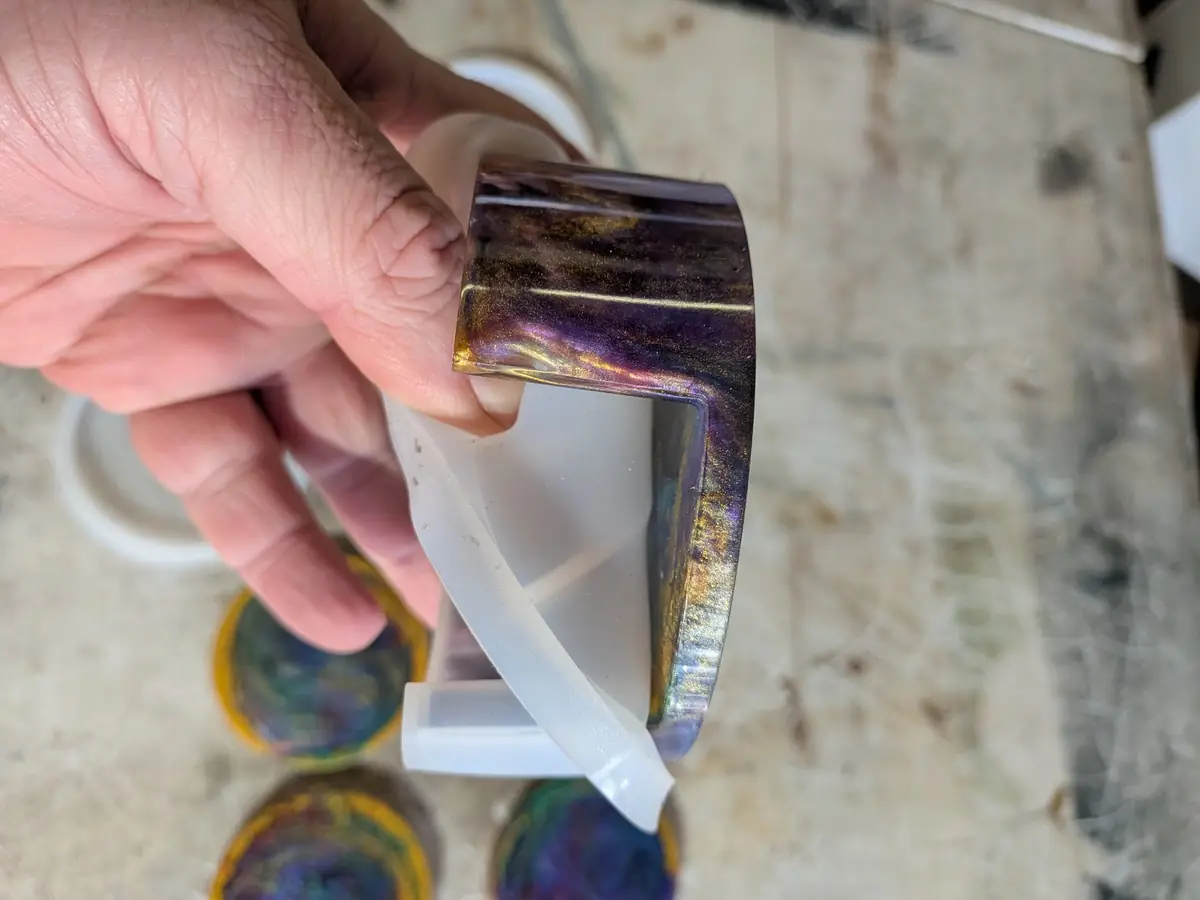
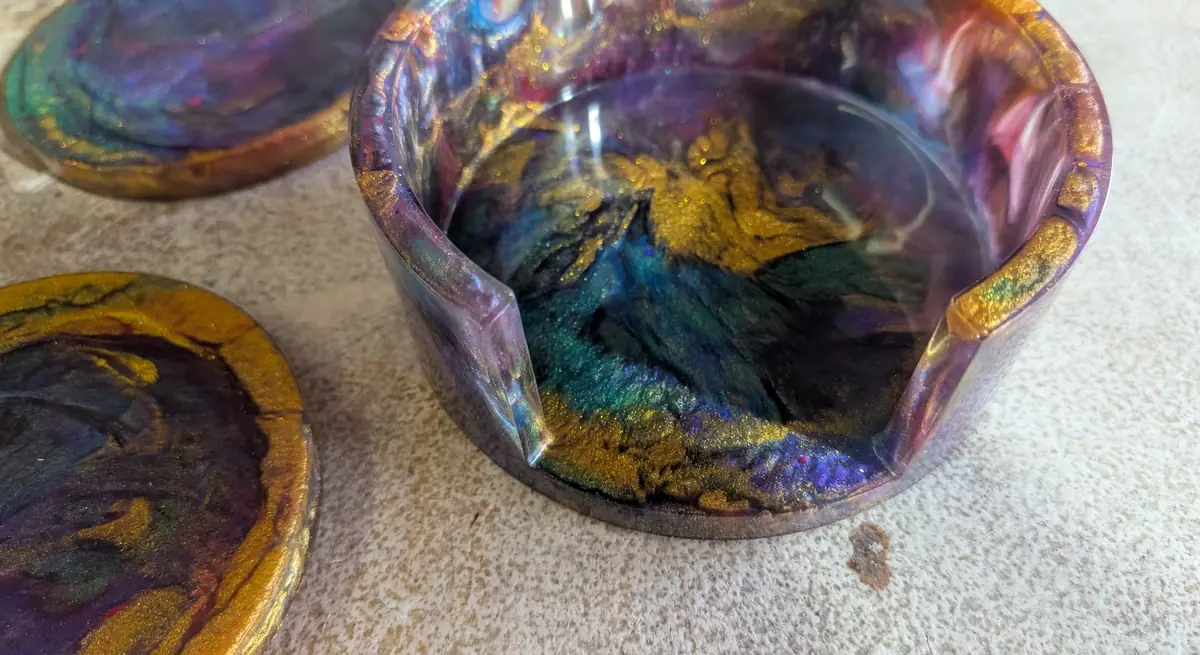
From my bench: I poured four coasters and a slotted holder with Let’s Resin epoxy. The infrared thermometer read 73.8°F at the molds before the pour, and I left the pieces in their molds for about three days. All five came out fully hard, with no soft or tacky spots. The holder has deeper walls and slots, but it still released easily: I peeled the silicone back and it came straight out. A little dust settled on the pieces after they had cured, and it wiped straight off. Dust that lands in the first 12 hours is different, because it sets into the resin.
Troubleshooting Guide: When Things Go Wrong (And How to Fix Them)
💡 A Word of Encouragement Before We Start
Every experienced resin artist has a “disaster batch” story. A sticky coaster, a cloudy surface, bubbles that refused to budge — these aren’t signs that you’re bad at this. They’re signs that you’re learning. This section exists so that when something unexpected happens, you don’t panic and throw everything in the bin. You diagnose, you understand, and you fix it.
Problem #1: “My Resin is Sticky or Tacky — Even After 72 Hours”
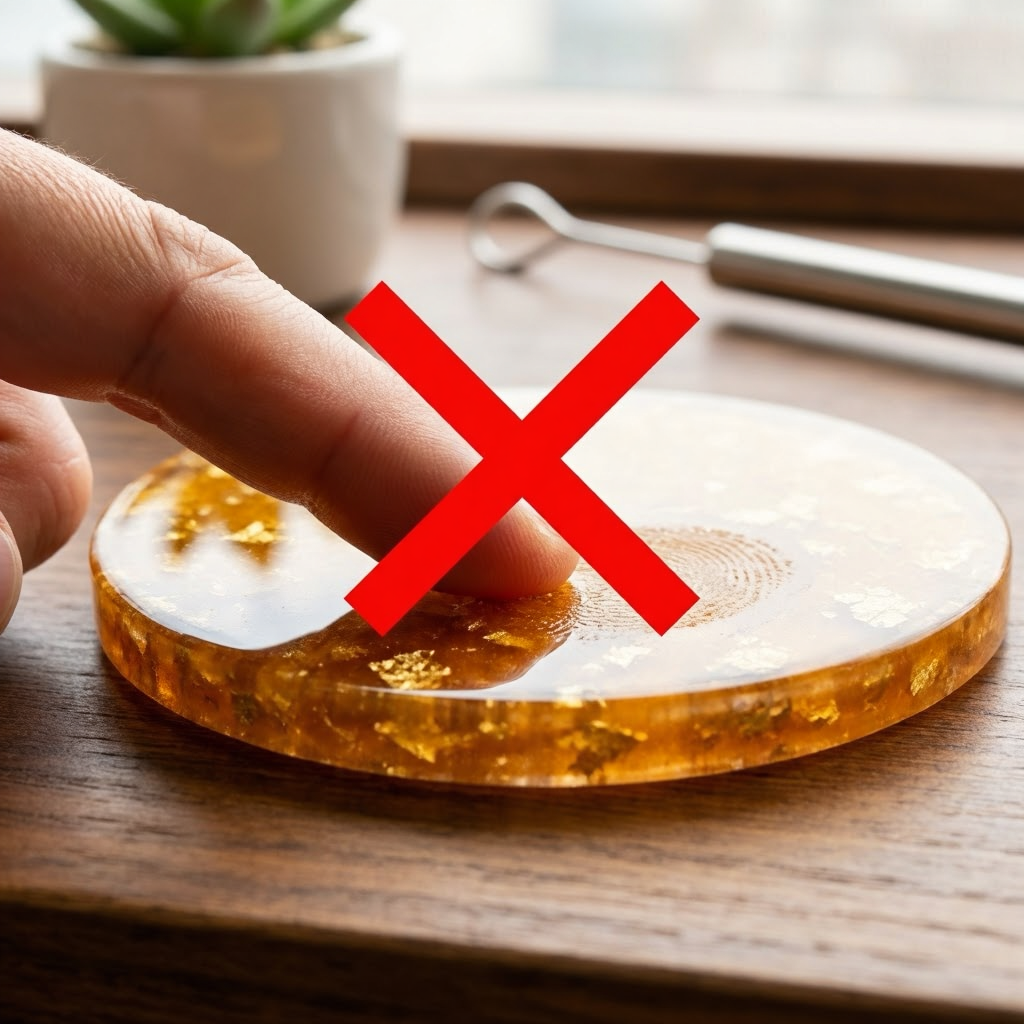
This is the most common beginner complaint, and the good news is that it almost always comes down to one of three fixable causes.
Cause A: Your Mixing Ratio Was Off
Epoxy resin is a two-part chemical reaction. Part A (resin) and Part B (hardener) need to be combined in the exact ratio specified by your brand. For our top pick, that’s 1:1 by volume.
Even being slightly off — say, a little heavy on the resin side — means there isn’t enough hardener to complete the chemical reaction. The result is a surface that stays soft, sticky, and never fully hardens.
The Fix:
- Always measure by volume using your graduated cups, not by weight and not by eye.
- Measure Part A first, note the measurement line, then measure Part B to the exact same line.
- When in doubt, remeasure. Then measure again.
Cause B: Incomplete Mixing
Remember that “Mixing Cup Anatomy” diagram from Step 4? Unmixed resin pooled at the bottom corners or clinging to the walls of your cup is the hidden culprit behind sticky patches on an otherwise fine-looking coaster.
The Fix:
- Commit to the full 3-minute mixing time with a timer.
- Use the scrape-and-transfer technique — pour your mixture into a fresh cup at the 2-minute mark and continue stirring. This leaves stubbornly unmixed material behind in the original cup.
- Stir slowly. Fast stirring creates bubbles but doesn’t actually improve mixing.
Cause C: Your Room Was Too Cold
Epoxy resin cures through a chemical reaction that is directly affected by temperature. If your craft space dropped below 65°F (18°C) during the cure the reaction slows to a crawl and may produce a permanently soft result.
The Fix (Prevention):
- Keep your workspace consistently between 72°F–77°F for the full 72-hour cure.
- In winter, move your curing coasters to a warmer room, or use a small space heater nearby (not directly blowing on the resin — indirect warmth only).
The Fix (If It Already Happened):
- If your coasters are tacky but only slightly soft, put them under a heat lamp or in a resin curing box at around 80°F–85°F (27°C–29°C) for 2–4 hours. Keep a heat lamp above the piece (never resting on it) and far enough away that the surface feels warm, not hot, and never put resin in an oven of any kind: a heat lamp or a curing box only. Sometimes gentle warmth is enough to finish the curing reaction. (A UV lamp won’t help here: UV light only cures UV resin, not two-part epoxy.)
- If the top is still tacky after 48 hours of warmth but the coaster is firm underneath, sand and recoat. Sand the surface lightly (wear gloves and an N95 mask), wipe off the dust, then pour a thin top coat from a fresh, correctly measured batch. Full steps are in why is my resin sticky.
⚠️ When to Start Fresh: If the coaster is still soft, bendy or wet in spots after 48 hours in a warm room, a new top coat won’t fix it, because fresh resin can’t make the layer underneath cure. Scrape it out and start again with a properly mixed batch, and see how to fix resin that didn’t cure for cleaning out the mold first.
Problem #2: “There Are So Many Bubbles on the Surface”
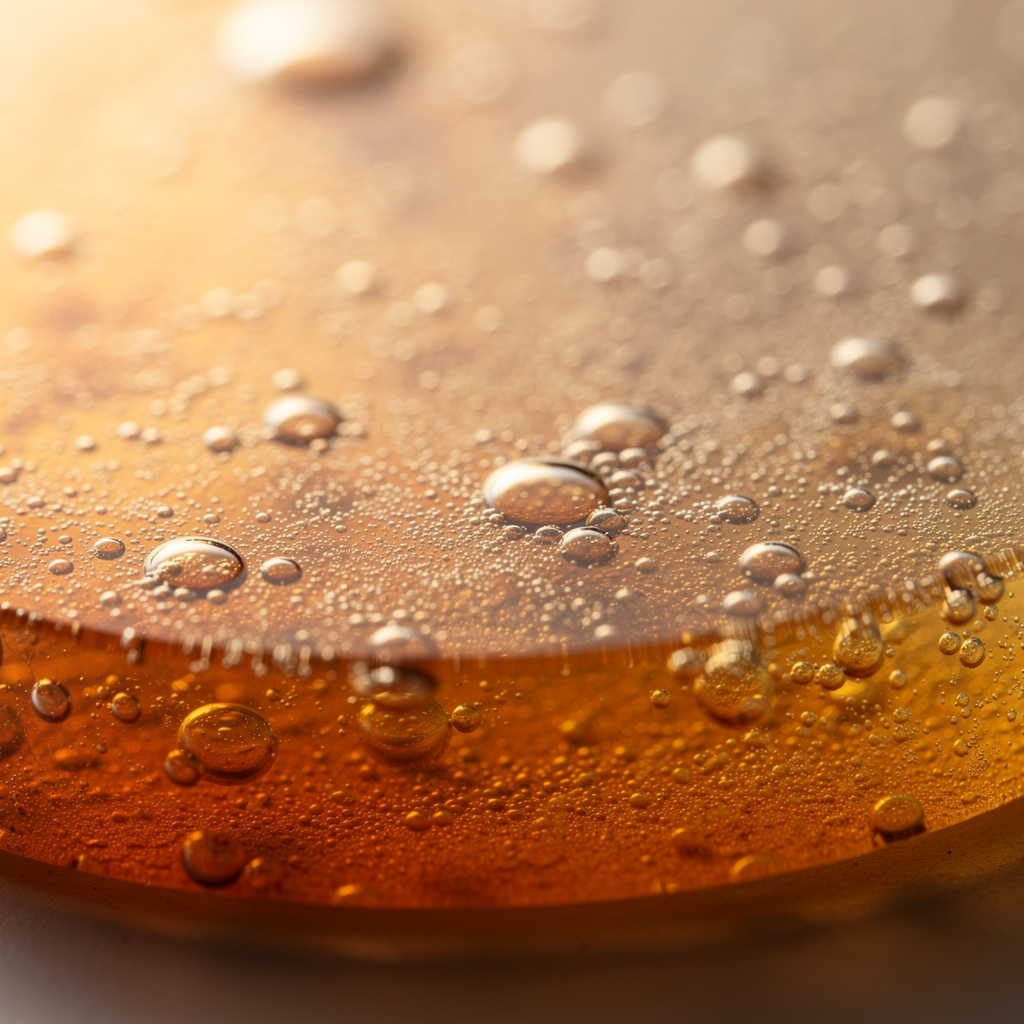
A few tiny bubbles here and there are normal and can often be sanded out. But a coaster that looks like it’s full of foam is a different issue, and it has a specific cause.
Cause A: Over-Mixing or Mixing Too Fast
Stirring your resin vigorously whips air directly into the mixture. The faster you stir, the more bubbles you create.
The Fix:
- Slow your stir down significantly. Think slow and deliberate, not fast and efficient.
- Use a figure-8 motion rather than circular stirring. Circular stirring creates a vortex that pulls air down into the resin.
Cause B: High Humidity in Your Workspace
Humidity above about 70% causes the resin to react with moisture in the air, producing small bubbles during the pour and throughout the early stages of curing.
The Fix:
- Run a dehumidifier in your craft space on high-humidity days.
- Check your local humidity on your phone’s weather app before starting a project. If it’s above 70% outside, consider waiting for a drier day.
Cause C: Cold Resin Straight From Storage
Resin that has been stored somewhere cold becomes thick and viscous. Viscosity just means how thick or runny a liquid is — cold resin is like cold honey compared to warm honey. Thick, cold resin traps air bubbles far more readily than resin at the correct working temperature.
The Fix:
- Before mixing, warm your resin and hardener bottles by placing them in a bowl of warm (not hot) water for 10–15 minutes.
- Never microwave resin bottles.
Cause D: You Skipped the De-Bubble Pass
The Fix (Prevention):
- Never skip the de-bubble step. Even one careful pass with a torch makes a dramatic difference.
The Fix (If It Already Happened):
- If bubbles are on the surface of a fully cured coaster, you can sand them out. Start with 400-grit wet/dry sandpaper, work up to 800-grit, then 1500-grit, and finish with a resin polishing compound to restore the shine.
- If bubbles are trapped deep inside the coaster, your best option is to pour a thin flood coat over the top to create a new, smooth surface. Our guide to getting bubbles out of resin walks through both repairs step by step.
🔗 Bubbles are one of the most common resin problems, and we’ve covered every cause and fix in detail. Head over to our complete guide: Common Resin Problems and How to Fix Them — it walks through why bubbles form and exactly how to remove them, plus fixes for stickiness, soft spots, and cracks too.
Problem #3: “My Resin Cured Cloudy or White”
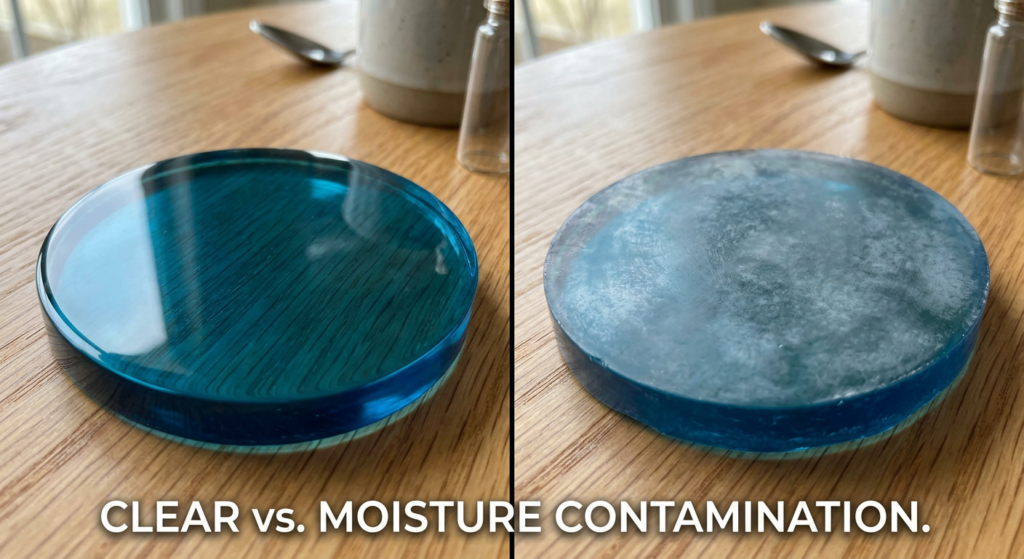
Cause A: Moisture Contamination
This is the #1 cause of cloudy resin. Moisture from humidity, a slightly damp mixing cup, or improperly stored resin triggers a reaction that shows up as a white, waxy, or cloudy film on the surface of your cured coaster.
The Fix (Prevention):
- Never store your resin in a garage, basement, or shed.
- Always make sure your mixing cups and molds are completely dry before use.
- Work in a space with humidity of 60% or lower.
- Keep the lids on your resin and hardener bottles when not actively pouring.
The Fix (If It Already Happened):
- The white film often sits on the surface only. A waxy film from humidity is usually amine blush, which is water-soluble: scrub it off with warm water and a non-scratch scouring pad, then dry.
- If wiping doesn’t solve it, lightly sand the surface with 400-grit sandpaper and apply a thin flood coat of fresh resin to restore clarity.
Cause B: Resin Poured in a Cold Environment
The Fix:
- Warm your resin bottles in a bowl of warm water before mixing.
- Make sure your workspace is at or above 72°F before you begin mixing.
Cause C: Using Too Much Colorant
The Fix:
- Stick to the 6% maximum colorant rule mentioned in Step 3.
- If using acrylic paint, use no more than a few drops per ounce of resin. Acrylic contains water, which is resin’s worst enemy.
Problem #4: “My Resin Overflowed the Mold”
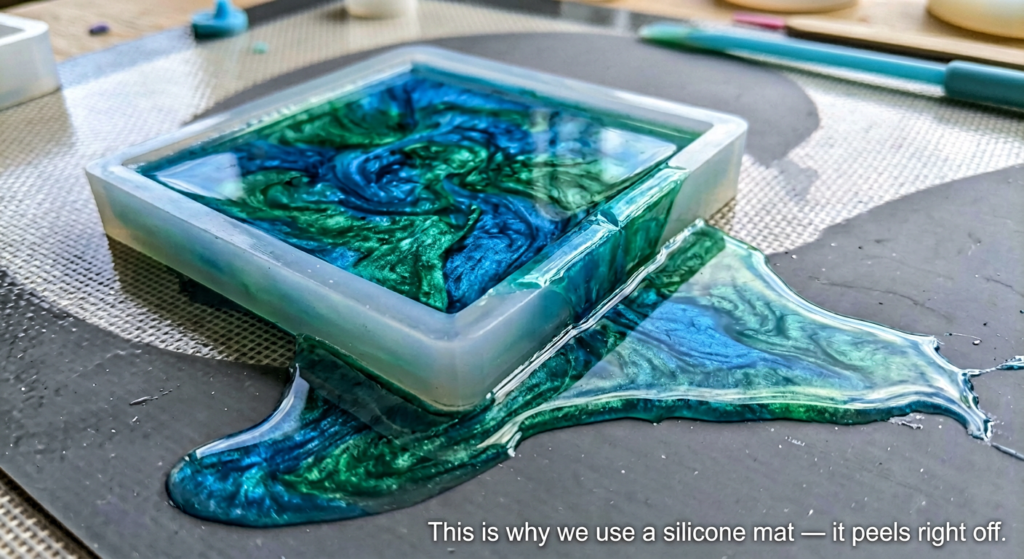
Cause A: Overfilling
The Fix:
- Use your Mixing Math table from Step 2 to calculate the exact amount needed.
- Pour to just below the rim of the mold — about 1/16 inch (1–2 mm) from the top.
- Pour slowly and stop frequently to check your level.
Cause B: An Unlevel Surface
The Fix:
- Level your surface. Every single time. Without exception.
Problem #5: “My Coaster Has a Rough or Uneven Bottom”
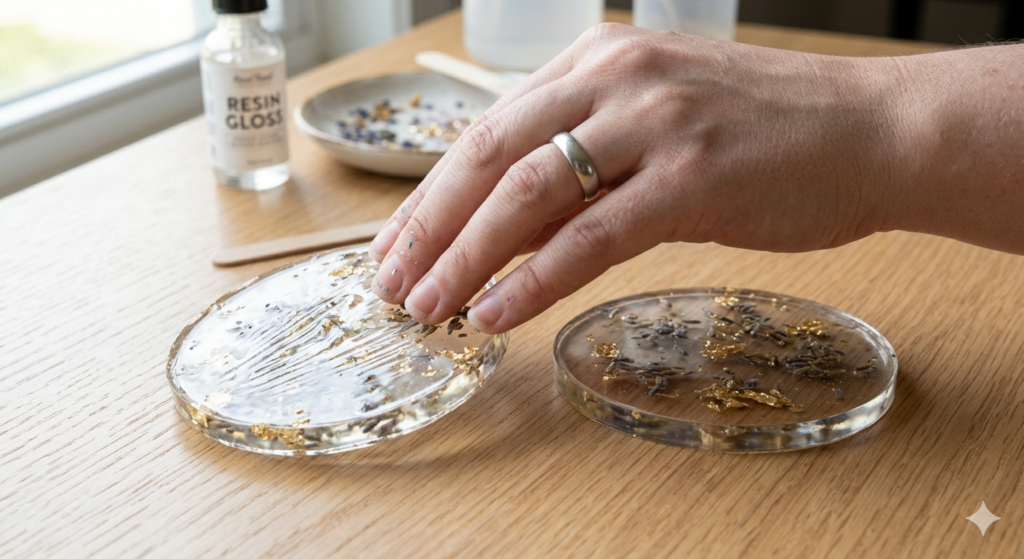
Cause: The bottom of your coaster (the side resting on the mold base) may have slight texture from the mold itself. This is completely normal.
The Fix:
- Sand the bottom with 400-grit sandpaper on a flat surface using circular motions.
- Work through the grits: 400 → 800 → 1500 and finish with a polishing compound.
- Or stick a self-adhesive cork sheet or felt pad to the bottom for a professional finished look.
Quick-Reference Troubleshooting Chart
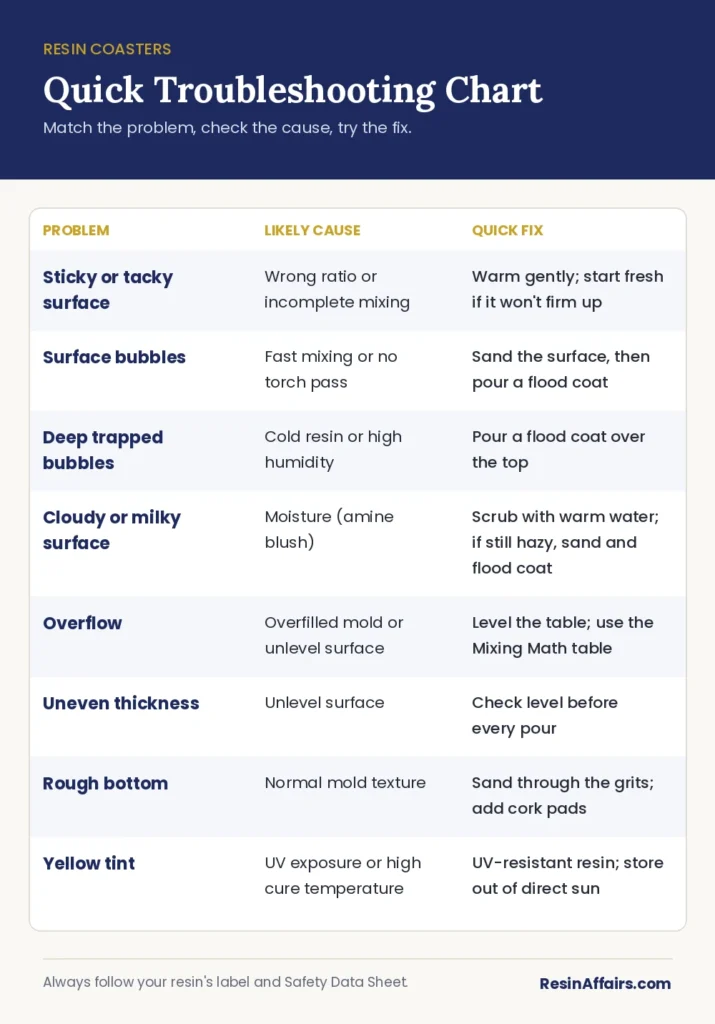
| Problem | Most Likely Cause | Quick Fix |
|---|---|---|
| Sticky/Tacky Surface | Wrong ratio or incomplete mixing | Warm gently; sand and recoat if still tacky after 48 h |
| Surface Bubbles | Fast mixing or no torch pass | Sand surface + flood coat |
| Deep Trapped Bubbles | Cold resin or high humidity | Flood coat over top |
| Cloudy/Milky Surface | Moisture contamination (amine blush) | Scrub with warm water and a non-scratch pad; if it stays hazy, sand + flood coat |
| Overflow | Overfilled or unlevel surface | Level table; use mixing math |
| Uneven Thickness | Unlevel surface | Always check level before pouring |
| Rough Bottom | Normal mold texture | Sand through grits; add cork pads |
| Yellow Tint | UV exposure or high cure temp | Use UV-resistant resin; store away from sunlight |
FAQ: Your Last Questions Answered
Q1: “How Much Resin Do I Need for 4 Coasters?”
For a standard set of four coasters using 4-inch round molds at ¼-inch depth, you need approximately 8 oz of mixed resin total. That means 4 oz of resin (Part A) and 4 oz of hardener (Part B) for a 1:1 resin.
Always add 10% extra to account for resin that clings to your mixing cup and stir stick. In practice, mix 4.5 oz of each to be safe.
For a quick reference by coaster size, revisit the Mixing Math Table in Step 2 above.
Q2: “How Long Does It Take for Epoxy Resin Coasters to Fully Cure?”
| Stage | Timeframe | What It Means |
|---|---|---|
| Cure to Touch | 12–24 hours | Surface feels hard but internal chemistry is still active |
| Demold Ready | 24–48 hours | Safe to remove from mold; handle with care |
| Ready to Use | About 72 hours | Hard enough for light, everyday use; wait for full hardness before hot mugs |
| Full Cure (Maximum Hardness) | 7 days | The resin reaches its absolute peak hardness and durability |
⚠️ Don’t rush the demold. Pulling your coasters out at 12 hours because they feel hard on top is one of the most common ways to end up with soft spots, warping, or permanent fingerprints.
Q3: “Do I Really Need a Heat Gun for Resin Coasters?”
Short answer: No, it’s not strictly required. But you will almost certainly wish you had one.
If you skip the torch entirely:
- Surface bubbles will cure permanently into your coaster.
- The final surface won’t have that glass-like finish without extra polishing work.
If you use a torch:
- Surface bubbles disappear in seconds.
- You get a noticeably smoother, glossier surface straight out of the mold.
A small butane culinary torch costs around $15–$20 and is one of the best investments you’ll make in this hobby.
💡 No Torch Yet? A craft heat gun on low, held 6–8 in away, also pops surface bubbles. It’s slower than a torch but safer on a cluttered bench.
Q4: “Are Epoxy Resin Coasters Heat Resistant?”
This is the question that catches the most beginners off guard.
Standard epoxy resin coasters are NOT heat resistant in the way most people assume.
Most cured epoxy resin can start to soften around 120°F (50°C), depending on the brand. A freshly poured hot coffee sits at around 160°F–180°F (71°C–82°C).
| Option | Details |
|---|---|
| Use a heat-resistant epoxy | Look for resins with a high HDT (Heat Deflection Temperature) rating — above 150°F (65°C). |
| Apply a heat-resistant topcoat | A ceramic-based topcoat spray adds a layer of heat protection. |
| Add cork or felt feet | Protects furniture from the coaster itself. |
| Use a coaster liner | A thin silicone mat between hot mugs and the coaster is a practical everyday solution. |
💡 HDT (Heat Deflection Temperature) is the temperature at which a cured resin starts to soften under pressure. When comparing resin brands for coasters, a higher HDT means better heat tolerance.
Q5: “Can I Make Resin Coasters Without a Silicone Mold?”
Yes — with some caveats.
Alternative options that work:
- Wood slice bases: Pour resin directly onto a flat wood slice. The wood acts as the base and creates a sealed top surface.
- Tape dams: Create a border around a flat tile or slate piece using painter’s tape, then pour resin inside. Remove tape after 24 hours.
- Repurposed silicone baking molds: Round tart molds work well, provided they are 100% silicone with a flat, smooth interior base.
What doesn’t work:
- Rigid plastic containers — hard to demold. Polyethylene and polypropylene release epoxy, but clear acrylic, polystyrene and PET bond to it, and rigid tubs may need to be cut away.
- Paper cups — moisture in the paper reacts with resin.
- Any non-flexible mold — you need to flex the sides to release a cured coaster.
Q6: “Can I Put My Resin Coasters in the Dishwasher?”
No.
Dishwashers combine high heat, high humidity, and harsh detergents — a worst-case environment for epoxy resin. Even a fully cured coaster will likely warp, cloud, or lose its surface shine after a dishwasher cycle.
The right way to clean resin coasters:
- Wipe with a soft, damp cloth and mild dish soap.
- Dry immediately.
- For stubborn marks, use isopropyl alcohol on a soft cloth.
Q7: “My First Batch Didn’t Turn Out Perfect. Should I Give Up?”
Absolutely not.
Every single person who now makes stunning, sellable resin coasters has a drawer somewhere with their first batch in it — bubbles, uneven edges, and all.
The difference between people who get good at this and people who quit is simple: the ones who get good treat every batch as data, not as a judgment.
Your first batch taught you something. That’s not failure — that’s the tuition fee for a skill you now own.
A few more quick answers:
What room temperature do resin coasters need to cure?
Aim for 72–77°F (22–25°C) with humidity of 60% or lower, and keep it steady for the full 72-hour cure. Below about 65°F (18°C) the cure slows right down and coasters can stay soft or bendy.
Why did my resin coasters turn cloudy or white?
Almost always moisture: humid air, a damp mixing cup or mold, or a water-based colorant such as acrylic paint. A waxy white surface film from humidity (amine blush) usually scrubs off with warm water and a non-scratch scouring pad. If it doesn’t, sand lightly with 400-grit sandpaper and pour a thin fresh coat.
How thick should resin coasters be?
Use a mold at least ¼ inch (6 mm) deep. Coasters between ¼ and ⅜ inch (6–9 mm) are sturdy enough for everyday use without needing a special deep-pour resin.
When can I take resin coasters out of the mold?
Wait 24–48 hours. If a coaster still feels flexible or rubbery, put it back and check again in a few hours. Give it the full 72 hours before putting drinks on it.
Why are my resin coasters still sticky after 3 days?
The usual causes are an off mixing ratio, not mixing long enough, or a room that was too cold. Gentle warmth from a heat lamp or resin curing box (around 80–85°F / 27–29°C) sometimes finishes the cure. If the surface is still tacky after 48 hours but the coaster is firm, sand it lightly (gloves and an N95 mask) and pour a thin fresh top coat. If it is soft or wet underneath, scrape it out and start a fresh batch.
Final Checklist: Your Pre-Pour Confidence Check
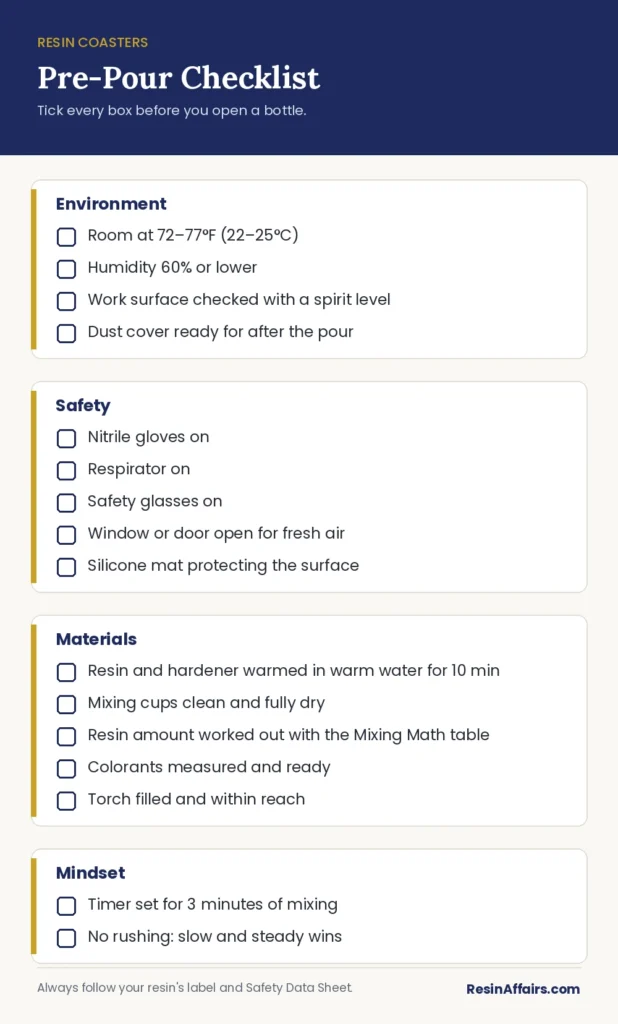
Environment:
- Room temperature is between 72°F–77°F
- Humidity is 60% or lower
- Work surface has been confirmed level with a bubble level
- A dust cover is ready to place over molds after pouring
Safety:
- Nitrile gloves are on
- Respirator mask is on
- Safety glasses are on
- Window or door is open for ventilation
- Silicone mat is protecting the work surface
Materials:
- Resin and hardener bottles have been warmed in a bowl of warm water for 10 minutes
- Mixing cups are clean and completely dry
- Correct amount of resin calculated using the Mixing Math table
- Colorants are measured and ready
- Torch is filled and within reach
- Dust cover is standing by
Mindset:
- Timer is set for 3 minutes of mixing
- You are not rushing
- You remember that slow and steady is the entire game
Keep Learning on ResinAffairs.com
You now have everything you need to make your first set of epoxy resin coasters with genuine confidence. Here’s where to go next:
- 🧤 Resin Safety Hub → — pouring and demolding coasters means direct resin contact; review the safe-handling basics first.
- 🥣 Resin Trinket Dishes & Phone Stands → — another mold-poured project for your leftover resin, once you’ve got coasters down.
- How to color resin →
Making resin coasters is the beginning of a skill set that can become a creative outlet, a side income, a gift-giving superpower, or simply something that is completely and satisfyingly yours.
You’ve read the guide. You know the steps. You know what to do when things go sideways. You are more prepared for your first pour than 90% of people who have ever tried this.
Now go make something beautiful.
Enjoyed this guide? Join the Resin Affairs newsletter for new tutorials, safety tips, and project ideas straight to your inbox.