Does Epoxy Resin Go Bad? Shelf Life, Storage and How to Test It
Quick answer: Most craft epoxy keeps for about a year unopened and 6 to 12 months once opened, but makers quote anything from 6 months to 3 years. Go by the date on your label, store both bottles sealed and dry at 60–90°F (16–32°C), and test a small batch before you trust an old bottle with a piece you care about.
What the makers say
Nobody agrees on one number, and the differences are real, so read your own label first.
| Maker | Unopened | Once opened | Storage they give |
|---|---|---|---|
| ArtResin | 12 months from the manufacture date | 6 months from the manufacture date | Re-cap the hardener right after pouring to slow oxidation |
| TotalBoat (ThickSet) | Not stated on the page I read | About 6 months to 1 year | 60–90°F, dry, fully sealed, off the floor in cold weather, away from outside walls and doors |
| WEST SYSTEM (marine epoxy) | At least 3 years for resin, 2 years for hardener | Not separated out | Above 50°F (10°C), original sealed containers; has tested epoxy over 10 years old that still cured |
WEST SYSTEM makes boat-building epoxy, not craft resin, so treat its numbers as the long end of the range. Craft resins are usually sold with the shorter dates. If you mix brands, keep each resin with its own hardener and its own date.
Find the date on your bottle
Look for a manufacture date or batch code on the label or the bottom of the bottle. ArtResin counts its “best before” from the date of manufacture, not from the day you bought it. If you can’t find a date, treat the bottle as opened today and use it within 6 months.
How to store it
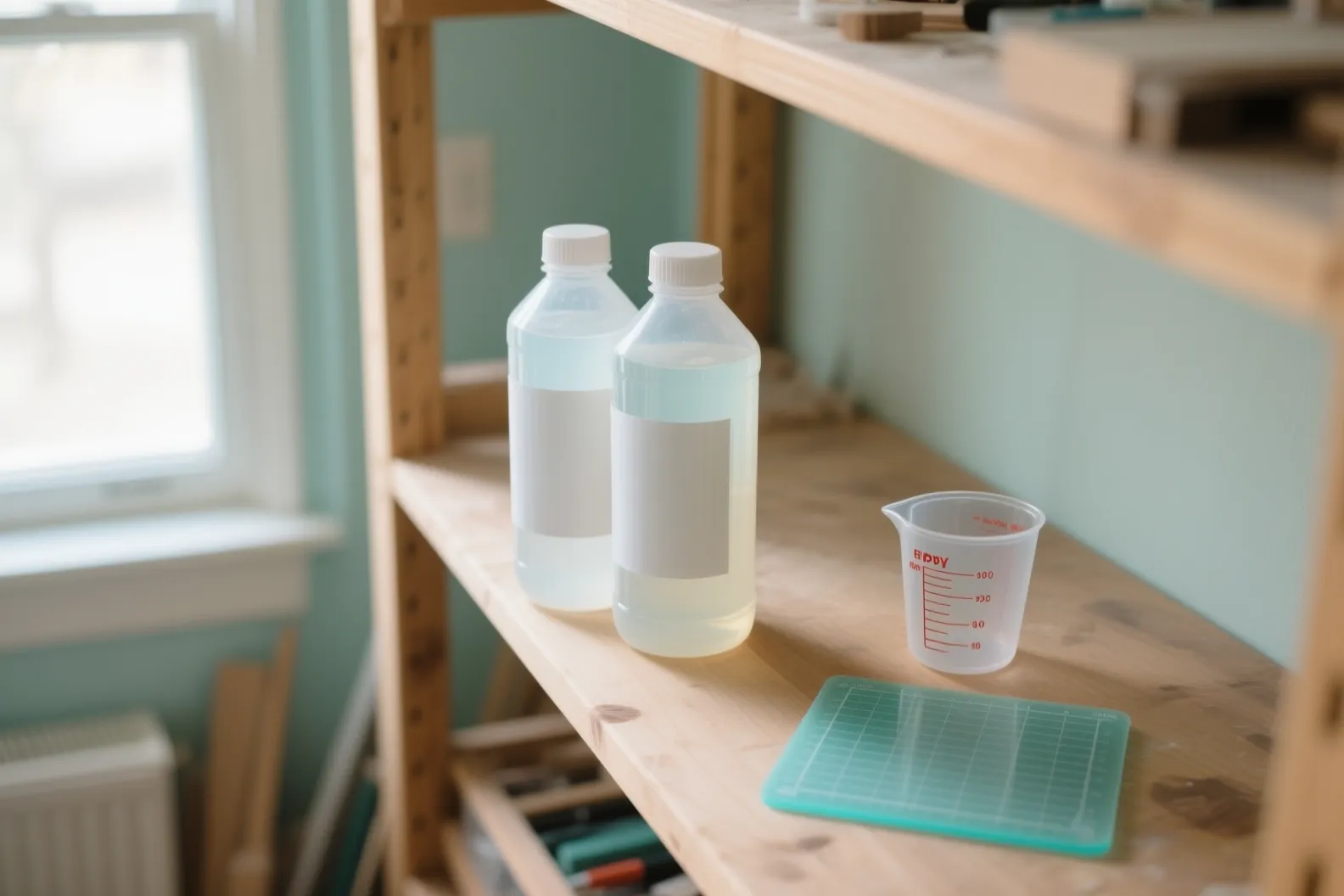
- Keep both bottles sealed, dry and at 60–90°F (16–32°C). That is the range TotalBoat gives. The room you pour in should be 70–80°F, but storage can be a little cooler or warmer.
- Off the floor and away from outside walls, doors and windows in cold weather, so the bottles don’t get a cold draft.
- Re-cap the hardener straight after you pour. Air and moisture are what age it. WEST SYSTEM warns that open hardener can absorb moisture, which can speed the cure and make the epoxy foam.
- Keep it out of direct sun and out of the car. Heat and light age resin faster. (This is ordinary storage practice, not a maker’s figure, so I’m not putting a number on it.)
- Store it where children and pets can’t reach it, in its original labeled bottles, away from food and drink.
If your garage gets cold in winter, bring the bottles indoors. The full cold-storage fix is in how long resin takes to cure.
Signs it has gone off
| What you see | What it usually means | What to do |
|---|---|---|
| Hardener has turned yellow or amber | Oxidation. ArtResin says yellowed hardener still performs if you measure and mix accurately | Test a small batch first |
| Resin looks cloudy, milky, chunky or grainy | Crystallization from cold storage, not ruined (TotalBoat, WEST SYSTEM) | Warm the closed bottle in a hot-water bath until the crystals are gone; the steps are in the cure-time post |
| Resin is thicker than it was | Age or cold | Warm the sealed bottle in warm water and mix a little longer; WEST SYSTEM says aged resin gets thicker |
| It cures slowly or stays tacky | Could be age, but check the ratio, mixing time and room temperature first | See why is my resin sticky |
| It foams, or the hardener has crusted or gone cloudy | Moisture got in | Discard it (disposal below) |
| Pot life or cure is far from what it used to be | The bottle has aged badly | Discard it; WEST SYSTEM says to discard epoxy whose gel time is drastically different or that foams |
Test a small batch before you trust it
If a bottle is older than the label’s date, or it looks or pours differently, don’t judge it by eye. Mix 1 to 2 ounces exactly as you normally would, with gloves, eye protection, cross-ventilation, and an organic-vapor respirator if the house rule applies: indoors without cross-ventilation, a larger batch, a torch or heat gun, or you can smell the resin (see the PPE guide). Pour a thin layer onto a silicone mat or a scrap piece and leave it where it won’t be touched.
- If it’s hard to the touch by the time the label says it should be, it’s fine for a trial piece.
- If it’s still tacky at twice the label’s time, check the room temperature and the ratio, then discard it. This post covers a cure that won’t finish.
- Don’t use a bottle you’re unsure about for anything that will hold food or drink, or for a gift, until a test batch has cured properly, and then give it the full 7 days. More on food in is resin food safe.
What to do with resin that’s too old
- Never pour liquid resin or hardener down the drain. The EPA lists drain disposal as improper for household hazardous waste, and says not to mix leftover products together. Take unused liquid resin or hardener to your local household hazardous waste collection (search your county plus “household hazardous waste”).
- Leftover mixed resin: spread it in a wide, shallow tray away from anything that can burn, and let it cure before you throw it away (WEST SYSTEM).
- Yellowed hardener that still tests fine can go into practice pours or pieces that won’t touch food or be given away. ArtResin suggests this for non-critical projects; it’s your call how much risk you want.
- UV resin has its own date and goes off in light, so check the label and keep the bottle in the dark. See UV resin for beginners.
Frequently asked questions
How long does epoxy resin last?
Most craft epoxy is dated at about 12 months unopened and 6 to 12 months once opened (ArtResin, TotalBoat). WEST SYSTEM’s marine epoxy is rated for at least 3 years for the resin and 2 for the hardener. Use the date on your own label.
Can I use epoxy resin after it expires?
Often yes, if it has been stored sealed and dry, but test a small batch first. Don’t use an old bottle for food contact, a gift or anything you can’t redo until the test has cured properly.
Does epoxy resin go bad if the bottle is open?
It ages faster, mostly because the hardener oxidizes and can absorb moisture. Re-cap both bottles right after you pour, and treat an opened bottle as good for 6 to 12 months.
Why has my hardener turned yellow?
Oxidation. ArtResin says it becomes noticeable at about 6 months and that accurately measured, well-mixed yellowed hardener still performs. Yellowed hardener can tint a clear pour, so don’t use it where clarity matters.
How do I store epoxy resin in winter?
Keep it indoors at 60–90°F (16–32°C), sealed, off the floor and away from outside walls. If it has gone cloudy or grainy, it has crystallized: warm the closed bottle in a hot-water bath (steps in the cure-time post), never an oven or microwave, and let it come back to room temperature before you mix.
Sources
- ArtResin, How Long Does Epoxy Resin Last: 12 months unopened, 6 months opened, yellowing at about 6 months, re-cap the hardener
- TotalBoat, shelf life of ThickSet epoxy once opened: about 6 months to 1 year opened, 60–90°F storage
- TotalBoat, epoxy stored in cold temperatures: crystallization and the warm-bath fix
- Epoxyworks (WEST SYSTEM), Diving Deep Into the Shelf Life of WEST SYSTEM Epoxy: 3 years resin, 2 years hardener, storage above 50°F, moisture and discard rules
- WEST SYSTEM, Epoxy Safety guide: leftover mixed epoxy, respirators
- US EPA, Household Hazardous Waste: no drain disposal, collection programs
- CDC NIOSH, Epoxies and Resins: ventilation and gloves; smell is not an indicator
Keep Learning on ResinAffairs.com
More on using resin safely around the home:
- How Long Does Resin Take to Cure: the 72-hour and 7-day marks and what to do when it’s cold
- Why Is My Resin Sticky: the usual causes, in order
- Is Resin Food Safe: what “FDA compliant” really means
- Resin PPE for Beginners: the gear that matters
Enjoyed this guide? Join the Resin Affairs newsletter for new tutorials, safety tips, and project ideas straight to your inbox.