Is Resin Food Safe? What “FDA Compliant” Really Means (and What My Labels Say)
Quick answer: Cured epoxy resin can be food safe, but only when the maker says so for its cured product, and only under the maker’s conditions: the exact mixing ratio, no colorants it hasn’t cleared, a full cure, and cool or room-temperature food. No cutting, and no hot dishes. If your resin’s maker doesn’t make that claim, treat what you make as decoration that wipes clean, not a food surface. UV resin is decoration too.
What “food safe” and “FDA compliant” actually mean
In the US, the rule that covers coatings on food-contact surfaces is 21 CFR 175.300, “Resinous and polymeric coatings”. It’s a list of ingredients a coating may be made from (bisphenol A epoxy resins are on it) and limits on how much may migrate into different kinds of food. It isn’t a certificate. The words “approved” and “certified” don’t appear in it.
The FDA doesn’t test or approve craft resins one by one. Its own guidance says it is the responsibility of the manufacturer to make sure food-contact materials comply. So “FDA compliant” on a resin label is the maker’s own declaration. Some makers back it with lab tests: ArtResin says a third-party lab ran 13 migration tests on its resin. The two resins on my bench don’t mention food at all (see the labels below). “Food grade” isn’t defined in that rule; it’s a marketing phrase.
The conditions that come with the claim
Read the small print on a food-safe claim and it always comes with conditions. ArtResin’s lab test used pure resin with no colorants, mixed in equal parts by volume, stirred for 3 minutes and cured for 72 hours. ArtResin also says the cured resin shouldn’t touch anything hotter than 120°F (50°C), so hot food is out. TotalBoat calls it “limited food contact”: a serving board is fine, a cutting board isn’t.
So if your resin does carry a claim, here’s how to keep it:
- Measure the exact ratio and mix fully (see how to mix epoxy resin).
- Don’t add anything the maker hasn’t cleared: no alcohol ink, nail polish or solvent dyes.
- Wait the full 7 days. Makers test at 72 hours, but craft epoxy is only usable at about 72 hours and reaches full hardness at about 7 days. This site’s rule is that anything that will hold food or drink waits the full 7 days.
- Only cool or room-temperature food. Craft epoxy starts to soften at about 120°F (50°C).
- Hand-wash only, and never cut on it.
I read the labels on my own resin
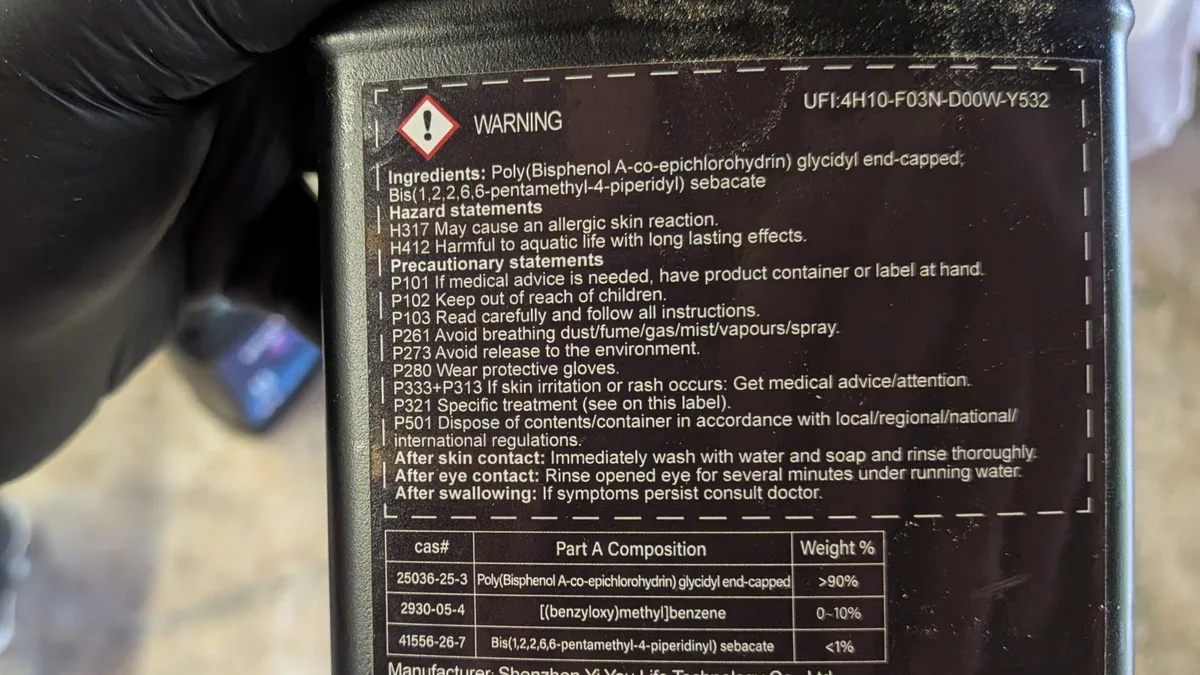
Here’s what the resins I actually use say, from the bottles on my bench (photographed 24 October 2026), next to what two makers publish online.
| Resin | What it says about food | Where |
|---|---|---|
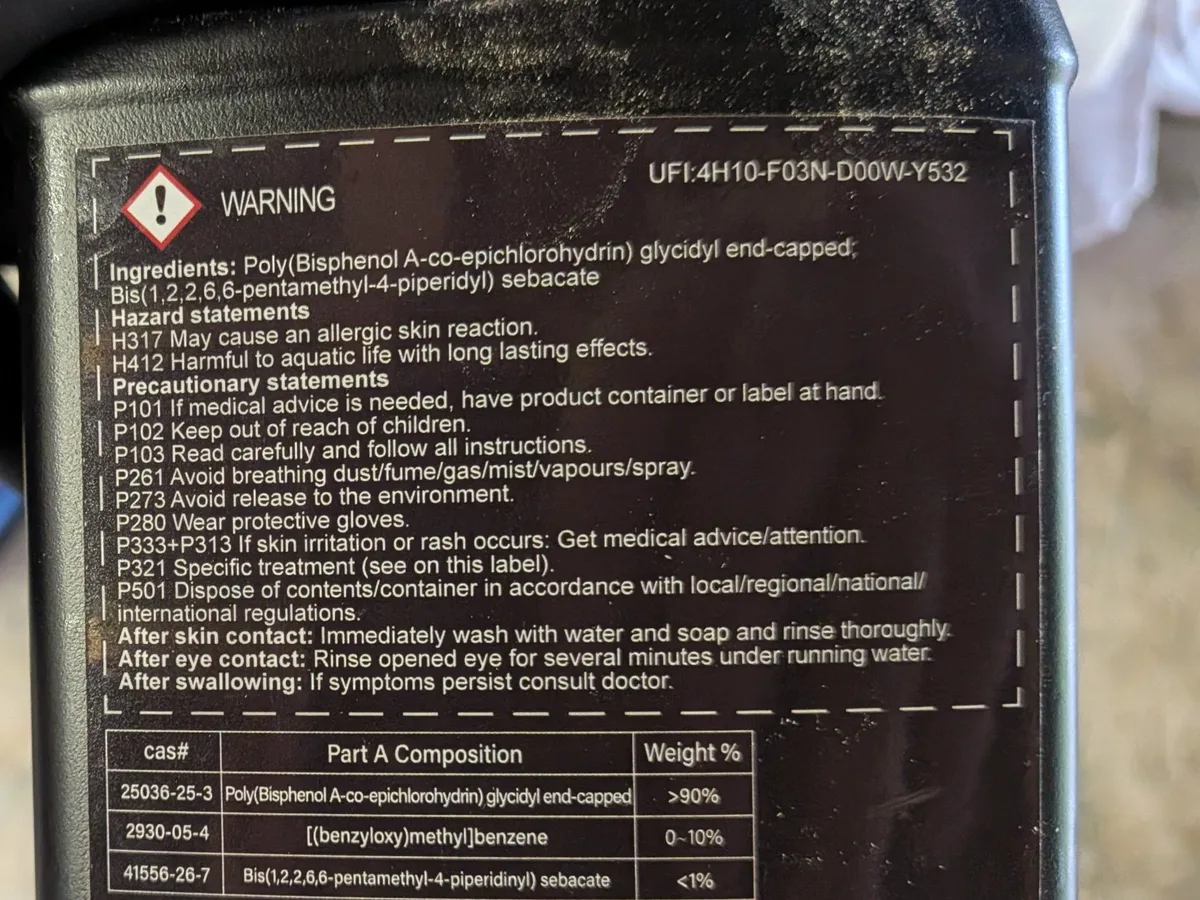
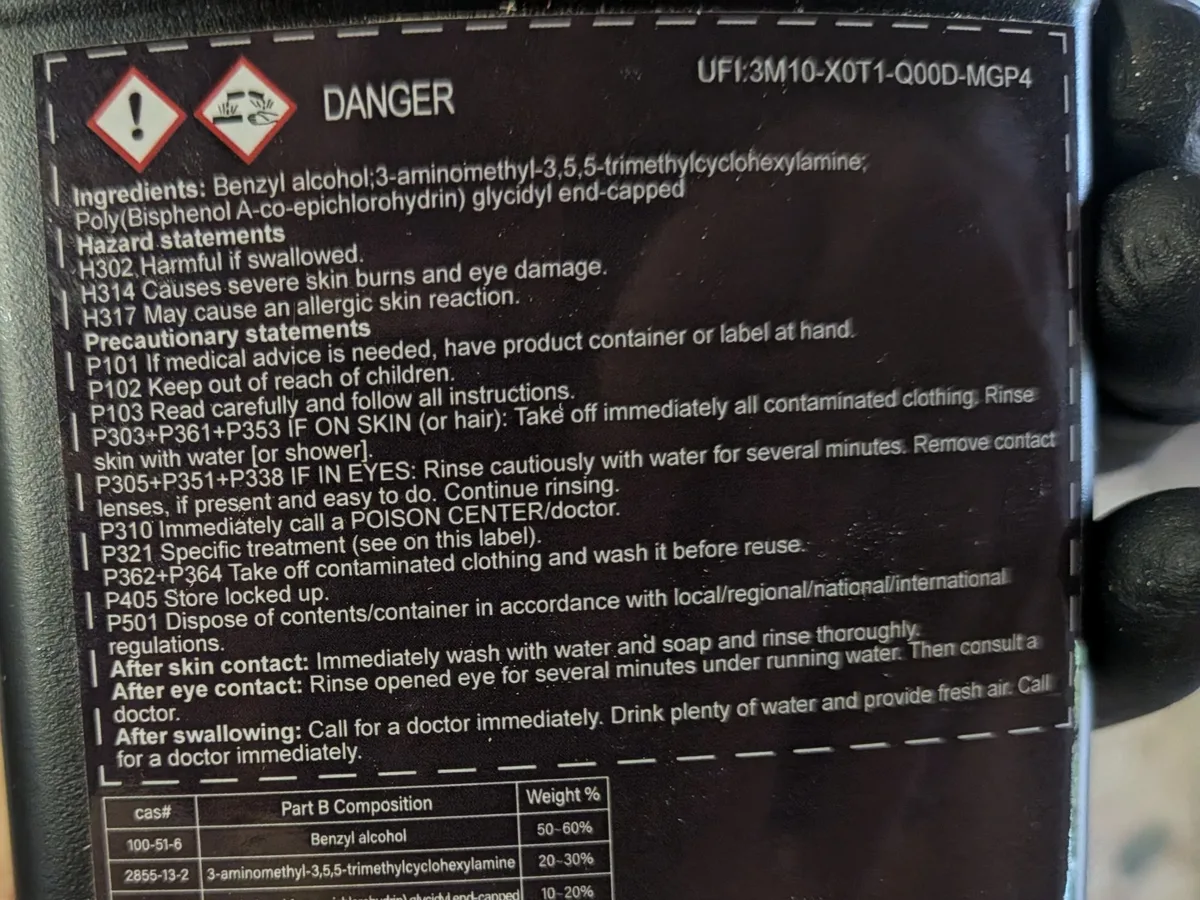
| Let’s Resin (Part A and Part B, the 1:1 kit I use) | No food claim. Part A carries WARNING (may cause an allergic skin reaction); Part B carries DANGER (causes severe skin burns and eye damage). The only mention of food on Let’s Resin’s help center is not to store the uncured product with food. | My bottles; Let’s Resin help center (read 25 Oct 2026) |
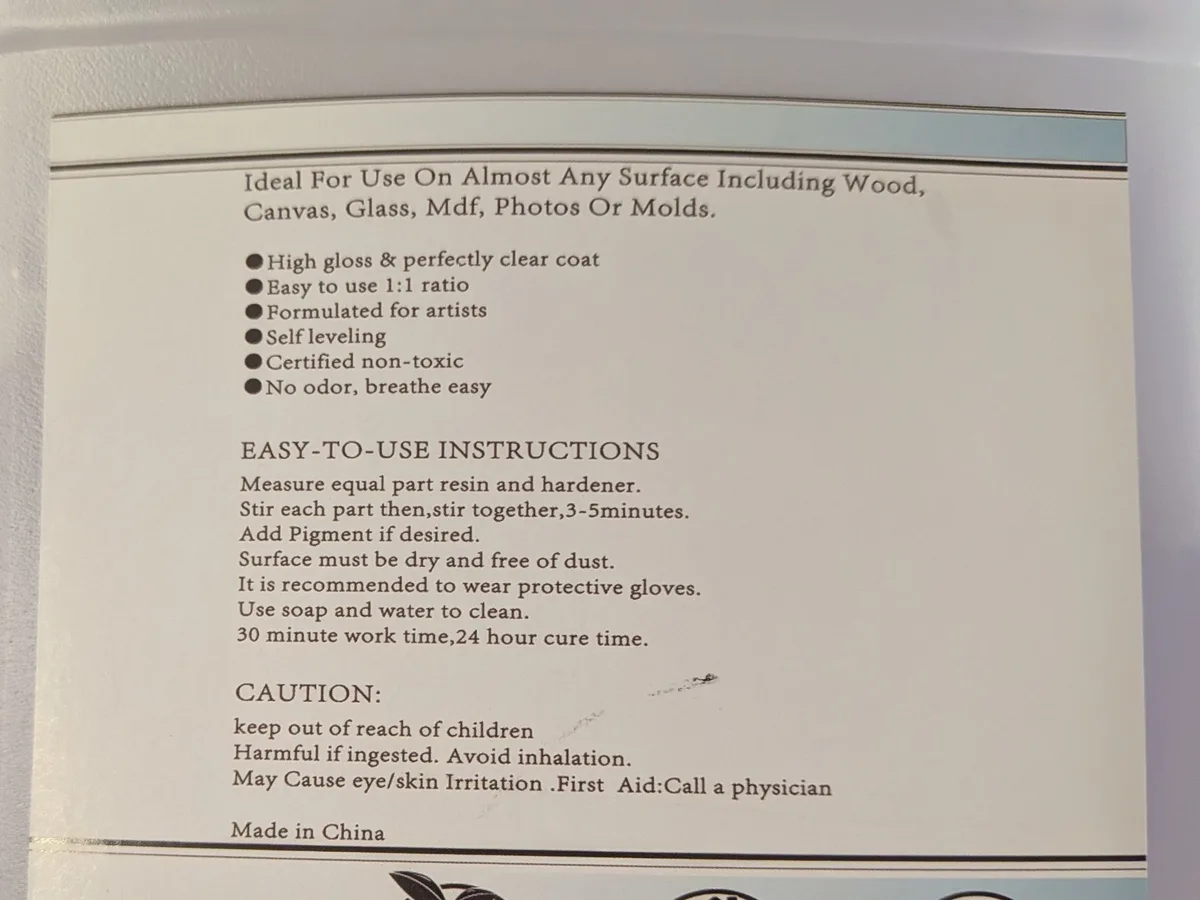
| Bilnins 1:1 epoxy | No food claim. The back label says “Certified non-toxic” and “No odor, breathe easy”, then “Harmful if ingested. Avoid inhalation.” “Non-toxic” isn’t a food-contact claim, and the label doesn’t name who certified it. | My bottle |
| ArtResin | “Once cured, ArtResin is compliant with FDA CFR 175.300”, with the conditions above. | ArtResin’s website |
| TotalBoat (some epoxies) | “Limited food contact”: serving boards yes, cutting boards no. | TotalBoat support |
Product listings sometimes go further than the maker’s own site. When I read them in October 2026, one Craft Resin listing on Amazon called it “certified food safe” and one Art ’N Glow listing said “food safe when fully cured”. Those are claims made by the seller. Check the safety data sheet before you rely on one.
Why I’d never use an epoxy cutting board
Even TotalBoat, which makes a limited food-contact claim, says its epoxies “should not be used to coat cutting boards”. Knives cut grooves, and the USDA says cutting boards that develop hard-to-clean grooves should be thrown out. On an epoxy board the grooves come from day one.
There’s a second problem: what the knife takes with it.
From my bench: I wouldn’t cut food on an epoxy board. I make solid wood chopping boards now and then, and I’ve seen the knife marks a board picks up in use. On epoxy, the same cuts could loosen and chip off particles of resin that end up in your food. Epoxy chopping boards are for decoration only. And for the record, my own resin bottles don’t mention food anywhere on the label.
Hot food is out too: craft epoxy starts to soften at about 120°F (50°C), well below a hot plate or a pan straight off the stove.
Is UV resin food safe?
Treat UV resin as decoration only. Let’s Resin’s UV resin help page makes no food-contact claim, and none of the epoxy makers’ food-safety pages above cover UV resin. Use it for jewelry, charms and keychains, not for anything that holds food or drink. More in UV resin for beginners.
Does coloring resin change things?
Yes. Even where a maker claims food safety, the claim is for its clear resin. ArtResin says the food safe status may become compromised when foreign products are added, and names alcohol inks, nail polish and solvent-based dyes. A tinted serving board isn’t covered by the base resin’s claim unless the maker says its colorant is fine. One way around this, which ArtResin suggests: a clear top coat over the colored layer.
What about BPA?
Most craft epoxy is made from bisphenol A (BPA). My Let’s Resin Part A lists a BPA-based epoxy at over 90%. ArtResin says the BPA is fully reacted when the resin cures, leaving only trace amounts. In the US, the FDA’s last update said its review hasn’t found anything that changes its safety assessment for BPA in food packaging. The EU has gone the other way: BPA has been banned in food-contact materials there since the transition ended on 20 July 2026, with a few exceptions. That’s why “food safe epoxy” can mean different things on US and European labels. A “BPA free” badge, like the one on my Bilnins bottle, isn’t a food-contact claim on its own.
What to do with the pieces you’ve already made
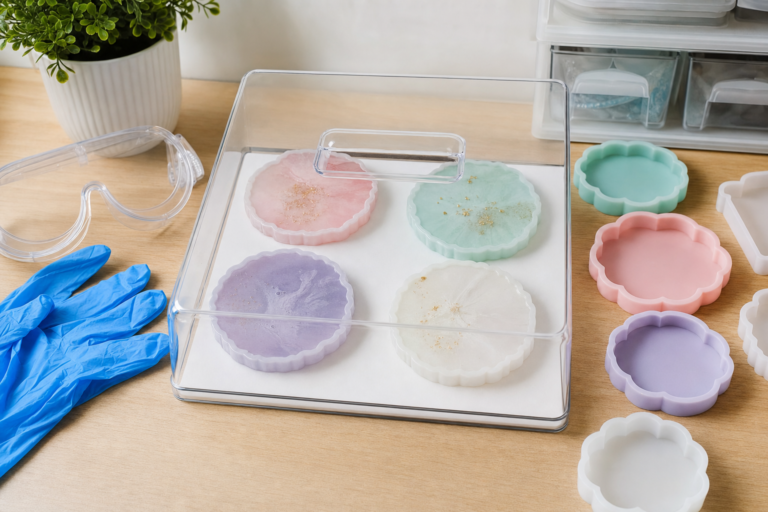
- Coasters, trays and dishes: treat them as decoration that wipes clean. A coaster under a cup is fine; the drink never touches the resin.
- Serving trays and boards: put a plate, napkin or liner between the food and the resin, unless your resin’s maker makes a food-contact claim and you followed every condition above.
- Wash by hand in warm, soapy water. No dishwasher, no soaking.
- Never cut on resin.
- Selling them? Don’t call a piece “food safe” unless the maker’s claim covers exactly what you did. More in how to sell resin crafts online.
Frequently Asked Questions
Is epoxy resin food safe once cured?
Only if the maker says its cured resin is, and only under its conditions: the exact ratio, no colorants it hasn’t cleared, a full cure (this site says 7 days), cool or room-temperature food, and no cutting. If your label says nothing about food, treat the piece as decoration.
Is Let’s Resin epoxy food safe?
Let’s Resin doesn’t make a food-contact claim. Its help center mentions food only to say don’t store the uncured product with it, and my own bottles say nothing about food. Treat pieces made with it as decoration.
Is UV resin food safe?
Treat it as no. Let’s Resin’s UV resin help page makes no food-contact claim, and none of the epoxy makers’ food-safety pages above cover UV resin. Use it for jewelry and decorations, not for anything that holds food or drink.
Can I make an epoxy cutting board?
Not one to cut on. Knives cut grooves that can’t be cleaned properly and can chip resin into food. Even TotalBoat, which makes a limited food-contact claim, says its epoxies shouldn’t coat cutting boards. A resin board is for display or serving with a liner.
Does adding color make resin unsafe for food?
It can. A maker’s food-safe claim covers its clear resin. ArtResin says added products can compromise that status, including alcohol inks, nail polish and solvent dyes. Check whether the maker has cleared your colorant.
Can I sell resin trays as food safe?
Only if your resin’s maker makes that claim and you followed all of its conditions. Otherwise sell them as decorative. See how to sell resin crafts online.
Sources
- eCFR, 21 CFR 175.300 Resinous and polymeric coatings: the US rule for coatings on food-contact surfaces
- FDA, Determining the regulatory status of components of a food contact material: the manufacturer is responsible for compliance
- FDA, Bisphenol A (BPA): the FDA’s current position on BPA in food packaging
- ArtResin, ArtResin passes food safety tests: test conditions, the 120°F limit and colorants
- ArtResin, Is epoxy food safe?: the 175.300 claim, inks and dyes, BPA
- TotalBoat, What does limited food contact mean?: serving boards yes, cutting boards no
- Let’s Resin Help Center, Know more about epoxy resin: the only food line is about storing the uncured product
- USDA FSIS, Cutting boards: discard boards with hard-to-clean grooves
- Food Packaging Forum, EU BPA ban reaches main transition deadline: Regulation (EU) 2024/3190
Keep Learning on ResinAffairs.com
More on using resin safely around the home:
- Is Epoxy Resin Safe?: fumes, skin contact and the gear that matters
- How Long Does Resin Take to Cure?: the 72-hour and 7-day marks
- How to Make Epoxy Resin Coasters: a first project you can use every day
- How to Make an Epoxy Serving Tray: with a liner for food
Enjoyed this guide? Join the Resin Affairs newsletter for new tutorials, safety tips, and project ideas straight to your inbox.