How to Dispose of Epoxy Resin Safely
Quick answer: Fully cured epoxy goes in your regular trash. Liquid resin or hardener you don’t want does not: take it to your local household hazardous waste collection. Leftover mixed epoxy is the in-between case. Let it harden in a wide, shallow container, away from anything that can burn, then bin it. Never pour any of it down the drain.
Most epoxy waste is easy to sort once you ask one question: is it liquid or hard? Hard is simple. Liquid is where people get into trouble, because the wrong move is either a fire risk or a pollution problem. This guide covers every kind of leftover a beginner ends up with, from a half-full mixing cup to a hardener bottle you will never finish.
Sort it first: liquid or cured?
| What you have | What to do |
|---|---|
| Fully cured epoxy (failed pours, drips, offcuts) | Regular trash. Epoxy mixed at the right ratio and fully hardened counts as a non-hazardous solid (WEST SYSTEM). |
| Leftover mixed epoxy that is still liquid | Spread it in a wide, shallow container, let it harden completely, then bin it. Steps below. |
| Mixing cups, stir sticks and gloves with a film of resin | Let the resin cure on them, then bin them (Resin Obsession). |
| Liquid resin or hardener you won’t use | Household hazardous waste collection. Not the trash, not the drain. Details below. |
| A pour that never cured | Treat it as liquid waste. Resin Obsession advises a collection center over trying to harden it. If you would rather rescue it, see how to fix resin that didn’t cure. |
| Empty or nearly empty bottles | Drain them well first. Rules below. |
Leftover mixed epoxy: let it harden, safely
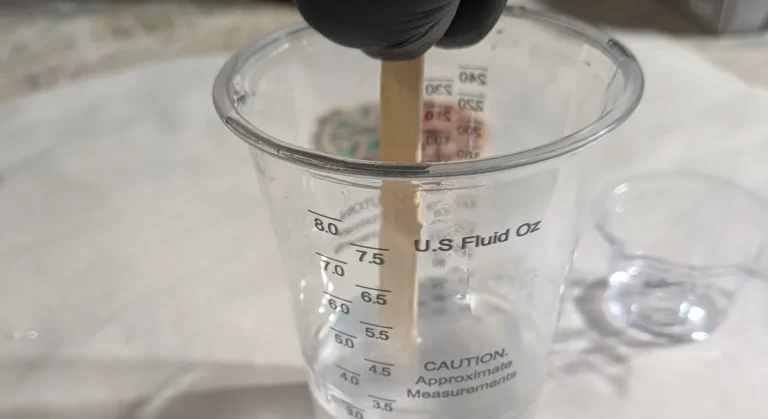
A cup of mixed epoxy isn’t finished when you stop using it. It keeps reacting, and the reaction makes heat. WEST SYSTEM says a 100-gram mass of mixed epoxy (about 3½ ounces) can reach 400°F and ignite whatever is around it. That is why the advice is to get leftovers out of the cup and spread them thin.
- Pour it into a wide, shallow container. WEST SYSTEM suggests a roller pan; System Three suggests a plastic-lined tray. A thin layer sheds heat, and a deep one doesn’t.
- Put it where you can check on it, in a ventilated spot, away from anything that can burn. WEST SYSTEM also suggests a fan to move the air away from you.
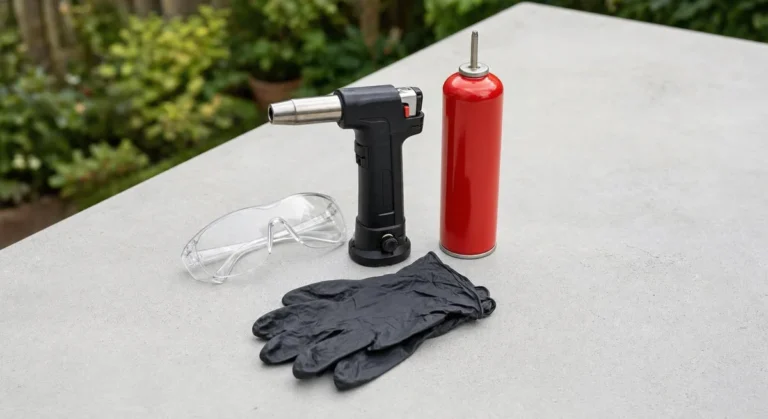
- Keep your gloves and eye protection on while you pour and move it.
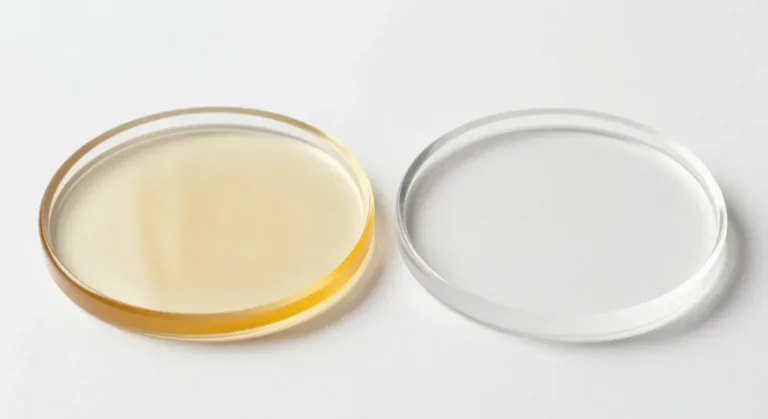
- Leave it alone until it’s hard and cool. Wait for the full-cure time on your label (about 7 days for most craft epoxy) to be safe, then put it in the trash.
Keep mixed epoxy and hardener away from sawdust, wood chips and similar material. WEST SYSTEM warns that hardener spilled on sawdust can heat up and ignite it, and says not to throw unused hardener into a trash can that holds those materials. If you do a lot of wood and resin work, this one matters.
If a pot of curing epoxy starts to smoke, step away and get fresh air. WEST SYSTEM says an uncontrolled cure can give off vapors that include carbon monoxide, nitrogen oxides and ammonia, and that an air-purifying respirator may not protect you from them. Don’t stand over it. For more on why the heat builds, see how to mix epoxy resin.
Liquid resin or hardener you don’t want
First ask whether you really need to throw it away. WEST SYSTEM and Entropy Resins both say unused resin and hardener keep well when sealed, and WEST SYSTEM says you can use up residue from a nearly empty container on a later project. Our guide to whether epoxy resin goes bad covers how long it lasts and how to test an old bottle.
If it really is waste, here is what to do:
- Read the safety data sheet. Section 13 covers disposal. Resin Obsession adds that if a maker gives you no SDS, you should presume the resin is hazardous.
- Take it to household hazardous waste (HHW) collection. The EPA says to contact your local environmental, health or solid waste agency for collection sites or days. You can also search “household hazardous waste” plus your ZIP code on Earth911.
- Keep it in its original container, label on, and never in a food container (EPA). Resin Obsession suggests sealing the bottle in a plastic bag so nothing sticks to the outside.
- Don’t mix it with other leftover products. The EPA warns that incompatible products can react.
There is one exception, and it comes from the makers. System Three and WEST SYSTEM both say a small amount of resin and hardener, mixed at the correct ratio and left to cure fully, becomes a solid you can bin. System Three warns that a large amount can overheat, so spread it in a thin film. That only works when you have both parts. Leftover hardener on its own can’t be turned into a solid this way, so it goes to the collection site.
The rules differ by place. Federal law excludes normal household waste from hazardous waste rules, and household hazardous waste is handled under state and local authority, according to the EPA. Your local program’s answer beats anything you read online, including this page.
Cups, stir sticks, gloves and small spills
- Cups, sticks and gloves: let the resin on them cure fully, then throw them in the trash (Resin Obsession).
- Work on a plastic-lined surface. ArtResin suggests leaving wet tools on it, letting the resin cure, and peeling it off the next day. Then the whole sheet goes in the trash.
- A small spill: wipe it up, seal the towels in a zip-top bag and put the bag in the regular trash. A bigger mess: bag the towels and take them to the collection center instead (Resin Obsession). Ventilate the room and wear gloves for either.
- Resin on your skin: wipe it off, use a waterless hand cleaner (soap and warm water for hardener), then wash with soap and warm water. Never use solvents on skin. More in our PPE guide.
Empty bottles
A bottle can go in your regular trash once you’ve made every effort to empty it and no more than 3% of its capacity by weight is left (WEST SYSTEM and Entropy Resins both give this rule). Warm containers drain more completely, so leave the bottle in a warm spot for a while before you finish emptying it.
For the last dregs, Resin Obsession has a trick: swap the caps between the resin and hardener bottles so each one cures shut, or pour one bottle into the other and let it cure. If you pour them together, treat it like leftover mixed epoxy: tiny amounts only, in a ventilated spot, away from anything that can burn.
What about UV resin?
UV resin has no hardener, so it stays liquid until light reaches it. Formlabs, which makes UV-curing resin for 3D printers, tells users to pour a small amount into a labeled, clear container and leave it in sunlight for 1 to 10 days. A 405 nm lamp plus heat works best. Once it is fully cured, the resin and the container go out with household waste. Paper towels with resin on them get the same sunlight treatment. Formlabs says not to pour liquid or partly cured resin down a drain or into household trash.
Craft UV resin is a different product from printer resin, so read your bottle’s SDS and check local rules first. Uncured UV resin is a strong skin sensitizer, so wear nitrile gloves every time. Our UV resin guide has the safety basics.
What not to do
- Never pour resin, hardener or mixed epoxy down a sink, toilet or outdoor drain. ArtResin, Entropy Resins and the EPA all say so. Entropy tells of a customer whose epoxy cured in a toilet bowl and broke it during removal.
- Don’t put liquid resin or hardener in the trash. The EPA lists regular trash, drains, storm sewers and the ground as improper for household hazardous waste.
- Don’t leave mixed epoxy in the cup and walk away.
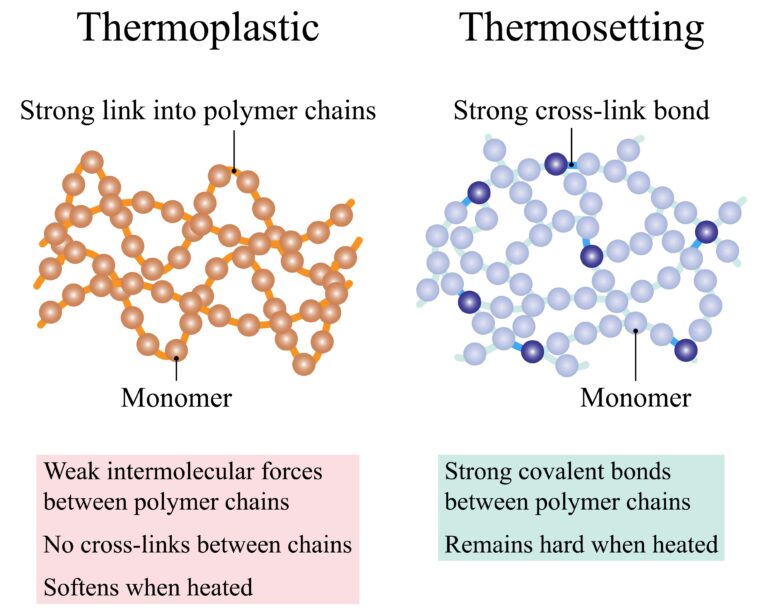
- Don’t put cured epoxy in the recycling bin. It is a thermoset, and it can’t be melted down and remolded. See is resin plastic?
Make less waste in the first place
- Work out how much you need. The resin calculator does the volume math.
- Mix small batches. WEST SYSTEM’s advice is to keep waste to a minimum by working with small batches.
- Keep a few small molds handy and pour any extra mixed resin into them.
- Close both bottles right after you pour, so what’s left stays usable.
Can I throw cured epoxy in the trash?
Yes. Epoxy mixed at the right ratio and fully hardened is treated as a non-hazardous solid by WEST SYSTEM and System Three, so it can go in your regular trash. Make sure it’s hard all the way through and no longer warm. Don’t put it in the recycling bin.
Can I pour leftover epoxy resin down the drain?
No. ArtResin, Entropy Resins and Resin Obsession all say never, and the EPA lists drains, storm sewers and the regular trash as improper for household hazardous waste.
How do I get rid of leftover hardener?
Hardener on its own can’t be cured into a solid the way a matched resin and hardener mix can, so take it to your local household hazardous waste collection. Keep it in its original, labeled container.
Is it safe to throw away a cup of mixed epoxy?
Not while it is liquid or warm. Mixed epoxy gives off heat as it cures, and WEST SYSTEM says a 100-gram mass can reach 400°F. Spread it in a wide, shallow container away from anything that can burn, let it harden fully, then bin it.
What do I do with empty resin bottles?
Drain them as completely as you can. Once no more than 3% of the bottle’s capacity by weight is left, WEST SYSTEM and Entropy Resins say it can go in your regular trash.
Sources
- WEST SYSTEM, Environmental Concerns: fully cured epoxy as a non-hazardous solid, the 3% empty-container rule, small batches, community collections
- WEST SYSTEM, Uncontrolled Cure: a 100-gram mass can reach 400°F, shallow containers, hardener and sawdust, vapors from an uncontrolled cure
- System Three, How do I properly dispose of unmixed Resin Part A or Hardener Part B: cure a matched mix and bin it, or use chemical waste disposal; thin film for large amounts
- Entropy Resins, Safe Epoxy Disposal: cure before disposal, the 3% rule, never down a drain
- Resin Obsession, How to dispose of resin: SDS and local rules, collection centers, cups and gloves
- Resin Obsession, How to easily handle every resin clean up challenge: small and large spills, the cap-swap trick
- ArtResin FAQ: never pour leftover resin down the drain, plastic-lined work surface
- US EPA, Household Hazardous Waste: collection programs, original containers, don’t mix products, drains and trash
- Formlabs, Disposing of resin: curing leftover UV resin in sunlight before disposal
Enjoyed this guide? Join the Resin Affairs newsletter for new tutorials, safety tips, and project ideas straight to your inbox.