How to Clean Resin Molds (Without Ruining Them)
A good silicone mold can last for years, but a harsh clean can ruin it faster than a bad pour. This guide covers dust before a pour, residue after a good pour, and sticky, uncured resin after a failed one. Still choosing a mold? Start with best resin molds for beginners.
Quick answer: wash silicone resin molds with warm water, mild dish soap and a soft cloth, lift dust and glitter with packing tape, and let them air-dry completely. Skip scrub pads, the dishwasher and solvent soaks: they shorten a mold’s life.
Before a pour: dust and lint
Do this every time, even if the mold looks clean. Dust, lint and glitter left in the cavity end up in the next piece, and every speck becomes a pit in the finish.
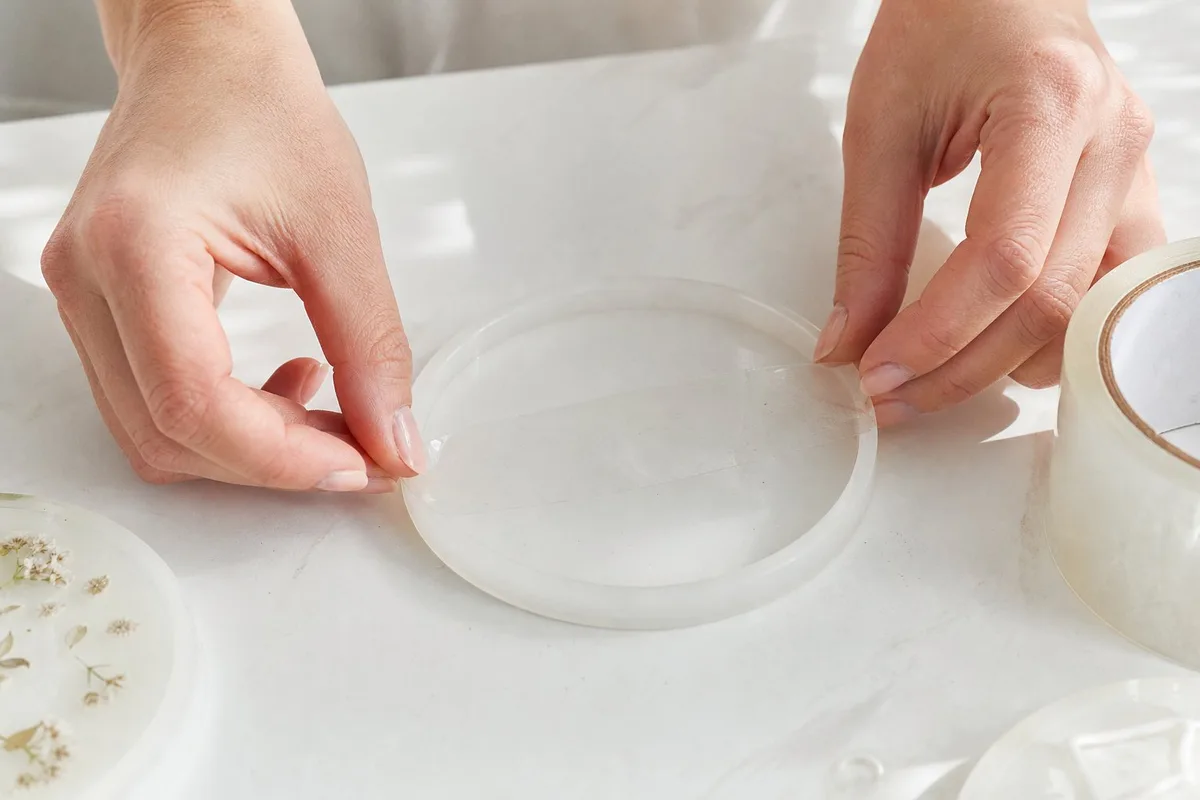
Press packing tape, sticky side down, into the cavity and lift it off. Work it into the corners and around any holes or raised details, then repeat with a fresh piece until nothing comes off. A lint-free wipe works too, but tape picks up glitter and fine dust better.
After a good pour: the everyday wash
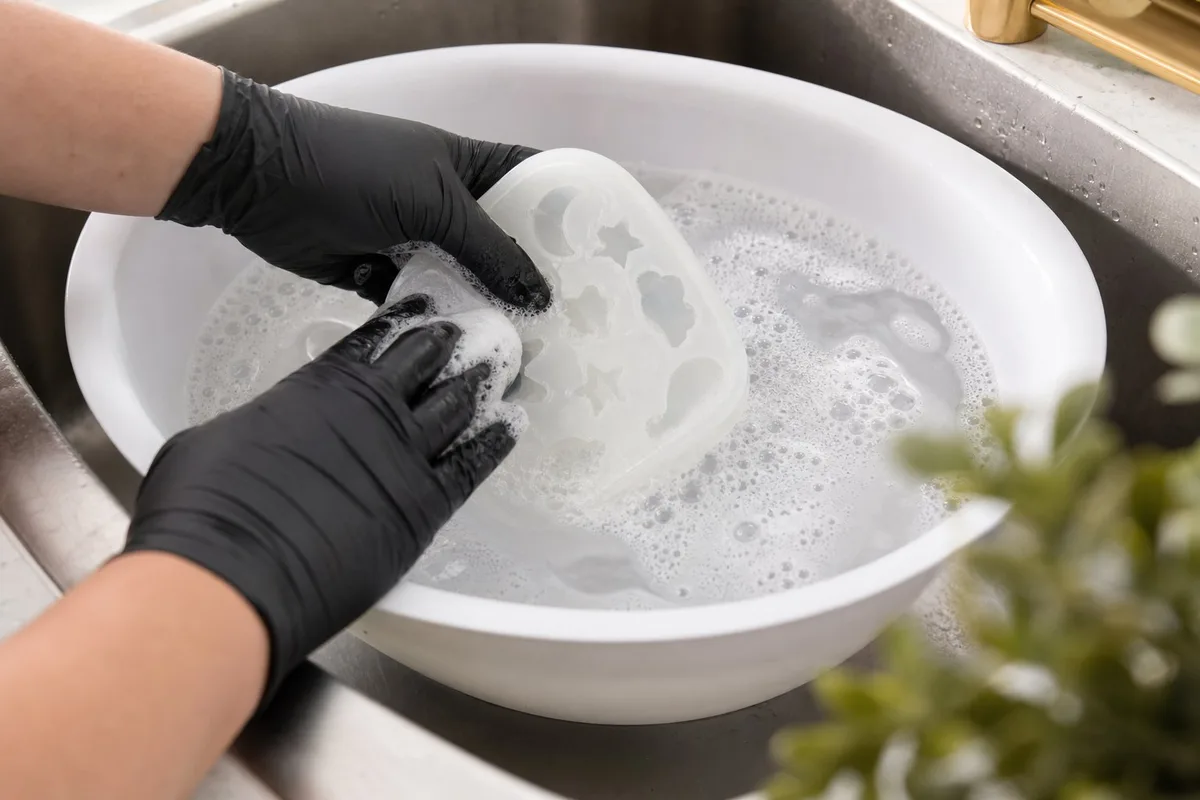
After a clean demold, most molds only need soap and water. Fill a bowl with warm (not hot) water and a drop or two of mild dish soap. Wash with a soft cloth or the soft side of a sponge, never a scrub pad or a stiff brush. Rinse well, then let the mold air-dry completely before you store it or pour into it again.
Don’t skip the drying. Resin Obsession’s mold-care guide says to make sure molds are completely dry before you store them, and water left in a mold can turn your next pour cloudy.

Sticky, uncured resin left in the mold
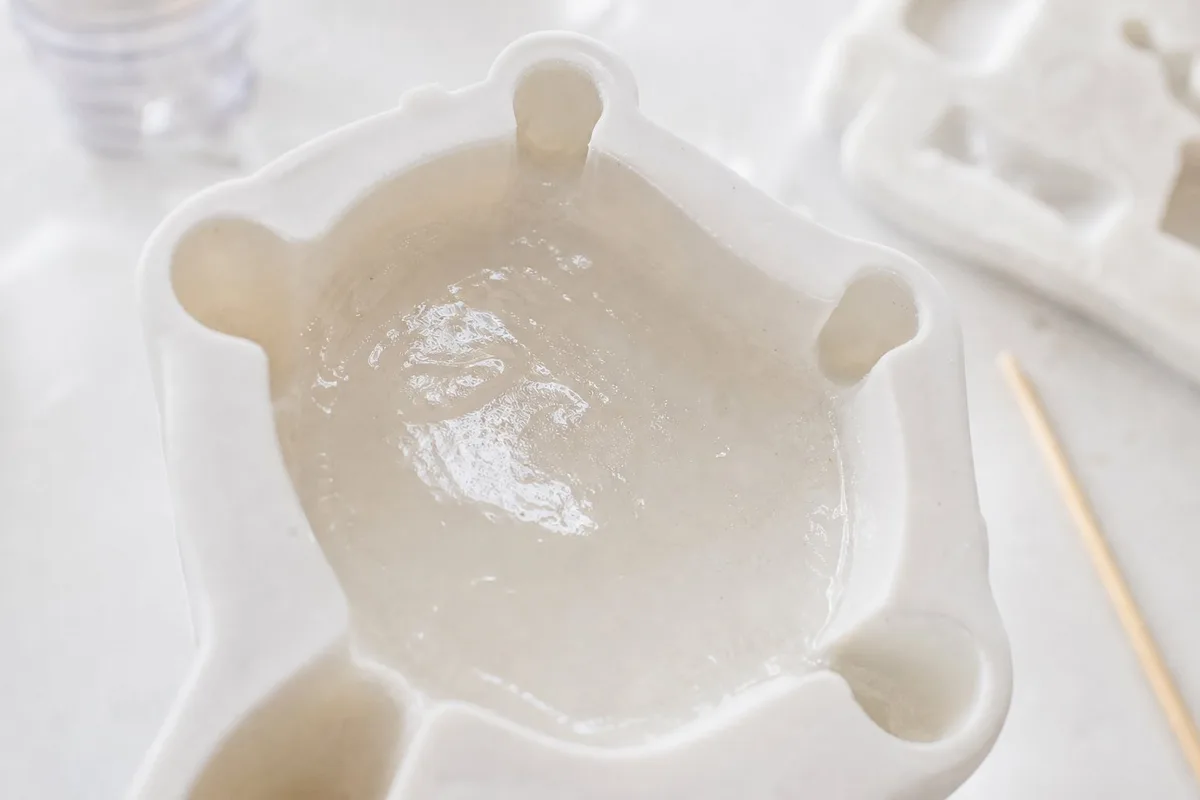
This is the failed-pour case: resin that never hardened and is now a tacky layer in the cavity. Work through these steps in order and stop as soon as the mold is clean.
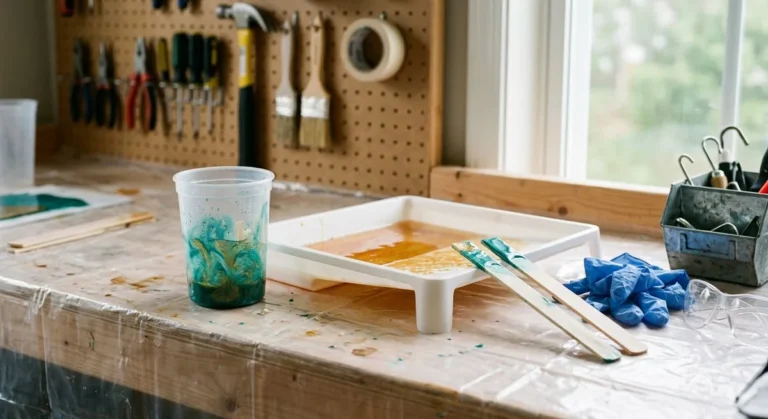
- Put on nitrile gloves. You’re handling uncured resin, so treat it like any other pour (see resin PPE for beginners).
- Scrape out what you can with a silicone spatula or a wooden craft stick you can throw away.
- Wipe out the rest with paper towels, folding to a clean section each pass so you lift the resin instead of smearing it.
- If a sticky film is left, cover it with fresh resin. Mix a small batch carefully (exact ratio, full mixing time), pour a thin layer over the film and let it cure fully. Then peel it out; the sticky residue usually comes out with it. This is Resin Obsession’s go-to method, and it uses no solvents.
- Last resort for a light film: one spot-wipe with alcohol. Put a small amount of 99% isopropyl alcohol on a good-quality shop towel and wipe only the film. Never pour alcohol into the mold, soak it or let it pool. Work with ventilation, away from any flame or torch, and let it evaporate fully. Smooth-On lists 99% alcohol among the best solvents for removing uncured material and warns that these solvents are flammable.
- Finish with the everyday wash: warm water, mild dish soap, a soft cloth, a good rinse and a full air-dry.
For the mold only, never your skin: never use solvents on skin. If resin gets on your skin, wipe it off, use a waterless hand cleaner (soap and warm water for hardener), then wash with soap and warm water. More in resin PPE for beginners.
Why not soak it in acetone or alcohol?
You’ll see this advice in forums. Skip it. Solvents soak into silicone rubber and swell it; Smooth-On even uses that effect on purpose to enlarge molds. Resin Obsession calls a solvent soak a last-ditch “nuclear option” with a good chance of ruining the mold.
That’s why the molds guide says never use solvents. The spot-wipe above is the one narrow exception: a little alcohol on a towel, wiped on, evaporated, then washed off. Not a soak, not poured in, and not for everyday cleaning.
Cleaning the mold doesn’t fix why the resin stayed sticky. If it keeps happening, check your measuring, mixing and cure conditions: see why is my resin sticky? and how to fix resin that didn’t cure.
Cured flakes and film
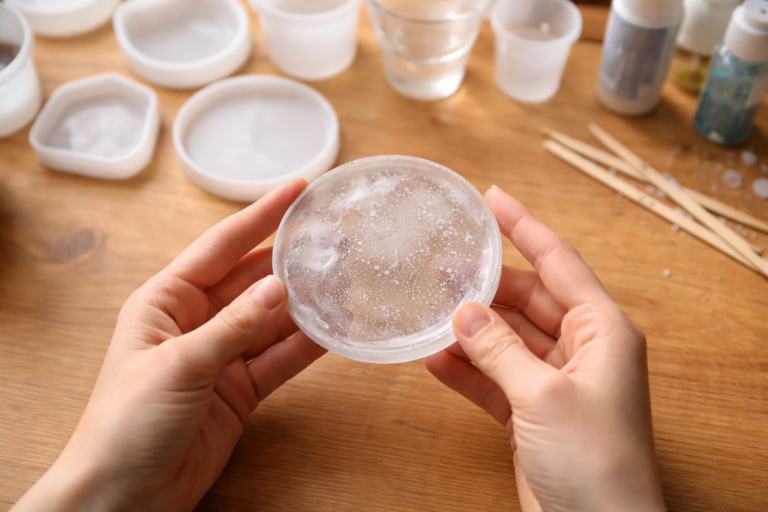
If the leftover resin has cured, flex the mold gently and peel the flakes off with your fingers, then use packing tape for the fine bits. Cured epoxy doesn’t stick well to a good silicone mold, so it usually lifts off once you bend the mold.
Never dig cured resin out with a knife or razor, and never scrub with a scouring pad. A cut or scratch in the cavity shows up on every piece you pour after it.
What not to do
- No dishwasher. Hand-washing is gentler on the mold and keeps resin residue out of the machine you wash food dishes in.
- No steel wool or scrub sponges. They scratch the cavity, and the scratches transfer to your pieces.
- No solvent soaks. Acetone, alcohol or mineral spirits left to soak swell silicone and can ruin the mold (the one spot-wipe above is the exception).
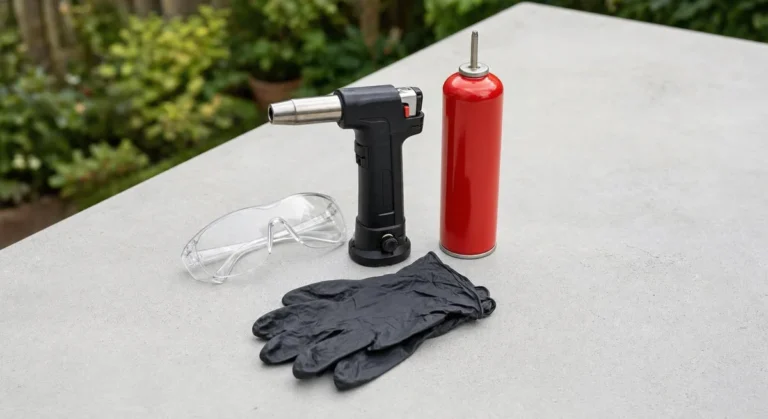
- No torch on a silicone mold. A flame can warp or burn silicone. If you need heat, use a heat gun (see how to get bubbles out of resin).
- No drying in direct sun. Heat and UV light dry silicone out. Air-dry indoors.
And once a mold has been used for resin, don’t go back to using it for food.
Store it so it lasts
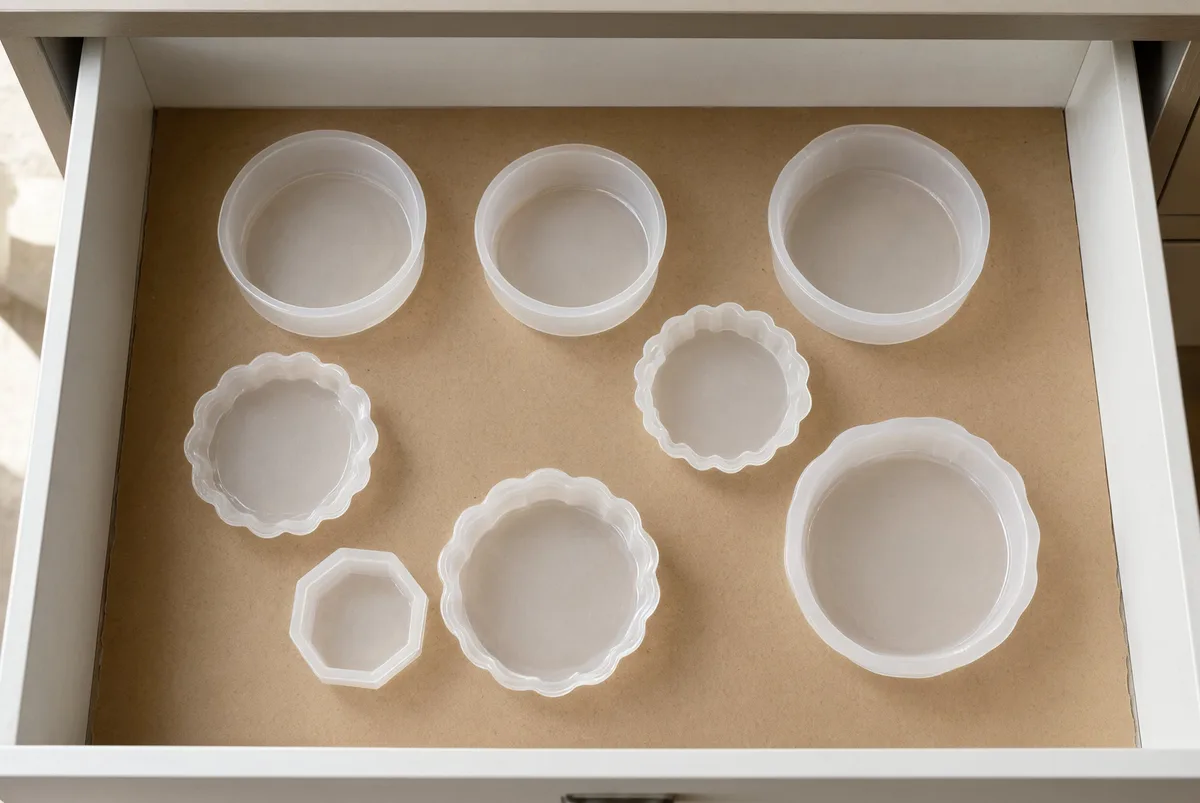
Keep molds flat, in a single layer, somewhere cool and dark. Stacked molds bend, and once silicone warps it won’t go flat again. Heat and UV light dry silicone out, so a mold left on a sunny windowsill breaks down and starts sticking sooner.
Short on space? Lay a sheet of cardboard over one flat layer and start a second layer on top, rather than piling molds on each other. Only put molds away when they’re completely dry.
A light coat of mold release before a pour can also help a mold last longer: Resin Obsession says it protects against the small tears that make molds rip. Many silicone molds release epoxy without it, so try a small test pour first if you use one.
Making coasters next? The full method is in how to make epoxy resin coasters.
Frequently Asked Questions
Can you put resin molds in the dishwasher?
No. Wash them by hand with warm water and mild dish soap, rinse, and let them air-dry. Hand-washing is gentler on the mold and keeps resin residue out of the machine you wash food dishes in.
Can I use alcohol to clean silicone molds?
Not for everyday cleaning, and never as a soak. For a light film of uncured resin, after scraping and wiping, you can do one spot-wipe with a little 99% isopropyl alcohol on a towel: never poured in or left to pool, with ventilation, away from any flame. Then wash the mold with soap and water.
How do I get sticky resin out of a silicone mold?
Wear nitrile gloves, scrape out the bulk with a silicone or wooden tool and wipe with paper towels. Then pour a thin layer of fresh, correctly mixed resin over what is left, let it cure and peel it all out. Finish with a soapy wash, and fix the cause: see why is my resin sticky?.
How do I store silicone resin molds?
Flat, in a single layer, somewhere cool and dark, and only once they are completely dry. Don’t stack them, and keep them out of direct sun. More in best resin molds for beginners.
Sources
- Resin Obsession, 7 Silicone Mold Care Mistakes: warm water and mild soap, no solvents or dishwasher, dry before storing, flat storage, heat and UV damage, heat gun not torch, mold release.
- Resin Obsession, 3 Steps to Get Uncured Resin off Silicone: cover with fresh resin and peel; solvent soaks as a last resort that often ruins the mold.
- Smooth-On, best solvents for cleaning uncured materials: 99% alcohol, small amount on a towel, never pooled, flammable.
- Smooth-On, enlarging a casting with solvent: solvent absorbs into silicone rubber and swells the mold.
- Smooth-On, Smooth-Sil 950: epoxy and other resins can be cast into platinum silicone without a release agent.
Enjoyed this guide? Join the Resin Affairs newsletter for new tutorials, safety tips, and project ideas straight to your inbox.