Why Does Resin Turn Yellow? Causes & How to Prevent It
Resin Affairs is reader-supported. If you buy through links on this page, we may earn a small commission at no extra cost to you. We only link to gear we would use ourselves. Prices and availability change, so check the current listing. Always follow your resin product’s label and Safety Data Sheet.
As an Amazon Associate I earn from qualifying purchases.
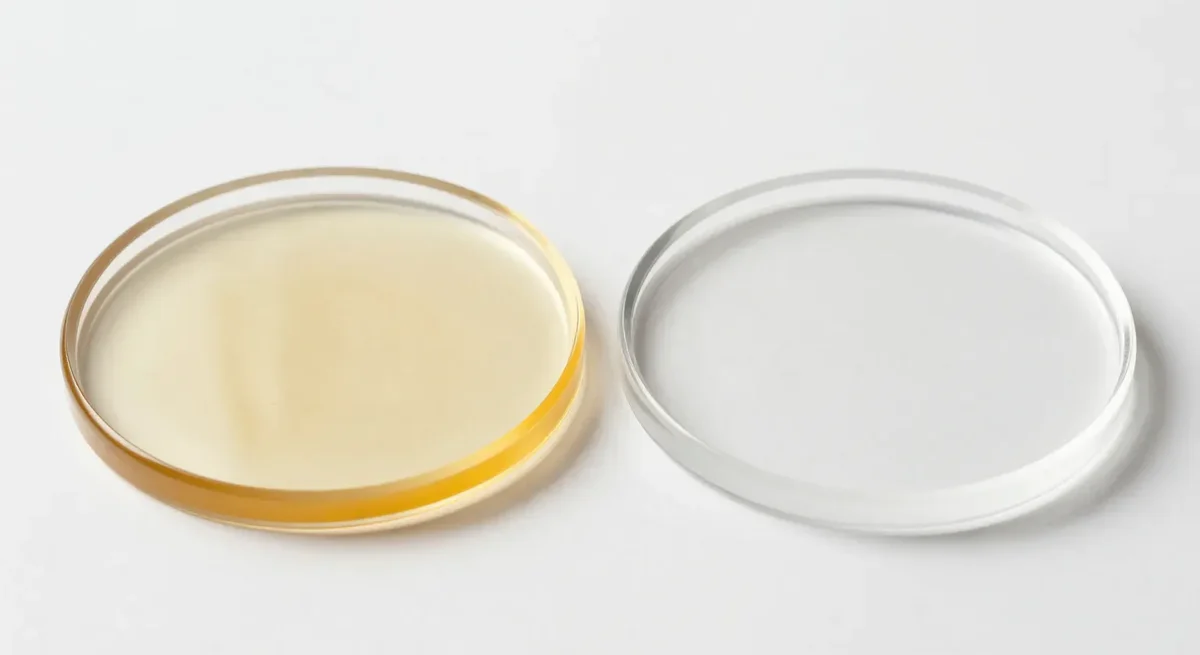
Quick answer: Resin turns yellow mainly because UV light breaks down the cured epoxy over time. Heat (a hot room, a torch held too close, or a pour too thick for its formula) and oxygen speed it up. You can’t reverse it, but you can slow it a lot: use a UV-stabilized resin for anything that sees daylight, measure exactly to the label, keep heat tools moving, and keep finished pieces out of direct sun.
How we sourced this: the causes below come from resin manufacturers’ own guidance (Stone Coat Countertops, WEST SYSTEM’s Epoxyworks, ArtResin) and basic polymer chemistry, not a lab test of our own. Where brands differ, we say so. See our editorial standards.
Yellowing isn’t a cure problem
A yellowed piece is usually fully cured and structurally fine. It’s just discolored. That makes it a different problem from sticky resin or resin that didn’t cure. If your piece is yellow and soft, tacky or smelly, deal with the cure problem first.
What causes resin to turn yellow
1. UV light (the big one)
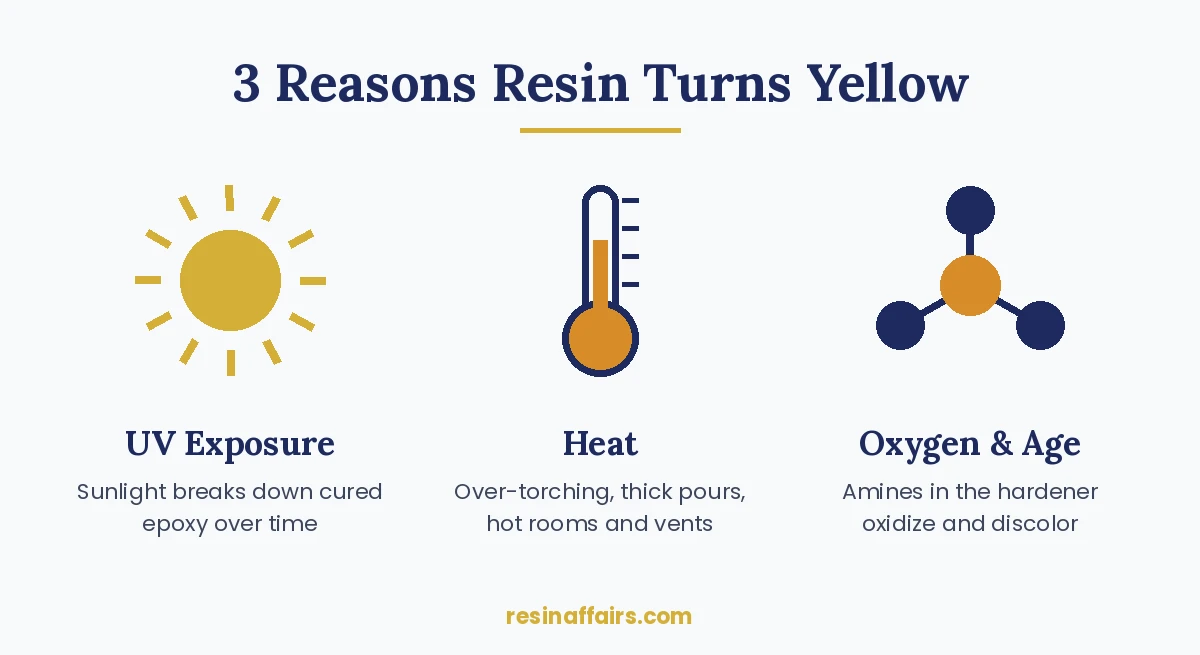
UV light breaks down the polymer chains in cured epoxy, a process called photodegradation. The visible result is a slow shift from water-clear to amber. Stone Coat Countertops puts it plainly: “no epoxy system can remain perfectly clear forever under UV exposure,” and even sunlight through a window counts.
That’s why a coaster on a sunny windowsill yellows much faster than an identical one kept in a drawer.
2. Heat, during the cure and after it
Heat speeds up the same breakdown. It shows up in three ways:
- Over-torching. Holding a torch or heat gun too close, or hovering in one spot, can scorch fresh resin. Keep a torch about 4–6 inches away and a heat gun about 6–8 inches away, and keep both moving in quick, light passes.
- A pour that’s too thick for its formula. Coating resin poured deeper than about ⅛–¼ inch per layer can overheat as it cures. That runaway heat (exotherm) can crack, bubble and yellow the piece before it ever sees the sun. Deep-pour resin exists for thicker layers. See Casting Resin vs Coating Resin.
- Living near heat. A finished piece next to a heat vent, a hot lamp or in a hot car will age faster.
3. Oxygen and age
Oxygen reacts with the amines in epoxy hardener, which is why an opened bottle of hardener slowly turns yellow on the shelf. ArtResin says this usually shows up around six months after opening. ArtResin also notes that some resins discolor slightly even when kept in the dark, so time alone plays a small part too.
Almost every epoxy hardener is amine-based, budget or premium. What separates a resin that stays clear for years from one that ambers in months is mostly the stabilizers in the formula: UV absorbers plus HALS (hindered amine light stabilizers), which mop up the damaging radicals UV creates. They slow yellowing a lot. They don’t stop it completely.
4. Measuring off-ratio
Too much or too little hardener doesn’t just risk a soft, sticky cure. An off-ratio batch leaves unreacted material behind, and that can discolor sooner. Measure exactly the way your label says, by volume or by weight, and never weigh a resin whose ratio is given by volume. Our How to Mix Epoxy Resin guide walks through it.
5. What’s under the resin
Sometimes it isn’t the resin at all:
- A yellowing sealant. Some sprays and sealers yellow on their own. Use one labeled non-yellowing.
- Paint that wasn’t dry. Resin poured over paint that’s still curing can discolor.
- Titanium white paint. ArtResin reports that titanium white (titanium dioxide) can yellow under any brand of epoxy. Seal it with a clear barrier coat first.
6. Thick layers make it look worse
A yellow tint that’s invisible in a ⅛-inch coaster can look obviously amber through two inches of resin. Deep, clear pieces and white or pale designs show yellowing first.
How to prevent resin from yellowing
Pick a UV-stabilized resin for anything that will see light. Tabletops, river tables, serving boards, window hangers and display pieces are worth the extra cost. Look for “UV resistant” or “HALS” on the label or data sheet. Treat “non-yellowing” as marketing; no manufacturer can promise it forever.
Buy fresh and store it well. Check the manufacture date, buy what you’ll use in the next few months, close the bottles straight after pouring, and store them cool and dry. A slightly yellow hardener still cures normally; it just adds a faint tint to clear or white work.
Measure exactly, mix fully. Follow your label’s ratio and mix for at least 3 minutes (or your label’s time), scraping the sides and bottom.
Keep the heat under control. Cure at a steady room temperature, around 70–80°F (21–27°C). Stay inside your resin’s maximum layer depth. Keep torch and heat-gun passes quick and moving.
Seal what’s underneath. Let paint dry fully and seal titanium white or porous surfaces with a non-yellowing clear coat before pouring.
Keep finished pieces out of direct sun. Even a UV-stabilized piece will last longer on a shaded shelf than on a windowsill.
For outdoor or sunny pieces, add a UV-stable topcoat. Epoxy isn’t built to handle long-term sun on its own. WEST SYSTEM’s Epoxyworks recommends a UV-stable topcoat, such as a UV-rated varnish or polyurethane, over epoxy that will live outdoors.
🧰 If Yellowing Is a Dealbreaker
- Craft Resin Table Top Epoxy Resin Kit (1 Gallon, UV Resistant) — a UV-resistant tabletop formula for pieces that will see daylight: tables, trays, window hangers. Skip it for small jewelry or pieces that live in a drawer; a standard clear resin is fine there.
Can yellowed resin be fixed?
Not really. ArtResin’s answer is that once resin has yellowed, “there isn’t much that can be done to reverse it,” because the color change is a chemical change in the cured resin, not dirt on top.
If the yellowing is light and the piece is a flat, single-layer coating, you can sand the surface and pour a fresh coat of UV-stabilized resin over it. That hides mild surface yellowing, but it won’t clear color that runs all the way through a thick pour or casting. For those, put the effort into the next piece.
Frequently Asked Questions
Does all epoxy resin eventually yellow?
Yes, to some degree. UV-stabilized formulas slow it down a lot, especially indoors and out of direct sun, but no epoxy stays perfectly clear forever.
How long does it take for resin to yellow?
It depends mostly on light and heat. A piece in direct sun can change within weeks or months. The same piece on a shaded indoor shelf, made with a UV-stabilized resin, can look unchanged for years.
My hardener has turned yellow in the bottle. Can I still use it?
Usually, yes. ArtResin says yellowed hardener still cures normally if you measure and mix correctly; it may just add a slight tint to clear or white pieces. Hardener that has thickened, gone cloudy or crystallized is a different problem, so check with the manufacturer before using it.
Is yellowed resin still safe?
Yes, if it cured properly in the first place. Yellowing is a cosmetic change. If a piece is yellow and still soft, sticky or smells strongly, it didn’t cure fully; see How to Fix Resin That Didn’t Cure.
Does UV resin yellow too?
It can. UV resin uses different chemistry from two-part epoxy, and yellowing varies a lot by brand. If long-term clarity matters, pick a product that says it’s UV-resistant or non-yellowing and keep the finished piece out of direct sun. See UV Resin for Beginners.
Sources
- Why Does Epoxy Yellow? Causes, Prevention & Solution, Stone Coat Countertops (US)
- The Art of Choosing a Topcoat: UV Stable Final Finishes, Epoxyworks / WEST SYSTEM (US)
- Does Resin Yellow Over Time?, ArtResin
- Resin Yellowing: Why Resin Turns Yellow & How to Fix It, ArtResin
- Epoxy Hardener Turned Yellow, ArtResin
- Exothermic Reaction, Resiners
Related guides
- Common Resin Problems and How to Fix Them
- How to Mix Epoxy Resin
- Which Type of Resin Should You Use?
- Why Is My Resin Sticky?
Get new guides in your inbox
For step-by-step tutorials, safety reminders and honest gear recommendations as we publish, join the Resin Affairs newsletter →
Enjoyed this guide? Join the Resin Affairs newsletter for new tutorials, safety tips, and project ideas straight to your inbox.